Ocicat vs Bengal NZ: Wild-Looking Cats With Very Different Temperaments
Ocicat or Bengal in New Zealand? Both look wild, but they're different cats. Compare energy levels, friendliness, apartment suitability, NZ availability, and what daily life looks like with each breed.
Both the Ocicat and the Bengal have spotted coats that evoke a wild cat aesthetic, and both attract buyers who want something visually striking. But underneath the similar appearance, they are significantly different animals — in origin, temperament, and suitability for different NZ households.
At a glance
| Ocicat | Bengal | |
|---|---|---|
| Weight | 3–7 kg | 4–7 kg |
| Lifespan | 12–14 years | 12–16 years |
| NZ price (breeder) | $1,500–$3,500 | Varies; confirm with breeder |
| Friendliness | ★★★★★ | ★★★★ |
| Trainability | ★★★★ | ★★★★ |
| Energy | ★★★★ | ★★★★★ |
| Grooming needs | ★ | ★ |
| Health | ★★★★ (fewer concerns) | ★★★ |
| Apartment life | ★★★ | ★★★ |
| With kids | ★★★★★ | ★★★ |
| With other pets | ★★★★ | ★★★ |
Origin: fully domestic vs recent wild ancestry
This is the core difference.
Ocicat: Entirely domestic — a purposeful cross of Abyssinian, Siamese, and American Shorthair breeds created in the 1960s. The resemblance to a wild ocelot is coincidental (the coat pattern was an unexpected result of breeding). The Ocicat has no wild cat DNA — it is as domesticated as a Labrador. The spotted coat and athletic build are maintained through selective domestic breeding.
Bengal: Descended from crosses between domestic cats and the Asian Leopard Cat (*Prionailurus bengalensis*), a small wild cat species. Modern pet Bengals are typically F5 or later generations (five or more generations removed from the wild ancestor) and are legally classified as domestic cats in New Zealand. However, the wild ancestry is real and relatively recent — and it shows in their behaviour.
Temperament: friendliness vs intensity
Ocicats are described by owners as dog-like in their sociability. They follow people around, come when called, want to be in the room where the action is, and generally behave more like an extroverted companion than a typical cat. They score 5/5 on friendliness — the highest available — and are notably good with children (5/5) and other pets (4/5). For a NZ family that wants an interactive, affectionate cat that doesn't require managing its temperament, the Ocicat is the easier animal.
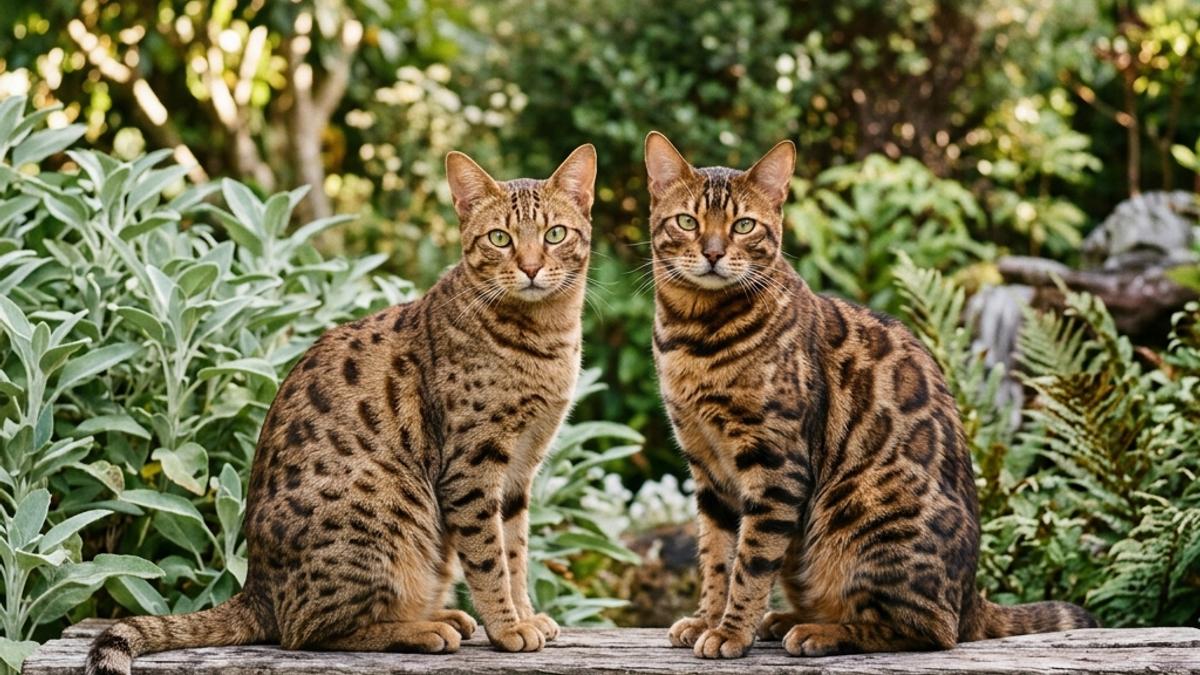
Bengals are also intelligent and interactive, but in a more demanding way. They score 4/5 on friendliness — still affectionate — but with higher energy (5/5, the maximum) and more complex temperament notes. Bengals are often described as needing a job or consistent enrichment. An under-stimulated Bengal will find its own enrichment — usually through activity the owner won't enjoy. They tend to be more selective about handling, can be more territorial, and score lower on compatibility with children (3/5) and other pets (3/5).
For experienced cat owners who specifically enjoy the Bengal's intensity and want an active, demanding companion, this is not a negative — it's the breed's character. But for first-time owners or households with young children, the Ocicat's more straightforward temperament is an easier fit.
Energy and enrichment requirements
Both breeds need significantly more enrichment than a typical domestic shorthair. Neither is a low-maintenance lap cat.
Ocicat: High energy (4/5) but channels it into play and interaction rather than destructive behaviour. Daily interactive play sessions (two or three 10–15 minute sessions with a wand or puzzle feeder) usually satisfy an Ocicat.
Bengal: Maximum energy (5/5). Bengals need more than toy play — many owners provide catios, harness walks outdoors, multi-level climbing structures, and regular change in enrichment. Bengals are also known for water fascination: they often play with dripping taps and may find water-based enrichment engaging. In a NZ urban setting, a Bengal in a small apartment without adequate stimulation is likely to develop behavioural problems. A secure outdoor enclosure or catio significantly improves their quality of life.
NZ wildlife note: Both breeds have hunting instincts, but the Bengal's instincts are noticeably stronger due to wild ancestry. Given NZ's native wildlife (geckos, weta, small birds), keeping a Bengal strictly managed for outdoor access is both legally responsible and practically important.
Grooming: minimal for both
Both breeds have short, close-lying coats that are genuinely low-maintenance. A weekly wipe-down or rubber-brush grooming is sufficient for either. Neither is a heavy shedder. This is one area where they genuinely are similar.
Health considerations
Ocicat (4/5 health score, fewer concerns): A generally robust breed with no breed-specific health conditions as prevalent as in some pedigree lines. Regular vet checks cover the standard domestic cat needs.
Bengal (3/5 health score): A small number of Bengals carry a genetic mutation for Progressive Retinal Atrophy (PRA-b), which can cause blindness. Responsible breeders test for this. You may also read breeder claims that Bengals are unusually sensitive to anaesthesia; this is not established in the peer-reviewed veterinary literature, so treat it as an unconfirmed breed anecdote rather than a fact — but do still tell your vet the breed and any known lines before a procedure. The higher health score concern (3/5 vs 2/5) reflects these breed-specific considerations rather than a general frailty.
NZ availability and pricing
Ocicats are rarer in New Zealand than Bengals. There are fewer registered breeders. Expect to be on a waiting list. Prices from registered breeders typically run $1,500–$3,500 NZD.
Bengals are more available in NZ — there are more registered breeders, and Bengals appear in SPCA rehoming occasionally (often from owners who underestimated their needs). Pricing varies widely by generation and breeder; confirm with current NZ breeders via the New Zealand Cat Fancy registry.
Which is right for you?
Choose an Ocicat if:
- You want the wild-spotted look without the wild temperament
- Your household includes young children
- You want an affectionate, outgoing companion that doesn't require managing
- You're a first-time pedigree cat owner
Choose a Bengal if:
- You have previous cat experience and specifically want a demanding, active breed
- You can provide a catio or significant enrichment infrastructure
- Your household can accommodate a cat that will be selective about handling
- You're prepared for the research into PRA-b health screening and vet communication about wild ancestry
Neither is ideal if:
- You're away from home for long periods
- You want a quiet, independent, low-stimulation cat
- You have particularly vulnerable native wildlife or smaller pets that share space
Related guides
- Best first cat breeds NZ
- Best low-shedding cat breeds NZ
- Best cats for seniors NZ
- Cat curfew and indoor cat management NZ
- Find a breed tool
- Compare breeds tool
---
References
- Cat Fanciers' Association — Bengal breed profile (coat pattern, temperament, activity level): https://cfa.org/breed/bengal/
- Cat Fanciers' Association — Ocicat breed profile (spotted coat, wholly domestic ancestry, sociability): https://cfa.org/breed/ocicat/
- Chew et al., "Characterization of an Early-Onset, Autosomal Recessive, Progressive Retinal Degeneration in Bengal Cats" (peer-reviewed; the PRA-b mutation and its inheritance): https://pmc.ncbi.nlm.nih.gov/articles/PMC4539567/
- Merck Veterinary Manual — Disorders of the Retina, Choroid, and Optic Disk in Cats (what progressive retinal atrophy is and how it progresses): https://www.merckvetmanual.com/cat-owners/eye-disorders-of-cats/disorders-of-the-retina-choroid-and-optic-disk-ocular-fundus-in-cats
- MPI New Zealand, Code of Welfare: Companion Cats (NZ owner obligations): https://www.mpi.govt.nz/animals/animal-welfare/codes/all-animal-welfare-codes/code-of-welfare-companion-cats/
---
*Profile scores sourced from PetMall breed profiles. Bengal ancestry, breeding generation, and health testing vary by breeder — confirm PRA-b status with any Bengal breeder before purchasing. Not a substitute for veterinary advice.*
Free PetMall tools
Related guides
petmall.co.nz
Shop at PetMall
The products below are practical support items for your pet. PetMall ships across New Zealand.
- Cat FoodStart with food that matches your cat's life stage — change brands slowly over 7–10 days to avoid digestive upset.
- Cat LitterClumping or crystal, most cats prefer an unscented litter and a clean tray — one tray per cat plus one spare is the NZ rule of thumb.
- Cat TreatsGreat for bonding and training — keep treats under 10% of daily calories to protect your cat's waistline.
- Cat ToysA small rotation of toys (feather wand, puzzle feeder, and comfort toy) usually works better than buying many at once.
- Cat GroomingRegular brushing cuts hairballs and shedding — essential for long-haired breeds like Ragdolls and British Longhairs.
- Flea & Worm TreatmentFor NZ conditions, choose protection that fits your cat's weight and lifestyle (indoor vs outdoor) and keep it regular.