How to Stop Counter Surfing in Dogs: NZ Training Guide
How to stop counter surfing in dogs using prevention, reward-based training and kitchen routines that work in NZ family homes.
The quick answer: stop counter surfing by making the bench boring, preventing access while you retrain, and rewarding a clear alternative such as lying on a mat. Dogs repeat counter surfing because it sometimes pays. One stolen sandwich can keep the habit alive for weeks, so consistency matters more than telling the dog off after the fact.
Why counter surfing works so well
Kitchen benches are exciting. They smell like roast chicken, school lunches, butter, cat food, crumbs and yesterday's takeaway bag. Many dogs only need one success to keep trying.
The behaviour is also self-rewarding. If the dog grabs food while nobody is watching, there is no teaching moment. The best plan combines management with training. Use Dog Training and Behaviour NZ, Dog Recall Training NZ, Puppy Socialisation NZ and How to Stop a Dog Barking NZ as the wider manners framework.
Step 1: reset the kitchen
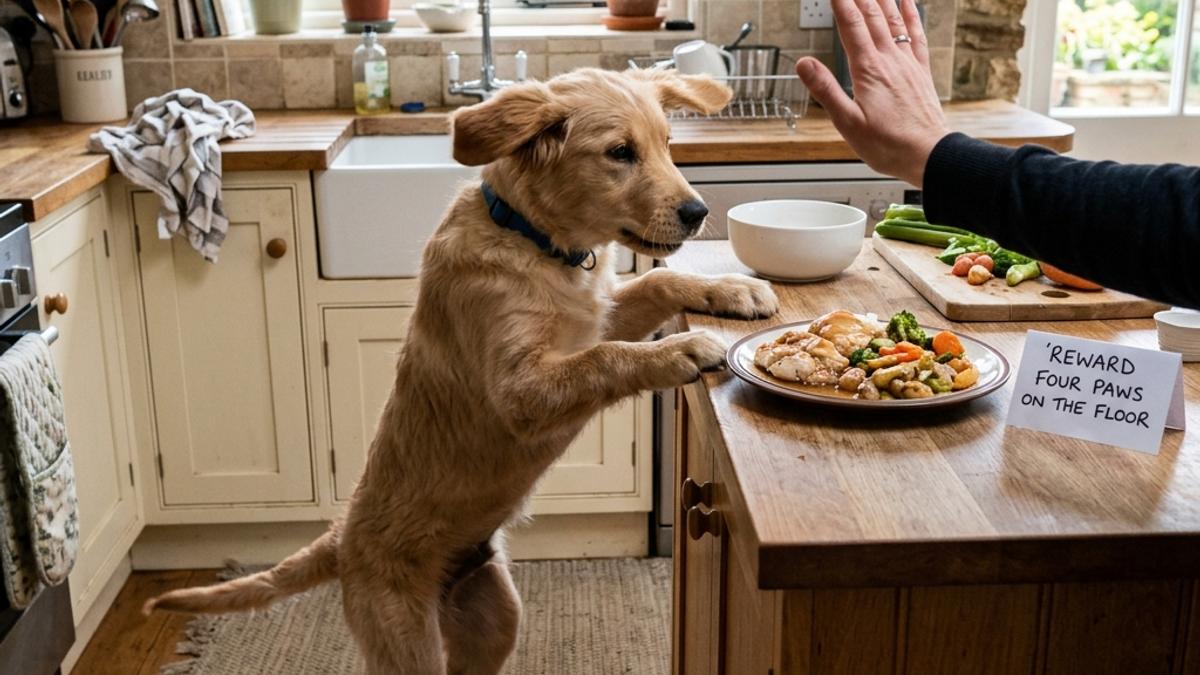
For two weeks, remove the payoff:
- keep food, compost and tea towels away from bench edges
- feed pets in a separate area
- use a baby gate when cooking if needed
- put shopping bags straight away
- keep children from waving snacks at nose height
- supervise visitors who may not know the rule
This is not a forever lockdown. It stops the dog practising the habit while you build the replacement behaviour.
Step 2: teach a kitchen station
Choose a mat, bed or rug where the dog can see you but is out of the traffic path. Toss a treat to the mat. When the dog steps on it, mark and reward. Build up to lying down, then short duration, then movement from you, then food prep.
Practise when nothing delicious is happening first. Reward calm check-ins, four paws on the floor and settling away from the bench. Keep sessions short and easy.
Step 3: teach leave it and call away
Teach "leave it" with low-value items before using it near food. Also practise calling your dog away from the kitchen and rewarding generously. Punishment around food can create sneaking, guarding or stress. RSPCA and AVSAB both support humane, reward-based training approaches.
When to get help
Contact a force-free trainer if the dog guards stolen food, snaps, growls or cannot relax around the kitchen. Contact a NZ vet urgently if your dog eats chocolate, cooked bones, xylitol products, onions, raisins, corn cobs or other dangerous foods.
Quick takeaways
- Counter surfing continues because it sometimes pays.
- Clear benches and block access while retraining.
- Teach a mat station before cooking starts.
- Food guarding or dangerous food ingestion needs professional help.
Related reading
- Dog Training and Behaviour NZ
- Dog Recall Training NZ
- Puppy Socialisation NZ
- How to Stop a Dog Barking NZ
References
- RSPCA, Training your dog, checked 2026-06-13: https://www.rspca.org.uk/adviceandwelfare/pets/dogs/training
- American Veterinary Society of Animal Behavior, Humane Dog Training Position Statement, checked 2026-06-13: https://avsab.org/wp-content/uploads/2021/08/AVSAB-Humane-Dog-Training-Position-Statement-2021.pdf
Important notice
*General dog training information for NZ owners. Food guarding, snapping, dangerous food ingestion or sudden behaviour change needs a NZ vet or qualified force-free professional.*
Free PetMall tools
Related guides
petmall.co.nz
Shop at PetMall
The products below are practical support items for your pet. PetMall ships across New Zealand.
- Dog FoodStart with food that matches your dog's life stage and activity level — and change brands slowly over 7–10 days.
- Dog TreatsTraining rewards and everyday treats — small, soft pieces work best for consistent reinforcement.
- Dog ToysA small rotation of chew, fetch, and puzzle toys usually works better than buying a large variety at once.
- Dog GroomingA gentle brush and the right shampoo make maintenance easier — especially for dogs that get muddy on walks.
- Leads & HarnessesComfort matters: padded contact points and adjustable fit help reduce rubbing on longer walks or tramping weekends.
- Flea & Worm TreatmentFor NZ conditions, look for protection that fits your routine (monthly vs longer-lasting) and your dog's weight range.