How to Stop a Kitten Biting: NZ Play Training Guide
How to stop a kitten biting in NZ with force-free play training: redirect claws and teeth, protect hands, and know when biting needs help.
The quick answer: stop using hands as toys, redirect your kitten to wand toys or kickers, and calmly end play when teeth touch skin. Kitten biting is usually play and learning, not "badness". Punishment, yelling or rough handling makes kittens more excited or scared. Consistency from everyone in the home is what changes the habit.
Why kittens bite
Kittens practise hunting through pouncing, grabbing and biting. In a litter, siblings teach each other when play is too rough. In a human home, you need to teach the same lesson kindly: teeth on people ends the game, toys keep the game going.
If your cat is older or the biting seems intense, also read why does my cat bite me in NZ.
Set up better outlets
- Wand toys for chasing.
- Kicker toys for grabbing and bunny-kicking.
- Toss toys for short bursts.
- Food puzzles for indoor enrichment.
- Scratching posts and cardboard scratchers.
- Quiet nap spaces away from children, dogs and visitors.
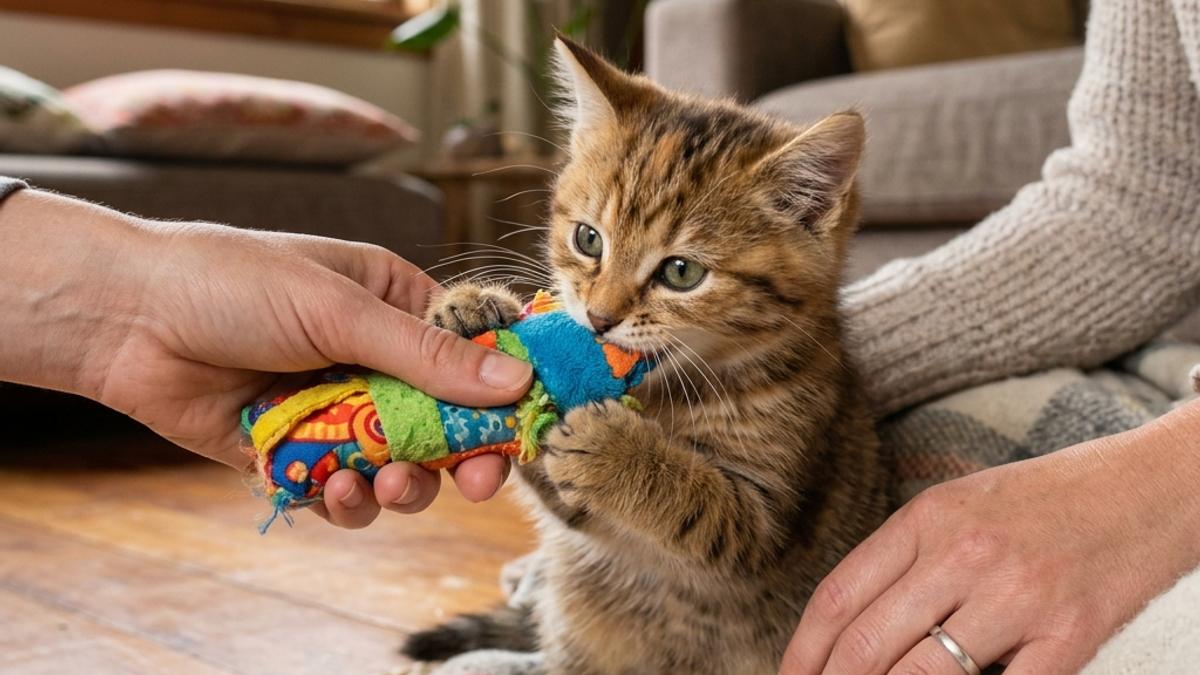
For toy ideas, see cat toys guide NZ. For scratching outlets, see stop cat scratching furniture NZ.
What to do when your kitten bites
- Freeze. Pulling away fast can turn your hand into prey.
- Disengage calmly. Remove attention for a short reset.
- Redirect to a toy. Offer a kicker, wand or tossed toy.
- Reward gentle play. Praise or treat when claws and teeth stay on toys.
- End before chaos. Stop play while your kitten can still think.
Everyone in the house must follow the same rule. If one person wrestles with hands, the kitten will keep trying it with everyone else.
Prevent ankle attacks
Ankle pouncing often happens at dawn, dusk or when people move through hallways. Keep wand toys near common ambush spots, schedule play before busy family times, and scatter a few treats away from your feet before walking past an excited kitten.
What not to do
- Do not smack, scruff, hiss at or spray your kitten.
- Do not wave fingers under blankets.
- Do not roughhouse with bare hands.
- Do not chase a kitten that is trying to leave.
- Do not ignore bites that break skin, become frequent, or appear suddenly in a previously gentle cat.
For the human-scratching version of this issue, see how to stop a cat scratching people NZ.
Quick takeaways
- Hands are not toys; redirect biting to wand and kicker toys.
- Teeth on skin ends play calmly.
- Reward gentle play and schedule daily play outlets.
- Roughhousing teaches the wrong lesson.
- Sudden, severe or injurious biting needs vet or behaviour help.
Shop related categories at PetMall
Looking for wand toys, kickers and play outlets in New Zealand? Browse the PetMall cat toys range for current options and nationwide delivery.
Related reading
- Cat Toys Guide NZ
- How to Stop a Cat Scratching People NZ
- Why Does My Cat Bite Me NZ
- Stop Cat Scratching Furniture NZ
References
- SPCA New Zealand, understanding your cat's behaviour, checked 2026-06-05: https://www.spca.nz/advice-and-welfare/article/understanding-your-cats-behaviour
- SPCA New Zealand, bringing your new cat home, checked 2026-06-05: https://www.spca.nz/advice-and-welfare/article/bringing-your-new-cat-home
- MPI, Code of Welfare: Companion Cats, checked 2026-06-05: https://www.mpi.govt.nz/animals/animal-welfare/codes/all-animal-welfare-codes/code-of-welfare-companion-cats/
Important notice
*General force-free training information for NZ kitten owners. Bite wounds, sudden behaviour change, severe fear, repeated attacks or a kitten that seems unwell should be checked by a NZ vet or qualified behaviour professional.*
Free PetMall tools
Related guides
petmall.co.nz
Shop at PetMall
The products below are practical support items for your pet. PetMall ships across New Zealand.
- Cat FoodStart with food that matches your cat's life stage — change brands slowly over 7–10 days to avoid digestive upset.
- Cat LitterClumping or crystal, most cats prefer an unscented litter and a clean tray — one tray per cat plus one spare is the NZ rule of thumb.
- Cat TreatsGreat for bonding and training — keep treats under 10% of daily calories to protect your cat's waistline.
- Cat ToysA small rotation of toys (feather wand, puzzle feeder, and comfort toy) usually works better than buying many at once.
- Cat GroomingRegular brushing cuts hairballs and shedding — essential for long-haired breeds like Ragdolls and British Longhairs.
- Flea & Worm TreatmentFor NZ conditions, choose protection that fits your cat's weight and lifestyle (indoor vs outdoor) and keep it regular.