How to Stop a Cat Scratching People: NZ Training Guide
Cat scratching people? A NZ force-free guide to reading body language, redirecting claws, teaching gentle play, and avoiding punishment.
The quick answer: stop using hands as toys, watch your cat's warning signs, redirect claws to toys or scratchers, and reward calm handling. Scratching people is usually play, fear, over-stimulation or a request for space - punishment makes it worse because the cat learns people are unsafe.
Why cats scratch people
Common reasons include:
- Play has become too rough.
- The cat is over-stimulated during patting.
- A kitten has not learned gentle play yet.
- The cat is frightened or trapped.
- Someone keeps touching a sore or disliked area.
- The cat has no good scratching outlets.
For furniture scratching, use the companion guide: stop cat scratching furniture in NZ.
Read the early warning signs
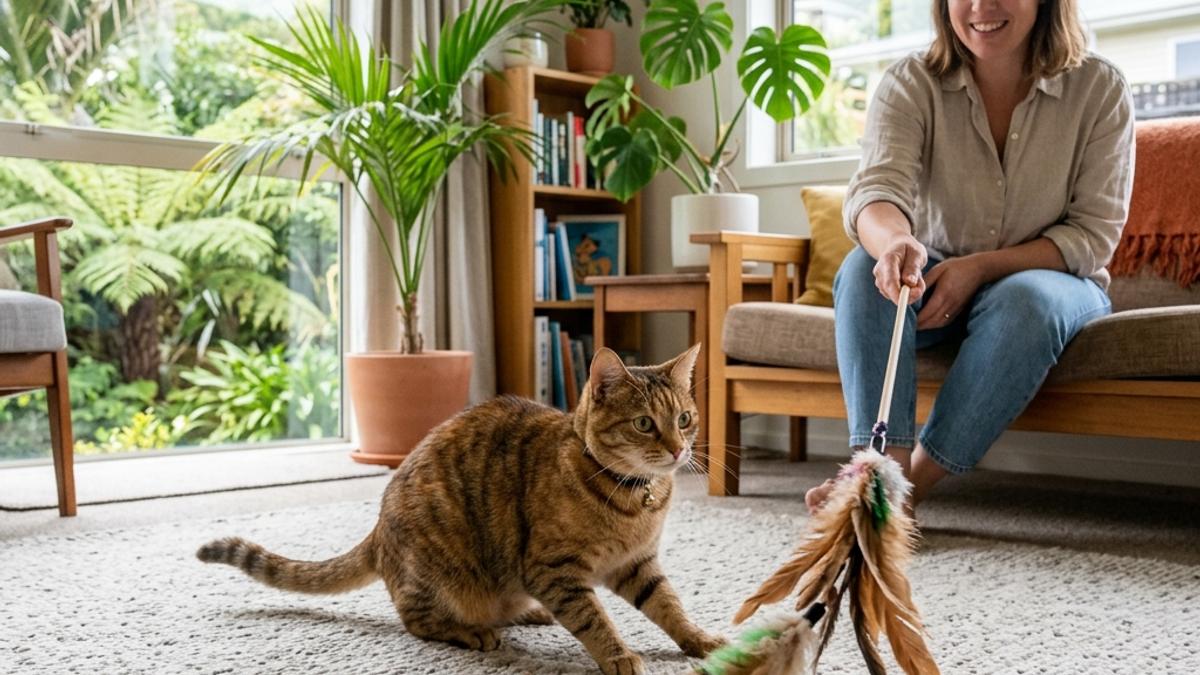
Most cats warn before claws come out. Watch for tail flicking, skin twitching, ears turning sideways, head turning toward your hand, freezing, grabbing, or a sudden look at the exit. Stop touching before the swipe. This is especially important with children, visitors and flatmates who may not know your cat's limits.
Set up better outlets
- Use wand toys, kickers and toss toys instead of hands.
- Put scratchers where the cat already wants to scratch, not hidden in the garage.
- Add vertical and horizontal options.
- Keep nails trimmed if your cat tolerates it.
- Give indoor cats daily play, especially before evening zoomies.
For scratcher choice, see cat scratching posts guide NZ, and for enrichment ideas see cat toys guide NZ.
What to do in the moment
- Freeze your hand instead of pulling away like prey.
- Calmly disengage.
- Offer a toy or toss a treat away from you.
- End the interaction for a short reset.
- Reward the next calm approach.
With kittens, everyone in the house must follow the same rule: toys are for biting and grabbing, hands are for gentle contact.
What not to do
- Do not smack, yell, spray water or scruff.
- Do not roughhouse with bare hands.
- Do not force cuddles.
- Do not chase a cat that leaves.
- Do not declaw; it is a welfare issue and does not teach better behaviour.
When to get help
If scratching is sudden, intense, linked to touching one body area, or comes with hiding, not eating or other behaviour changes, talk to a NZ vet. If health is clear but the behaviour continues, a qualified force-free cat behaviour professional can help.
Quick takeaways
- Hands are not toys; redirect claws to wand toys, kickers and scratchers.
- Stop patting before the tail flick, skin twitch or hard stare turns into a swipe.
- Reward calm handling and gentle play.
- Punishment increases fear and defensive scratching.
- Sudden or severe scratching needs vet or behaviour help.
Shop related categories at PetMall
Looking for wand toys, kickers or play outlets in New Zealand? Browse the PetMall cat toys range for current options and nationwide delivery.
Related reading
References
- SPCA New Zealand, understanding your cat's behaviour, checked 2026-06-05: https://www.spca.nz/advice-and-welfare/article/understanding-your-cats-behaviour
- SPCA New Zealand, responsible cat ownership, checked 2026-06-05: https://www.spca.nz/advice-and-welfare/article/responsible-cat-ownership
- MPI, Code of Welfare: Companion Cats, checked 2026-06-05: https://www.mpi.govt.nz/animals/animal-welfare/codes/all-animal-welfare-codes/code-of-welfare-companion-cats/
Important notice
*General force-free behaviour information for NZ cat owners. Sudden aggression, bite wounds, severe fear or pain-related scratching should be checked by a NZ vet or qualified behaviour professional.*
Free PetMall tools
Related guides
petmall.co.nz
Shop at PetMall
The products below are practical support items for your pet. PetMall ships across New Zealand.
- Cat ToysA small rotation of toys (feather wand, puzzle feeder, and comfort toy) usually works better than buying many at once.
- Cat FoodStart with food that matches your cat's life stage — change brands slowly over 7–10 days to avoid digestive upset.
- Cat LitterClumping or crystal, most cats prefer an unscented litter and a clean tray — one tray per cat plus one spare is the NZ rule of thumb.
- Cat TreatsGreat for bonding and training — keep treats under 10% of daily calories to protect your cat's waistline.
- Cat GroomingRegular brushing cuts hairballs and shedding — essential for long-haired breeds like Ragdolls and British Longhairs.
- Flea & Worm TreatmentFor NZ conditions, choose protection that fits your cat's weight and lifestyle (indoor vs outdoor) and keep it regular.