Dog Grooming NZ: Complete Hub for Brushing, Bathing, Nails, Teeth and Ears
Dog grooming NZ hub: brushing, bathing, nails, teeth, ears and coat tools, with NZ seasonal notes and safe vet referral points.
The quick answer: dog grooming in NZ is not just about looking tidy. A good routine keeps your dog comfortable through wet winter walks, humid northern summers, beach salt, grass seeds and everyday shedding. Start with gentle handling, match tools to coat type, keep baths sensible, trim nails little and often, and leave painful ears, dental disease, skin sores or tight mats to a vet or professional groomer.
Start with coat type and handling
Before buying tools, ask what coat you are actually caring for: short smooth, double coat, long silky, curly or woolly, wire coat, or a mixed coat that needs a groomer's eye. The overview in Dog Brush Types NZ explains slickers, bristle brushes, deshedding tools, pin brushes, undercoat rakes and rubber mitts. For a more direct decision path, use Choosing a Dog Brush by Coat Type NZ.
Handling matters as much as gear. Practise touching paws, ears, tail, collar area and muzzle when nothing dramatic is happening. Short sessions with treats are better than one long wrestle in the laundry.
Brushing and shedding
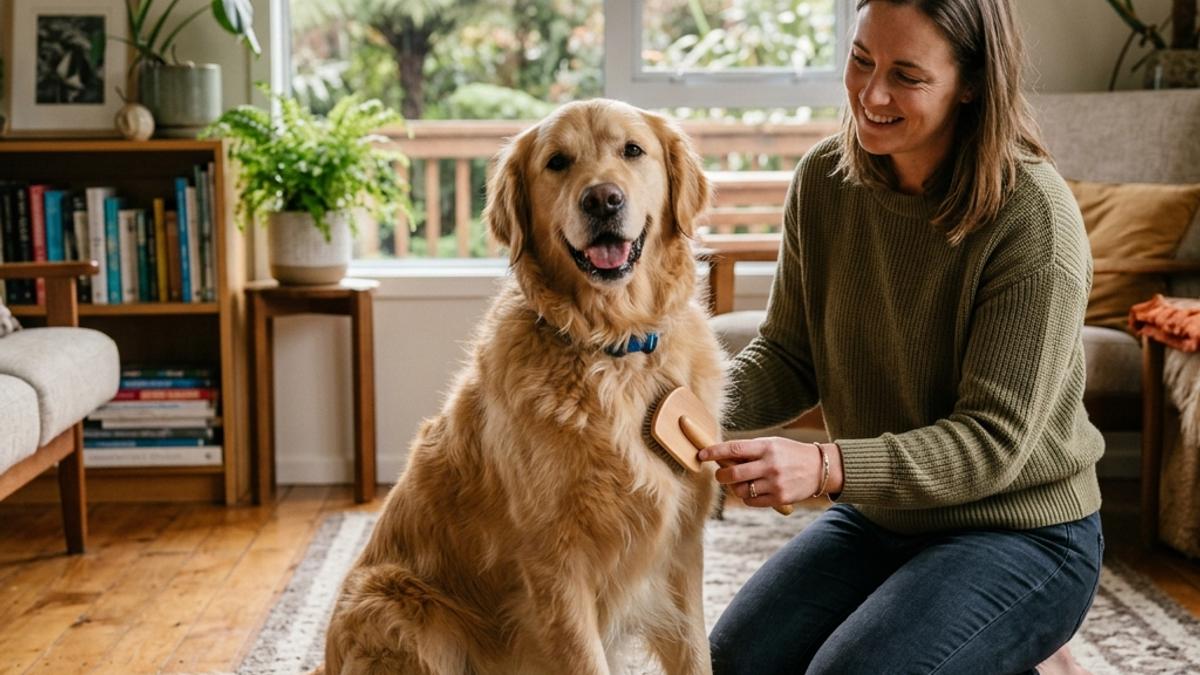
Brushing is the foundation. It removes loose coat, finds burrs and grass seeds early, spreads natural oils and helps you notice skin changes before they become a bigger problem. Long-coated dogs on rural sections and dogs who run through seed heads need checks after walks. Double-coated dogs often need more brushing when seasonal shedding hits.
If you are choosing between tools, Slicker Brush vs Deshedding Tool NZ keeps the decision simple: slickers help with tangles and many longer coats; deshedding tools are for loose undercoat in suitable double-coated dogs. Do not rake hard at one patch, and stop if the skin looks red.
Bathing without drama
Most dogs do not need constant baths. Bath when your dog is dirty, smelly, salty, muddy or your groomer or vet has given a routine. The step-by-step guide is How to Bath a Dog NZ.
NZ detail matters here. In a damp Auckland winter or a cold South Island evening, plan drying before the dog gets wet. Brush before bathing because water tightens mats. Use dog shampoo, rinse thoroughly and keep water out of eyes and ears. A beach dog may need a fresh-water rinse after salt and sand even when they do not need a full shampoo.
Nails: clippers, grinders and calm sessions
Long nails change how a dog stands and can make walking uncomfortable. Dogs who mostly exercise on grass, sand or a soft Kiwi section may not wear nails down the way city dogs do on footpaths.
For the full process, read How to Trim Dog Nails at Home NZ. If you are choosing tools, Dog Nail Clippers vs Grinder NZ compares the options. The safe rule is little and often. Dark nails are harder to read, so take small amounts and stop before the quick. Fearful dogs, very overgrown nails or paw-sensitive dogs are good reasons to use a groomer, vet nurse or vet clinic.
Teeth and ears are routine checks, not DIY treatment
Tooth brushing can be part of grooming, but it needs tiny reward-based steps and dog-safe toothpaste. Use How to Brush Dog Teeth NZ for the routine. Do not use human toothpaste, scrape tartar yourself or treat bleeding, swelling, loose teeth or eating changes as a grooming issue.
Ear checks are similar. How to Clean Dog Ears NZ is for healthy ears only. Red, smelly, painful ears, discharge, head shaking, head tilt or balance changes belong with a NZ vet. Do not pour home remedies into a sore ear.
Build a realistic NZ grooming rhythm
Your routine should fit the dog, home and season:
- After muddy winter walks: towel paws, check belly and brush out debris.
- After beach trips: rinse salt and sand, then dry ears and paws well.
- During shedding season: brush before loose coat takes over the couch.
- In seed season: check paws, armpits, ears and feathering after walks.
- Before a professional groom: keep brushing at home so mats do not become painful.
Some dogs are easy at home. Others need a professional groomer because of coat type, size, fear, matting or owner confidence. That is not failure; it is good welfare.
Quick takeaways
- Match grooming to coat type, not just breed name.
- Brush first; wet mats tighten.
- Use dog shampoo and dry well in cold or damp NZ weather.
- Nails are safer little and often.
- Teeth and ears need routine checks, but pain, smell, bleeding, swelling or discharge means vet.
- Professional groomers and vet nurses are part of normal dog care.
Shop related categories at PetMall
For brushes, shampoos, nail tools, dental-care basics and everyday dog grooming supplies in New Zealand, browse the PetMall dog range.
Related reading
- How to Trim Dog Nails at Home NZ
- How to Bath a Dog NZ
- How to Brush Dog Teeth NZ
- Dog Brush Types NZ
- Choosing a Dog Brush by Coat Type NZ
- Slicker Brush vs Deshedding Tool NZ
- Dog Nail Clippers vs Grinder NZ
- How to Clean Dog Ears NZ
References
- SPCA New Zealand, Grooming position statement, checked 2026-06-11: https://www.spca.nz/advocacy/position-statements/article/grooming
- SPCA New Zealand, Dog and puppy care, checked 2026-06-11: https://www.spca.nz/dog-care
- SPCA New Zealand, Companion animal dentistry, checked 2026-06-11: https://www.spca.nz/advice-and-welfare/article/companion-animal-dentistry
- WSAVA Global Dental Committee, Toothbrushing toolkit, checked 2026-06-11: https://wsava.org/wp-content/uploads/2022/06/GDC-Toothbrushing-Toolkit.pdf
- MPI, Code of Welfare: Dogs, checked 2026-06-11: https://www.mpi.govt.nz/animals/animal-welfare/codes/all-animal-welfare-codes/code-of-welfare-dogs
Important notice
*General grooming information for NZ dog owners. Skin sores, painful mats, ear smell or discharge, dental pain, bleeding, swelling, lameness, sudden coat change or strong distress should be assessed by a NZ vet or professional groomer.*
Free PetMall tools
Related guides
petmall.co.nz
Shop at PetMall
The products below are practical support items for your pet. PetMall ships across New Zealand.
- Dog GroomingA gentle brush and the right shampoo make maintenance easier — especially for dogs that get muddy on walks.
- Dog FoodStart with food that matches your dog's life stage and activity level — and change brands slowly over 7–10 days.
- Dog TreatsTraining rewards and everyday treats — small, soft pieces work best for consistent reinforcement.
- Dog ToysA small rotation of chew, fetch, and puzzle toys usually works better than buying a large variety at once.
- Leads & HarnessesComfort matters: padded contact points and adjustable fit help reduce rubbing on longer walks or tramping weekends.
- Flea & Worm TreatmentFor NZ conditions, look for protection that fits your routine (monthly vs longer-lasting) and your dog's weight range.