Best Dog Treats NZ (2026): How to Choose
Find the best dog treats in NZ: Training treats vs natural chews, single-ingredient NZ venison, green-lipped mussel, and the 10% daily calorie limit.
Dog treats are far more than simple snacks; they are vital tools for positive reinforcement training, mental enrichment, dental hygiene, and strengthening the bond between you and your pet. However, the treat market is flooded with products loaded with artificial fillers, excess sugars, and chemical preservatives that can lead to obesity and nutritional imbalances.
When selecting the best dog treats in New Zealand, you must balance factors like ingredient transparency, size-appropriate caloric value, structural safety, and suitability for training vs. long-lasting chewing. This guide compares dog treat categories, details key ingredients to look for and avoid, and highlights the 10% daily caloric limit. For further information on treat categories, see our detailed guide on dog treat types.
---
Types of Dog Treats Compared
Dog treats are generally categorized by their purpose and physical structure.
1. Training Treats (High-Value, Bite-Sized)
These are tiny, soft, aromatic morsels designed to be eaten in less than a second, allowing training sessions to continue without interruption.
- Pros: Extremely low calorie per individual piece, highly motivating due to strong aromas, and easy to carry in a treat pouch.
- Cons: Not suitable for keeping a dog occupied or promoting dental health.
- NZ Price Range: Typically $8.00 to $18.00 NZD per bag.
2. Long-Lasting Natural Chews
Dehydrated bully sticks, venison ears, lamb trachea, or beef tendons that provide extended chewing opportunities.
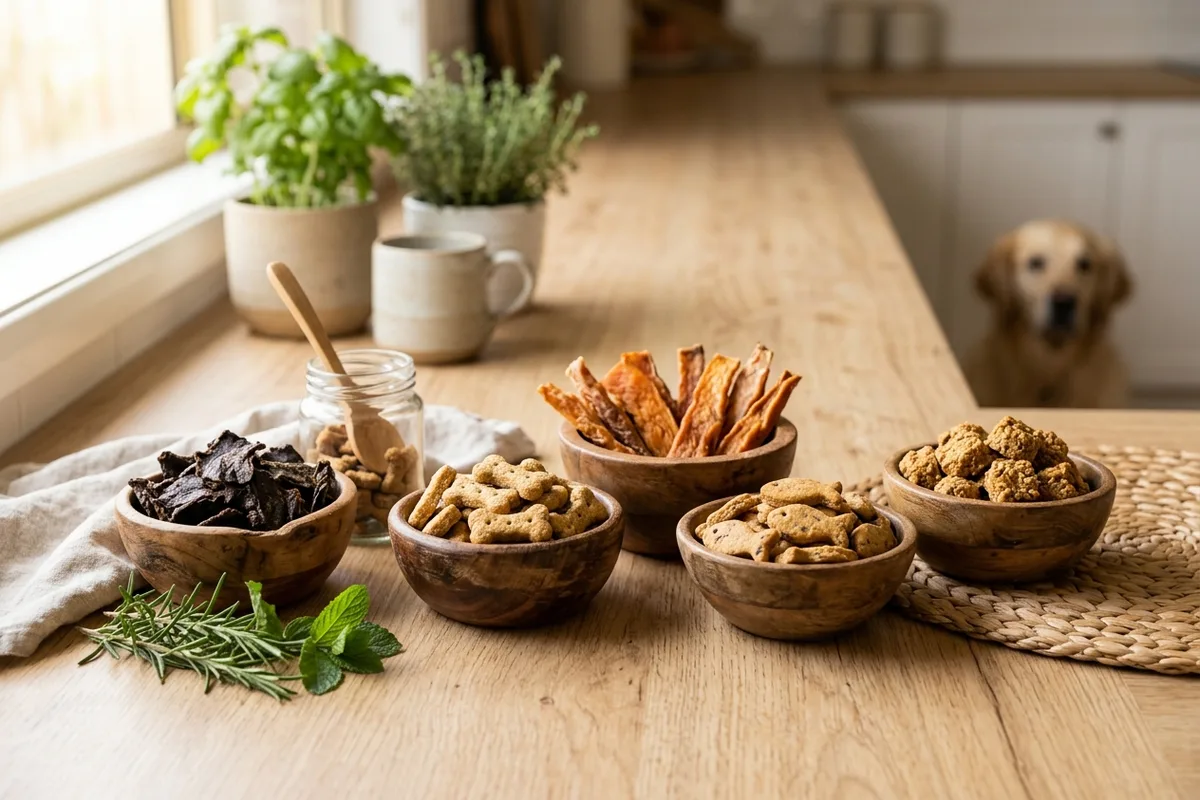
- Pros: Encourage long chewing sessions, which naturally relieves stress and anxiety by releasing endorphins in a dog's brain. They also help scrape away dental plaque and tartar mechanically.
- Cons: Can present choking or blockage hazards if swallowed whole; close supervision is mandatory. Heavy chews like antlers and hooves are too hard for some dogs and can cause painful tooth fractures.
- NZ Price Range: Typically $4.00 to $12.00 NZD per individual piece or pack.
3. Dehydrated or Freeze-Dried Pure Meat
Single-ingredient meats (like chicken breast, beef liver, or wild-caught venison) that are gently dehydrated to preserve nutrients.
- Pros: 100% natural, free of artificial preservatives, and highly palatable. Excellent for dogs with severe food allergies or inflammatory bowel disease.
- Cons: More expensive than grain-filled baked biscuits and must be stored in airtight containers to prevent moisture spoilage.
- NZ Price Range: Typically $12.00 to $25.00 NZD per packet.
---
The Golden 10% Calorie Rule
The most critical guideline in veterinary nutrition is the 10% rule: treats should make up no more than 10% of a dog's total daily caloric intake. The remaining 90% of their daily energy must come from a complete and balanced diet.
Commercial treats are not formulated to be "complete and balanced," meaning they lack the precise ratio of essential vitamins and minerals required for daily bodily function. Overfeeding treats causes nutrient dilution and weight gain. To understand the long-term impact of obesity and excess weight on skeletal health, consult the Merck Veterinary Manual guidelines on arthritis in dogs.
For guidance on evaluating pet food manufacturers and ensuring quality control for snacks, consult the WSAVA Global Nutrition Guidelines.
Calculation Example: The Labrador Case
For example, an active 30kg Labrador Retriever might require approximately 1,200 calories per day to maintain a healthy weight. Under the 10% rule, their treat allowance is strictly limited to 120 calories per day. If you feed them a single large pigs-ear chew (which can exceed 150-200 calories), they have already exceeded their daily treat limit. You must adjust their evening kibble portion downward to prevent gradual weight gain. For breeds predisposed to pancreatitis (like Miniature Schnauzers), strict fat and calorie control is a life-saving necessity.
---
What to Look For (Key Buying Standards)
When browsing dog treats in New Zealand, you should consider three key physical factors to ensure the rewards are safe and functional:
- Size and Texture Appropriateness: Small puppies with delicate baby teeth require soft, spongy treats that are easy to swallow. In contrast, heavy chewers (like Pitbulls or Mastiffs) require tough, dense tendons or wind-dried muscles that resist immediate destruction and promote jaw exercise.
- Aroma vs. Messiness: High-value training treats must be highly aromatic to capture your dog's attention in distracting outdoor environments, such as a busy NZ off-leash park. However, they should also be dry and firm enough to prevent greasy residue on your hands or inside your treat pouch.
- Digestibility: Always choose treats that dissolve fully in the digestive tract. Rawhide, for instance, is notorious for swelling in the stomach and causing life-threatening gastrointestinal blockages. Natural alternatives like bully sticks are fully digestible.
---
Ingredients to Look For & Avoid
Ingredients to Look For
- Single-Source NZ Proteins: Look for locally sourced meats like venison, lamb, or beef. New Zealand's wind-dried processing preserves nutritional integrity without cooking out natural vitamins.
- Green-Lipped Mussel (GLM): A unique NZ superfood ingredient that is highly rich in omega-3 fatty acids, glucosamine, and chondroitin, offering excellent anti-inflammatory support for joint health. Dehydrated GLM is a superb high-value reward for aging dogs.
- Coconut Oil or Pumpkin: Great natural digestives and skin-supporting additives.
Ingredients to Avoid
- Artificial Preservatives (BHA, BHT, Ethoxyquin): Linked to adverse health issues in animal studies. Opt for natural preservatives like Tocopherols (Vitamin E) or rosemary extract.
- Excess Sodium & Artificial Dyes: Dogs do not care about the color of their treats. Bright red or green treats contain artificial food dyes that serve no health purpose and can trigger skin allergies.
- Vague Meat Labeling: Avoid terms like "animal derivatives" or "meat by-products." Look for named sources like "dehydrated beef liver" or "air-dried lamb lung."
---
Common Mistakes to Avoid
- Forgetting to Subtract Treat Calories: If you feed your dog 100 calories worth of training treats during a walk, you must subtract 100 calories from their evening kibble portion. Failing to do so is a primary driver of pet obesity in New Zealand.
- Feeding Splinter-Prone Bones: Never feed cooked bones of any type. Cooking changes the cellular structure of bone, making it brittle and highly prone to splintering, which can pierce a dog's stomach or intestines.
- Leaving Chews Unsupervised: When natural chews (like bully sticks) get chewed down to the last 2-3 cm, dogs frequently attempt to swallow them whole, presenting an immediate choking hazard. Always supervise chew sessions and discard the final stub.
---
Conclusion
Selecting the best dog treats in New Zealand involves aligning the treat type with your dog's training goals and health requirements, while strictly adhering to the 10% daily caloric limit. Sourcing single-ingredient, locally wind-dried proteins like venison or green-lipped mussel supports health and joint mobility. To explore more about canine rewards, check our guide on dog treat types or visit the dogs channel to view more care articles.
---
Sources
- Merck Veterinary Manual. Arthritis and joint disorders in dogs, checked 2026-06-29: https://www.merckvetmanual.com/dog-owners/bone,-joint,-and-muscle-disorders-of-dogs/arthritis-in-dogs
- World Small Animal Veterinary Association (WSAVA). Global nutrition guidelines, checked 2026-06-29: https://wsava.org/global-guidelines/global-nutrition-guidelines/
Related guides
petmall.co.nz
Shop at PetMall
The products below are practical support items for your pet. PetMall ships across New Zealand.
- Dog TreatsTraining rewards and everyday treats — small, soft pieces work best for consistent reinforcement.
- Dog FoodStart with food that matches your dog's life stage and activity level — and change brands slowly over 7–10 days.
- Dog ToysA small rotation of chew, fetch, and puzzle toys usually works better than buying a large variety at once.
- Dog GroomingA gentle brush and the right shampoo make maintenance easier — especially for dogs that get muddy on walks.
- Leads & HarnessesComfort matters: padded contact points and adjustable fit help reduce rubbing on longer walks or tramping weekends.
- Flea & Worm TreatmentFor NZ conditions, look for protection that fits your routine (monthly vs longer-lasting) and your dog's weight range.