Best Dental Chews for Dogs NZ (2026): How to Choose
Find the best dental chews for dogs in NZ: edible vs synthetic chews, VOHC certification standards, weight sizing rules, and dangerous chew warnings.
Maintaining your dog's oral health is vital for preventing periodontal disease, bad breath, and systemic infections. While active tooth brushing is the gold standard of care, many dogs resist manual brushing. Dental chews offer a convenient, highly palatable way to support oral hygiene through mechanical scraping action during chewing.
However, pet store shelves in New Zealand are packed with chews that make bold claims without scientific backing. This comprehensive guide outlines how to choose the best dental chews for dogs in NZ, comparing edible and non-edible chews, explaining VOHC certification, sizing rules, and calorie management. To understand canine oral hygiene, read our dog dental care guide or explore our dog treat types analysis and our ranked best dog treats NZ picks.
---
Types of Dental Chews Compared
Dental chews in New Zealand are available in several formats, each varying in durability, digestibility, and cost:
1. Edible Dental Chews (Vegetable or Starch-Based)
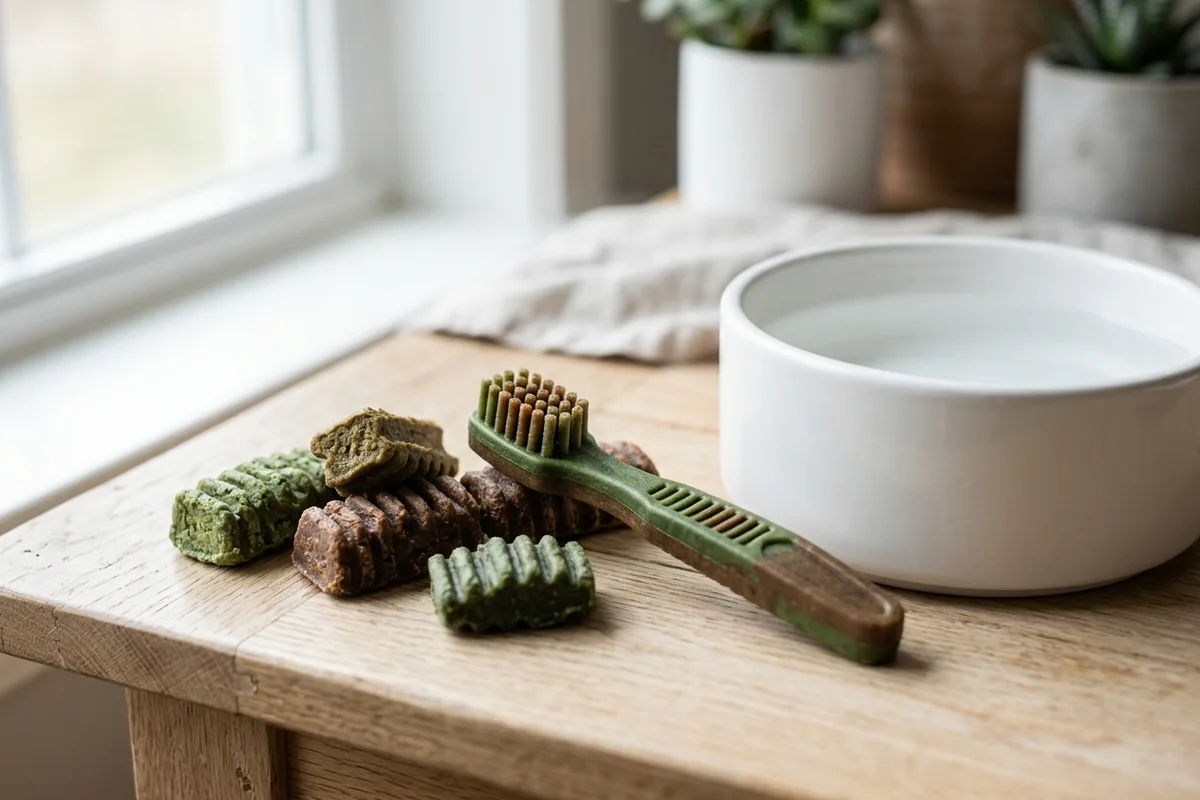
These are digestible, molded chews made from starches (like potato or wheat starch) and gelatin, designed to dissolve fully in the digestive tract.
- Pros: Highly digestible, reducing the risk of bowel blockages. They are highly palatable and often contain breath-freshening additives.
- Cons: They are consumed quickly (often in under 5 minutes), limiting the duration of mechanical cleaning action. They also contribute calories to the daily diet.
- NZ Price Range: Typically $15.00 to $35.00 NZD per bag (containing 8 to 30 chews).
2. Dehydrated Natural Chews (Trachea, Tendons, bully sticks)
Air-dried or dehydrated animal parts (like beef trachea, tendons, or bully sticks) that soften as the dog chews.
- Pros: 100% natural, single-ingredient products. Chewing duration is longer than starch-based chews, providing extended mechanical plaque scraping.
- Cons: High in fat and calories. They can become slippery and present choking hazards if swallowed whole in large chunks.
- NZ Price Range: Typically $4.00 to $12.00 NZD per piece or packet.
3. Non-Edible Dental Chew Toys (Nylon or Rubber)
Durable synthetic chew toys designed with ridges, nubs, or bristles to clean teeth while your dog plays.
- Pros: Extremely durable and long-lasting. They contain zero calories, making them perfect for overweight dogs.
- Cons: They do not clean as effectively if the dog loses interest. Sharp nylon edges can scrape gums, and cheap plastics can break off and be swallowed.
- NZ Price Range: Typically $20.00 to $45.00 NZD per toy.
---
What to Look For (VOHC & Sizing Standards)
To select a dental chew that is scientifically proven to work and safe for your dog, evaluate products against these guidelines:
The Veterinary Oral Health Council (VOHC) awards its Seal of Acceptance only to products that submit rigorous clinical data proving they reduce plaque and/or tartar by at least 15% to 20% in testing. To achieve the VOHC Seal, manufacturers must conduct two independent clinical trials. These trials involve dividing dogs into test and control groups, measuring plaque and tartar accumulation using dental disclosing solutions, and proving a statistically significant reduction. VOHC evaluates separate protocols for plaque (soft bacteria) and calculus (hardened tartar). Selecting a product accepted for both plaque and tartar control provides the most comprehensive preventative care. Check the official list of certified products on the VOHC accepted products database.
2. Active Plaque-Fighting Ingredients
Many modern veterinary dental chews are formulated with active ingredients like sodium hexametaphosphate (SHMP) or other polyphosphates. As the dog chews, these compounds are released into the saliva and bind to mineral ions (like calcium), preventing them from precipitating on the tooth surface and hardening plaque into tartar. This combination of physical scraping and chemical mineral binding provides a dual-action defense against gum disease.
3. Precise Sizing Rules
Always select a chew that matches your dog's current weight. Feeding a chew that is too small for a large dog is dangerous: they will likely swallow it whole rather than chewing it, posing a choking risk or bowel obstruction. Conversely, feeding a large chew to a small dog leads to excessive calorie intake and jaw fatigue.
4. Calorie Integration (The 10% Rule)
Edible dental chews contain significant calories (often 50 to 150 calories per chew). These must be counted as part of your dog's daily treat allowance. Under veterinary guidelines, treats should make up no more than 10% of a dog's total daily caloric intake. If you feed a dental chew, reduce their evening dry kibble portion accordingly to prevent progressive weight gain.
---
Limitations: Chews Do Not Replace Brushing
While dental chews are highly effective at scraping plaque from the crown of the teeth, they have major limitations:
- Plaque vs. Tartar: Plaque is a soft, sticky film of bacteria that forms on teeth. If not removed within 24–48 hours, it mixes with saliva minerals and hardens into tartar (calculus). Tartar cannot be removed by chews; it requires professional veterinary scaling under anesthesia.
- Under the Gum Line (Subgingival): The most damaging periodontal bacteria reside under the gum line, where chews cannot reach. Only active tooth brushing and professional cleaning can address subgingival plaque.
- Chewing Style: Dogs often chew using only their back molars and premolars, meaning front incisors and canine teeth receive very little cleaning action from chews.
For detailed veterinary clinical information on dental plaque, calculus formation, and proper oral hygiene, review the Merck Veterinary Manual guidelines on canine dental disorders.
---
Warning: Dangerous Chews to Avoid
Many popular chewing items are too hard for a dog's teeth and can cause serious injuries.
- The Thumbnail Test: If you cannot dent the chewing item with your thumbnail, it is too hard and can fracture your dog's teeth (specifically the large upper carnassial teeth).
- Items to Avoid: Avoid animal bones (especially cooked bones, which splinter), deer or elk antlers, cow hooves, and hard nylon toys. These materials frequently cause painful slab fractures of the teeth, requiring extraction.
- Rawhide Risks: Traditional rawhide is treated with harsh chemicals, is highly indigestible, and swells in the stomach, presenting a significant risk of gastrointestinal blockage.
---
Conclusion
Choosing the best dental chews in New Zealand involves selecting VOHC-accepted products, matching the chew size to your dog's weight, and integrating the calories into their daily 10% limit. Remember that chews are a helpful support tool but cannot replace regular tooth brushing and veterinary dental checkups. To read more about dental hygiene, check our dog dental care guide or review our dog treat types guide.
---
Sources
- Veterinary Oral Health Council (VOHC). VOHC accepted products lists, checked 2026-07-02: https://vohc.org/accepted-products/
- Merck Veterinary Manual. Dental disorders of dogs, checked 2026-07-02: https://www.merckvetmanual.com/dog-owners/digestive-disorders-of-dogs/dental-disorders-of-dogs
Related guides
petmall.co.nz
Shop at PetMall
The products below are practical support items for your pet. PetMall ships across New Zealand.
- Dog TreatsTraining rewards and everyday treats — small, soft pieces work best for consistent reinforcement.
- Dog FoodStart with food that matches your dog's life stage and activity level — and change brands slowly over 7–10 days.
- Dog ToysA small rotation of chew, fetch, and puzzle toys usually works better than buying a large variety at once.
- Dog GroomingA gentle brush and the right shampoo make maintenance easier — especially for dogs that get muddy on walks.
- Leads & HarnessesComfort matters: padded contact points and adjustable fit help reduce rubbing on longer walks or tramping weekends.
- Flea & Worm TreatmentFor NZ conditions, look for protection that fits your routine (monthly vs longer-lasting) and your dog's weight range.