Best Dog Bed NZ (2026): How to Choose
Find the best dog bed in NZ: Orthopedic memory foam, bolster, elevated mesh, sizing rules, easy washing covers, and managing cold damp floors.
A high-quality dog bed is not a luxury; it is a fundamental requirement for your dog's physical health, emotional security, and joint support. Dogs spend up to 12 to 14 hours a day sleeping or resting. Without proper cushioning, sleeping on hard, cold floors can lead to pressure sores, calluses, and worsened joint stiffness.
When searching for the best dog bed in New Zealand, you must evaluate factors like support quality, durability, ease of cleaning, and suitability for the local damp climate. This guide compares the most popular dog bed styles, explains how to measure your dog for the perfect fit, and highlights critical features to seek out. For general home environment advice, see our detailed dog beds guide.
---
Types of Dog Beds Compared
Dog beds come in several designs, each serving different sleeping styles, age brackets, and physical needs.
1. Orthopedic Memory Foam Beds
These beds feature high-density memory foam (similar to human mattresses) that contours to your dog's body shape.
- Pros: Outstanding joint support and pressure relief. They prevent senior dogs or large breeds from sinking through to the hard floor, significantly reducing arthritis pain.
- Cons: Often the most expensive option, and cheap knock-offs use low-grade egg-crate foam that flattens quickly.
- NZ Price Range: Typically $90 to $300+ NZD, depending on size and foam density.
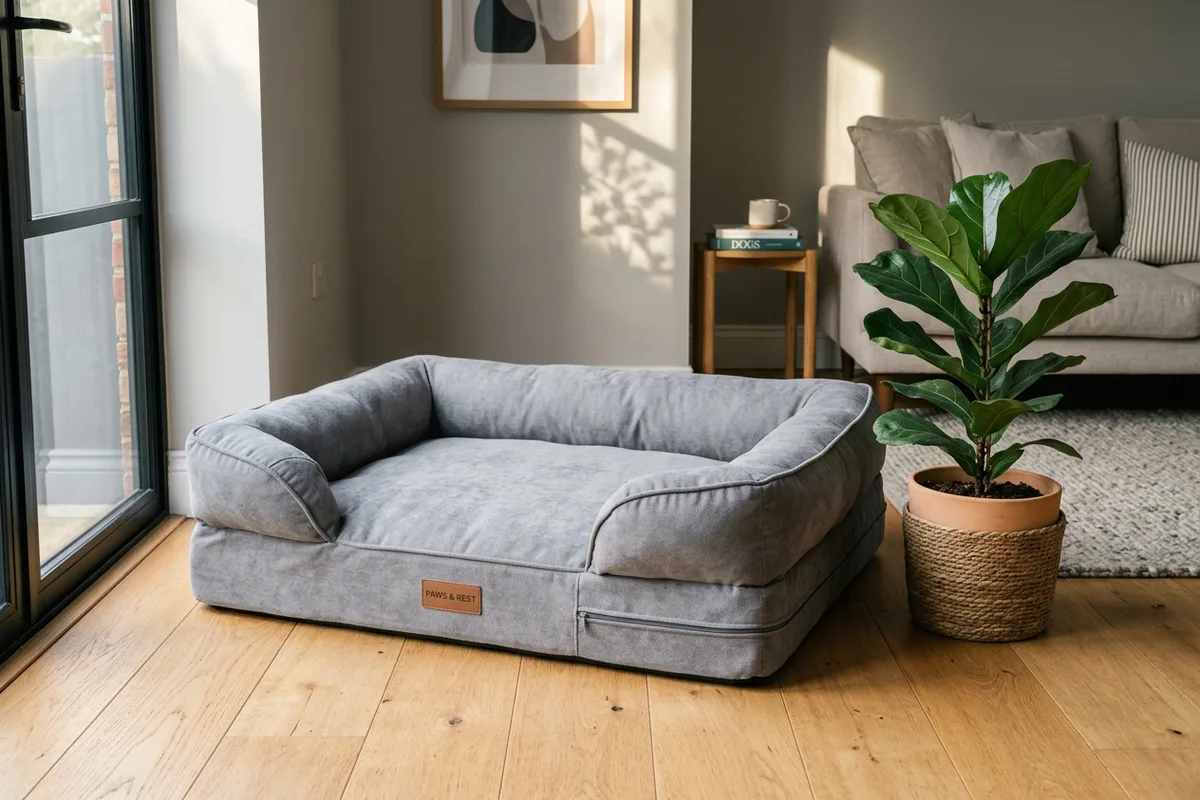
2. Bolster or Nest Beds
Bolster beds feature raised, cushioned walls around the perimeter, creating a nesting space.
- Pros: The raised edges act as built-in pillows for dogs that like to rest their heads, and they offer a sense of security and protection for anxious dogs.
- Cons: The walls reduce the usable sleeping area, meaning they are not ideal for dogs that like to stretch out fully.
- NZ Price Range: Typically $45 to $150 NZD.
3. Elevated (Cot Style) Beds
These beds consist of a durable fabric (like canvas or mesh) stretched tightly over a metal frame, lifting your dog off the ground.
- Pros: Highly breathable mesh allows air to circulate underneath, keeping dogs cool in summer. They are chew-resistant, extremely easy to hose down, and prevent mould growth.
- Cons: They offer minimal padding and are unsuitable for freezing winter nights without a thick blanket on top.
- NZ Price Range: Typically $30 to $80 NZD.
4. Flat Mattress or Crate Mats
Simple, flat rectangular pads designed to fit into standard dog crates or playpens.
- Pros: Highly versatile, portable, and easy to slide into crates.
- Cons: Standard poly-filled mats tend to bunch up or flatten quickly, offering minimal joint support.
- NZ Price Range: Typically $20 to $70 NZD.
---
What to Look For (Key Buying Criteria)
To ensure you buy a bed that lasts, verify these key features before purchasing:
1. Removable, Machine-Washable Cover
Dog beds collect hair, mud, drool, and flea eggs. Never buy a bed where the entire unit must be stuffed into a washing machine. Look for heavy-duty zippers and covers that can be removed and machine washed.
2. Water-Resistant Inner Liners
An accidental puddle or wet paws can ruin memory foam instantly, leading to deep mould growth. Ensure the foam core is protected by a water-resistant cover under the outer fabric.
3. Non-Slip Bottom
A bed that slides around when a dog tries to lie down can cause injuries, especially for elderly dogs with weak hind legs.
4. Hidden or Covered Zippers
Dogs are naturally curious and may chew on exposed plastic or metal zippers. Hidden zipper designs keep these components out of sight and out of reach, preventing your dog from swallowing foreign objects or damaging the bed's mechanism.
5. Durable Outer Fabrics
Look for durable materials like heavy-duty polyester, canvas, or ripstop nylon. A dog's nails can easily tear cheap fleece or cotton, rendering the bed useless within a few weeks of active scratching.
---
Senior Support & Arthritis Considerations
As dogs age, their joints naturally degrade. According to veterinary guidelines, osteoarthritis is highly prevalent in older dogs, causing progressive joint pain and stiffness. Providing proper orthopedic support is key to managing this condition.
A proper orthopedic memory foam bed evenly distributes your dog's weight, preventing pressure points on their hips, shoulders, and elbows. Cheap poly-filled beds compress under weight, forcing your dog's bones directly onto the hard floor. For detailed veterinary information on canine joint health, read the Merck Veterinary Manual guidelines on arthritis in dogs.
Additionally, the SPCA NZ emphasizes that dogs must have access to a comfortable, dry, and warm sleeping area that is sheltered from wind and dampness. Check their advice on providing a comfortable environment on the SPCA NZ dog care guide.
Observing Your Dog's Rising Habits
If you notice your dog struggling to rise from their bed in the morning, or showing hesitation before lying down, it may indicate their current bed is not providing adequate support. Upgrading to a board-certified orthopedic bed can make a dramatic difference in their morning mobility.
---
Size Matching for Popular NZ Breeds
To choose the perfect bed size, follow this guide based on common New Zealand dog breeds:
- Small Breeds (Chihuahua, Toy Poodle, Cavoodle): Small bolster beds (50–60 cm length) provide security and comfort.
- Medium Breeds (Border Collie, Kelpie, Staffy): Medium flat mattresses or bolsters (75–90 cm length) allow stretching while maintaining support.
- Large Breeds (Labrador, Golden Retriever, German Shepherd): Large memory foam orthopedic mattresses (100–120 cm length) are mandatory to prevent joint compression and hip pain.
---
Common Mistakes to Avoid
- Buying Too Small: Always measure your dog while they are sleeping in their natural position. Measure from the tip of the nose to the base of the tail, then add 15 to 30 cm to find the minimum length of the bed. If in doubt, always size up.
- Neglecting Local Dampness: Many NZ homes experience high humidity. Placing a cheap fabric bed directly onto a cold, uninsulated floor will cause it to absorb moisture from the air, creating a breeding ground for mould and mildew. Use an elevated frame or a bed with a water-resistant bottom layer.
- Ignoring Sleep Style: Observe how your dog sleeps. "Sprawlers" need flat mattresses with no borders, while "curlers" need bolster beds to feel secure.
---
Conclusion
Choosing the best dog bed in New Zealand involves matching the bed style to your dog's sleeping style, size, and health requirements. For large breeds or senior dogs, investing in a high-density orthopedic memory foam bed supports joint longevity and prevents pain. To continue your research, read our dog beds guide or visit the dogs channel to view more pet care resources.
---
Sources
- SPCA New Zealand — Bringing your new dog or puppy home (set up a space with a bed, crate or blankets; room quiet, secure and a comfortable warm temperature), checked 2026-07-30: https://www.spca.nz/advice-and-welfare/article/bringing-your-new-dog-or-puppy-home
- Merck Veterinary Manual. Arthritis and joint disorders in dogs, checked 2026-06-29: https://www.merckvetmanual.com/dog-owners/bone,-joint,-and-muscle-disorders-of-dogs/arthritis-in-dogs
Related guides
petmall.co.nz
Shop at PetMall
The products below are practical support items for your pet. PetMall ships across New Zealand.
- Dog FoodStart with food that matches your dog's life stage and activity level — and change brands slowly over 7–10 days.
- Dog TreatsTraining rewards and everyday treats — small, soft pieces work best for consistent reinforcement.
- Dog ToysA small rotation of chew, fetch, and puzzle toys usually works better than buying a large variety at once.
- Dog GroomingA gentle brush and the right shampoo make maintenance easier — especially for dogs that get muddy on walks.
- Leads & HarnessesComfort matters: padded contact points and adjustable fit help reduce rubbing on longer walks or tramping weekends.
- Flea & Worm TreatmentFor NZ conditions, look for protection that fits your routine (monthly vs longer-lasting) and your dog's weight range.