Basenji vs Shiba Inu NZ: Two Cat-Like, Independent Dogs Compared
Basenji or Shiba Inu in New Zealand? Both are fox-like, independent, low-shedding dogs often described as cat-like. They differ significantly on energy, trainability and vocality.
The Basenji and Shiba Inu attract a similar type of owner: someone who wants an intelligent, independent dog that's different from the mainstream retriever or herding breeds. Both are described as "cat-like" in their self-sufficiency. Both are visually distinctive. They're meaningfully different in temperament and management, and choosing between them matters.
At a glance
| Basenji | Shiba Inu | |
|---|---|---|
| Weight | M: 10–12 kg / F: 9–11 kg | M: 8–11 kg / F: 7–9 kg |
| Lifespan | 13–14 years | 12–16 years |
| NZ price (registered breeder) | $1,500–$3,500 | Breeders quote on enquiry (Sept 2026) |
| Friendliness | ★★★★ | ★★★★ |
| Trainability | ★★ | ★★★ |
| Energy | ★★★★★ | ★★★ |
| Grooming needs | ★ | ★★★ |
| Apartment life | ★★★ | ★★★ |
| With kids | ★★★★ | ★★★★ |
| With other pets | ★★★ | ★★★ |
The Basenji's unique characteristic: it doesn't bark
The Basenji is the only naturally barkless dog breed in the world. They can vocalise — producing a distinctive yodel or chortle sound — but they don't bark in the way other dogs do. This is a genuine characteristic, not a trained behaviour.
For NZ apartment owners or those with noise-sensitive neighbours, this is significant. A Basenji in a small Wellington flat presents a very different noise management situation than virtually any other dog.
However: the absence of barking does not mean silence. Basenjis can howl when distressed, produce their yodel vocalisations, and whine. They are also active enough to cause environmental noise through movement if kept in a small space without adequate exercise.
Trainability difference: both low, but Shiba ahead
Basenji (trainability 2/5): Among the lowest trainability scores available. Basenjis are highly intelligent — they understand what you want — but frequently choose not to comply. They are sighthounds with hunting independence bred over thousands of years of self-directed hunting in central Africa. They train in short sessions when properly motivated with high-value rewards, but traditional obedience training approaches often fail entirely.
Recall in off-lead environments is a genuine challenge for Basenjis. A Basenji that catches sight or scent of something interesting will likely disengage from the owner and pursue. Secure fencing and leash management in NZ's off-lead environments (beaches, DOC land, parks) is essential.
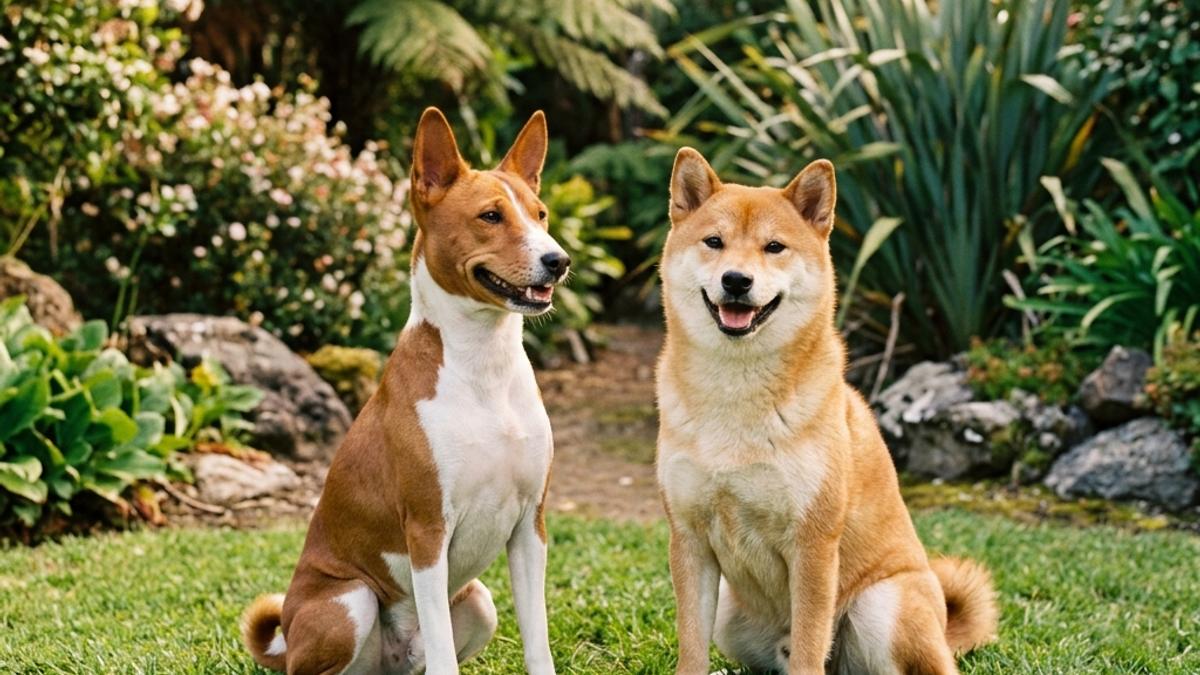
Shiba Inu (trainability 3/5): Also independent-minded, but more consistently trainable than the Basenji. Shibas respond better to positive reinforcement training and are more likely to develop reliable basic commands. Still not as trainable as a retriever or herding dog — but the difference from the Basenji is meaningful.
Energy: Basenji significantly higher
Basenji (energy 5/5): Maximum rating. Despite their medium-small size, Basenjis have enormous exercise requirements. They were bred to hunt all day in central Africa. An under-exercised Basenji in a NZ suburban home will find creative and often destructive ways to use that energy. Daily vigorous exercise (running, off-lead play in a securely fenced area, lure coursing) is not optional.
Shiba Inu (energy 3/5): Moderate energy — much more manageable than the Basenji. Daily walks and interactive play sessions satisfy most Shibas. They can adapt to suburban NZ life without the intensity required for a Basenji.
Grooming
Basenji (grooming 1/5): One of the lowest-maintenance coats available. The Basenji is self-cleaning — they groom themselves like cats. The short, fine coat requires almost no human intervention. Minimal shedding.
Shiba Inu (grooming 3/5): A double-coated dog with significant seasonal shedding. During the twice-yearly moult, the shedding is substantial — consistent brushing (2–3 times weekly, more during moult) is needed. Professional grooming helps manage the moult.
NZ price and availability
Registered NZ Shiba Inu breeders quote prices on enquiry; none we checked publish a price, and only one Shiba Inu litter was advertised on TradeMe (Sept 2026), too few for a reliable range. The Basenji's NZ price range is $1,500–$3,500 from registered breeders.
Basenjis are rare in NZ — but less commercially in demand than Shibas. Shibas appear more frequently in NZ SPCA and breed rescue situations than Basenjis, often from owners who found the temperament harder than expected.
Both are for experienced dog owners
Neither breed is recommended for first-time dog owners. The independent, often frustrating training reality of both breeds — and the escape-artist tendencies common to both — require owners who specifically understand and appreciate what they're working with.
NZ security note: Both Basenjis and Shibas are athletic, clever escapers. Standard fencing may not be adequate — they can climb, jump, and squeeze through gaps that would contain most breeds. High solid fencing with no footholds is strongly recommended.
Which is right for you?
Choose a Basenji if:
- You specifically want a barkless dog (this is a genuinely unique characteristic)
- You're an experienced active owner who can provide vigorous daily exercise
- You prefer the lowest-maintenance coat available
- You're prepared for near-zero recall reliability off-lead
Choose a Shiba Inu if:
- You want a more manageable energy level (3/5 vs 5/5)
- You prefer slightly better trainability (3/5 vs 2/5)
- You're prepared for significant grooming during moult
- The Shiba's distinctive "doge" appearance specifically appeals
Neither is right if:
- You want a reliable off-lead dog without extensive ongoing recall training
- You're a first-time dog owner
- You can't provide adequate secure fencing
Related guides
- Shiba Inu vs Akita NZ
- Best dogs for first-time owners NZ
- Best dog breeds for apartments NZ
- Find a breed tool
- Compare breeds tool
---
The Basenji-specific condition to ask a breeder about
Fanconi syndrome is a defect in how the kidney's proximal tubules reabsorb glucose, amino acids and electrolytes. The Merck Veterinary Manual records it as a heritable disorder in Basenjis (and only uncommonly in other breeds), typically developing gradually in adult dogs, and notes that the tubular defect itself cannot be corrected — management is about balancing acid and electrolytes.
The tell-tale laboratory finding is glucose in the urine while blood glucose is normal, which is why some Basenji owners overseas run periodic urine glucose checks. Signs to mention to a vet include drinking and urinating much more than usual, weight loss and a dull coat.
If you are buying a Basenji in New Zealand, ask the breeder directly what testing or monitoring they do for Fanconi, and raise it with your own vet at the first adult health check.
References
- Dog Control Act 1996: https://www.legislation.govt.nz/act/public/1996/0013/latest/whole.html
- American Kennel Club — Basenji breed page: https://www.akc.org/dog-breeds/basenji/
- American Kennel Club — Shiba Inu breed page: https://www.akc.org/dog-breeds/shiba-inu/
- Merck Veterinary Manual — Renal Tubular Defects in Dogs and Cats (Fanconi syndrome in Basenjis): https://www.merckvetmanual.com/urinary-system/noninfectious-diseases-of-the-urinary-system-in-small-animals/renal-tubular-defects-in-dogs-and-cats
---
*Profile scores sourced from PetMall breed profiles. NZ price ranges are indicative — Shiba Inu pricing varies significantly based on line and demand. Not a substitute for veterinary advice.*
Free PetMall tools
Related guides
petmall.co.nz
Shop at PetMall
The products below are practical support items for your pet. PetMall ships across New Zealand.
- Dog FoodStart with food that matches your dog's life stage and activity level — and change brands slowly over 7–10 days.
- Dog TreatsTraining rewards and everyday treats — small, soft pieces work best for consistent reinforcement.
- Dog ToysA small rotation of chew, fetch, and puzzle toys usually works better than buying a large variety at once.
- Dog GroomingA gentle brush and the right shampoo make maintenance easier — especially for dogs that get muddy on walks.
- Leads & HarnessesComfort matters: padded contact points and adjustable fit help reduce rubbing on longer walks or tramping weekends.
- Flea & Worm TreatmentFor NZ conditions, look for protection that fits your routine (monthly vs longer-lasting) and your dog's weight range.