Shiba Inu vs Akita NZ: Japan's Two Most Popular Breeds Compared
Both are Japanese breeds with a loyal but independent nature. Compare Shiba Inu and Akita on size, temperament, trainability, apartment suitability and NZ ownership in this side-by-side guide.
The Shiba Inu and the Akita are Japan's two most internationally recognised breeds. Both are known for their loyalty, cat-like cleanliness, and reserved nature with strangers. But they're very different dogs in terms of size, management, and suitability for different NZ lifestyles.
The essential difference in one line
A Shiba Inu is a compact, clever, adaptable dog that suits an active apartment or suburban home. An Akita is a large, powerful, intensely loyal breed that requires an experienced owner, significant space, and careful socialisation.
Side-by-side overview
| Shiba Inu | Akita | |
|---|---|---|
| Weight | 8–11 kg (male); 7–9 kg (female) | 45–59 kg (male); 32–45 kg (female) |
| Lifespan | 12–16 years | 10–13 years |
| NZ Price (breeder) | Breeders quote on enquiry (Sept 2026) | $1,800–$4,000 |
| NZ Price (adoption) | $75–$399 via SPCA (fees by age) or rescue | $75–$399 via SPCA (fees by age) |
| Energy level | ★★★☆☆ | ★★★☆☆ |
| Trainability | ★★★☆☆ | ★★★☆☆ |
| Grooming needs | ★★★☆☆ | ★★★★☆ |
| Apartment suitability | ★★★☆☆ | ★★☆☆☆ |
| Good with kids | ★★★★☆ | ★★★★☆ |
| Good with other pets | ★★★☆☆ | ★★☆☆☆ |
*Scores from PetMall breed profiles (1–5).*
Temperament: similar on the surface, very different in practice
Both breeds share the classic Japanese dog character: loyal and devoted to family, reserved or aloof with strangers, independent-minded, and fastidiously clean (they groom themselves much like cats).
But the similarities end there.
Shiba Inu are spirited, alert, and sometimes theatrical. When unhappy or excited, they're known for the "Shiba scream" — a dramatic, high-pitched vocalisation that can be alarming to new owners and neighbours. Shibas are proud and confident; they'll follow their own agenda if they think they can get away with it. They're not typically people-pleasers in the way a Labrador is. Despite this, well-socialised Shibas can be affectionate, fun companions who adapt well to NZ city and suburban living when given enough exercise and mental stimulation.
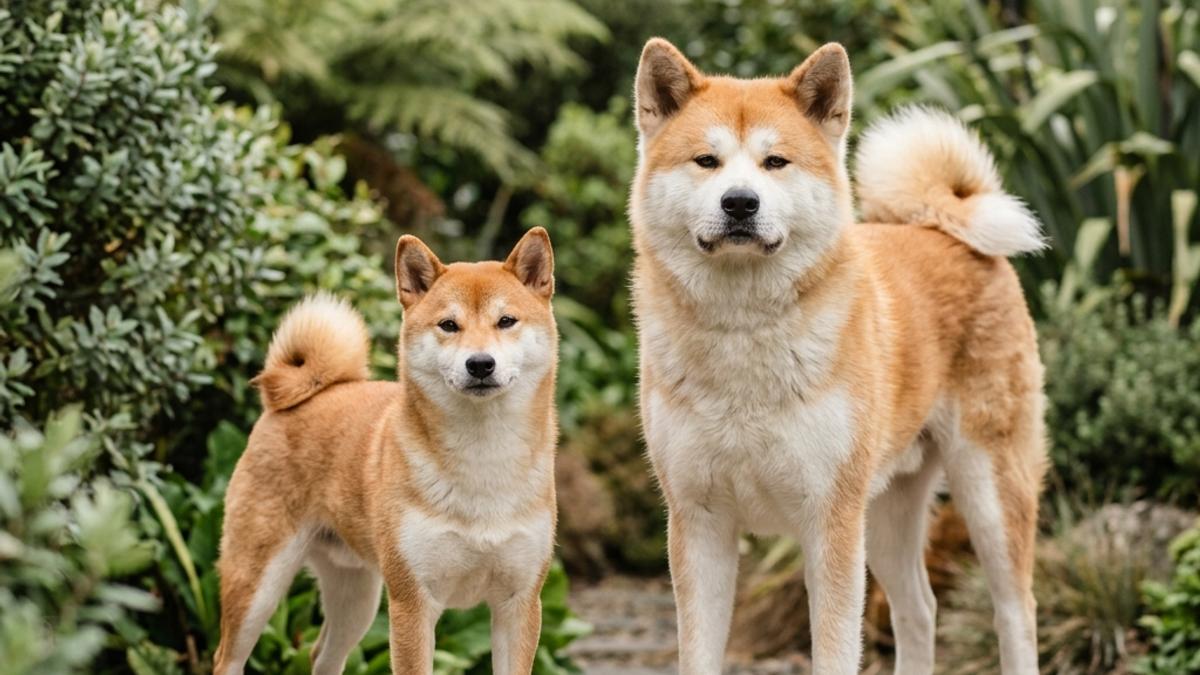
Akitas carry a different weight. In Japan, the Akita is a national symbol — a monument to loyalty (the famous story of Hachiko, who waited at a train station for his owner for nearly a decade, was an Akita). Akitas are deeply devoted to their family but can be dominant, territorial, and aggressive toward other dogs, particularly same-sex dogs. They were originally used for hunting large game including boar and bear, and their prey drive and power should not be underestimated. An Akita that's not properly socialised and managed by a confident owner can become a serious management problem.
Size: a significant practical gap
This comparison has one of the largest size differentials of any two breeds routinely confused with each other. A male Akita can weigh 45–59 kg — five to six times the weight of a small Shiba Inu at 7–9 kg. This matters for:
- Strength management: An unsocialised or reactive Akita on leash requires physical strength to control
- Cost of ownership: Food, vet care, and boarding all scale with body weight
- Space requirements: Akitas need a large, securely fenced section — a 1.2m fence is not adequate for a determined Akita
- Heat management: Like other large-bodied double-coated breeds, Akitas can struggle with NZ's warm summers
The Shiba Inu, at 7–11 kg, is much more manageable in typical NZ suburban and apartment contexts.
Grooming
Both breeds have dense double coats that shed heavily twice a year — the famous seasonal "blowout." During these periods, daily brushing is essential for both. Outside of blowouts:
- Shiba Inu: Weekly brushing is generally sufficient. They're known for self-grooming and staying clean.
- Akita: 2–3 times a week brushing is needed due to the denser, thicker coat. The Akita scores ★★★★☆ on grooming needs vs ★★★☆☆ for the Shiba.
Both are otherwise low-maintenance — minimal bathing needed (every 2–3 months or when dirty).
Training and handling
Both breeds score ★★★☆☆ on trainability — they're intelligent but wilful.
The Shiba Inu learns quickly but may choose not to comply unless there's a compelling reason (usually treats or clear value for the dog). Recall training is critical and should be established early, as Shibas have a strong hunting instinct and will follow a scent at speed. They should be on-lead or in securely fenced areas in public. See our dog recall training guide.
The Akita requires firm, consistent handling from puppyhood. First-time dog owners should think carefully before taking on an Akita — their size, strength, and dominant tendencies require a confident, experienced handler. They respond well to clear structure and reward-based training but will push boundaries if they sense weakness or inconsistency. Early and ongoing socialisation with people and other animals is non-negotiable.
Who each breed suits in NZ
Shiba Inu suits you if:
- You live in a NZ apartment, townhouse, or suburban home with outdoor access
- You want a compact, independent, low-maintenance (mostly) companion
- You can provide 45–60 minutes of exercise and mental stimulation daily
- You have experience with dogs and understand the Shiba's "selective compliance"
- You want a long-lived (12–16 year), healthy breed
Akita suits you if:
- You have a large, securely fenced property with ample space
- You have previous experience with dominant, strong-willed breeds
- You can commit to early and ongoing socialisation
- You don't have other dogs (Akitas can be dog-aggressive, especially same-sex)
- You want a profoundly loyal, deeply bonded one-family dog
Neither suits you if:
- You're a first-time dog owner expecting an easy, biddable companion
- You want a breed that's reliably off-lead safe in public
Use our Find a Breed tool to compare across more criteria, and see our new dog owner guide for first-time owner tips.
NZ availability
Both breeds are available in NZ but require research to find responsible breeders. The New Zealand Kennel Club maintains a breeder directory. Given the Akita's specific management requirements, it's important to source from a breeder who health-tests and socialises pups from birth, and to meet the parent dogs before purchase.
Quick takeaways
- Shiba is compact (7–11 kg) and apartment-adaptable; Akita is large (32–59 kg) and requires significant space and experience
- Both are independent, loyal, and aloof with strangers — typical Japanese breed character
- Akita requires experienced handling and careful socialisation due to size, strength, and potential dog-aggression
- Both shed heavily twice yearly; otherwise relatively low grooming maintenance
- Shiba suits more NZ households; Akita is for experienced owners with appropriate space
See also
- Shiba Inu breed profile
- Akita breed profile
- New dog owner guide NZ
- Dog recall training NZ
- Cost of owning a dog NZ
- Find a Breed
---
References
- American Kennel Club (AKC), Shiba Inu Breed Information: https://www.akc.org/dog-breeds/shiba-inu/
- American Kennel Club (AKC), Akita Breed Profile & Characteristics: https://www.akc.org/dog-breeds/akita/
- Merck Veterinary Manual, Patellar Luxation in Dogs and Cats: https://www.merckvetmanual.com/musculoskeletal-system/arthropathies-and-related-disorders-in-small-animals/patellar-luxation-in-dogs-and-cats
- MPI New Zealand, Code of Welfare for Dogs, checked 2026-06-05: https://www.mpi.govt.nz/animals/animal-welfare/codes/all-animal-welfare-codes/code-of-welfare-dogs/
---
*This guide provides general information. All dogs are individuals — meet the breed, talk to experienced owners, and consult a registered NZ vet before purchasing.*
Free PetMall tools
Related guides
petmall.co.nz
Shop at PetMall
The products below are practical support items for your pet. PetMall ships across New Zealand.
- Dog FoodStart with food that matches your dog's life stage and activity level — and change brands slowly over 7–10 days.
- Dog TreatsTraining rewards and everyday treats — small, soft pieces work best for consistent reinforcement.
- Dog ToysA small rotation of chew, fetch, and puzzle toys usually works better than buying a large variety at once.
- Dog GroomingA gentle brush and the right shampoo make maintenance easier — especially for dogs that get muddy on walks.
- Leads & HarnessesComfort matters: padded contact points and adjustable fit help reduce rubbing on longer walks or tramping weekends.
- Flea & Worm TreatmentFor NZ conditions, look for protection that fits your routine (monthly vs longer-lasting) and your dog's weight range.