Corgi vs Shetland Sheepdog NZ: Which Smart Herding Breed Is Right for You?
Pembroke Welsh Corgi or Shetland Sheepdog? Both are intelligent, active herding dogs popular in NZ. Compare size, trainability, noise level and family fit to choose your match.
Two of the most popular herding breeds in New Zealand — and two of the most vocal. The Pembroke Welsh Corgi and the Shetland Sheepdog (Sheltie) are both highly intelligent, athletic small-to-medium dogs that were bred to control livestock. That herding background means both have strong instincts to herd things — children, cats, other dogs, and sometimes their owners' feet — and both are enthusiastic barkers. Neither is a low-maintenance small dog.
Quick comparison
| Pembroke Welsh Corgi | Shetland Sheepdog | |
|---|---|---|
| Size | Small-medium — 10–14 kg, 25–30 cm | Small-medium — 5–11 kg, 33–41 cm |
| Coat | Medium double coat — heavy seasonal shedding | Long, rough outer coat + dense undercoat |
| Energy level | High | High |
| Trainability | Very high | Very high |
| Barking tendency | Moderate-high | High — alert barkers |
| Herding instinct | Strong — will herd children and pets | Strong — vocal herding style |
| Good with kids? | Yes, supervision needed re: nipping heels | Yes, with socialisation |
| NZ price estimate | Price on enquiry (registered breeders) | $1,000–$2,000 |
Full profiles: Pembroke Welsh Corgi · Shetland Sheepdog
The herding instinct — and what it means in your home
Both breeds were selected for intelligence and the drive to control moving things. In a modern NZ household with no sheep to herd, that instinct redirects to:
- Children — both breeds may nip at the heels of running children (a herding action, not aggression, but still unacceptable). Needs early training and supervision.
- Other pets — cats and small dogs may find themselves rounded up.
- You — both breeds may use barking as a tool to direct your behaviour, especially when they want a walk.
This herding drive is manageable with consistent training and mental stimulation. Both breeds excel in dog sports (agility, herding trials, obedience competition) that give the instinct a legitimate outlet.
Temperament
Pembroke Welsh Corgi: confident, bold and direct. Corgis are affectionate but have a terrier-adjacent independence streak. They're playful, enjoy a game, and are strongly bonded to their family — but they're not as sensitive as a Sheltie and have less emotional need for reassurance. Corgis can be pushy and opinionated. They were working dogs that had to make decisions in the field without constant handler input, and that shows in their character. They do not suit households that want a submissive small dog.
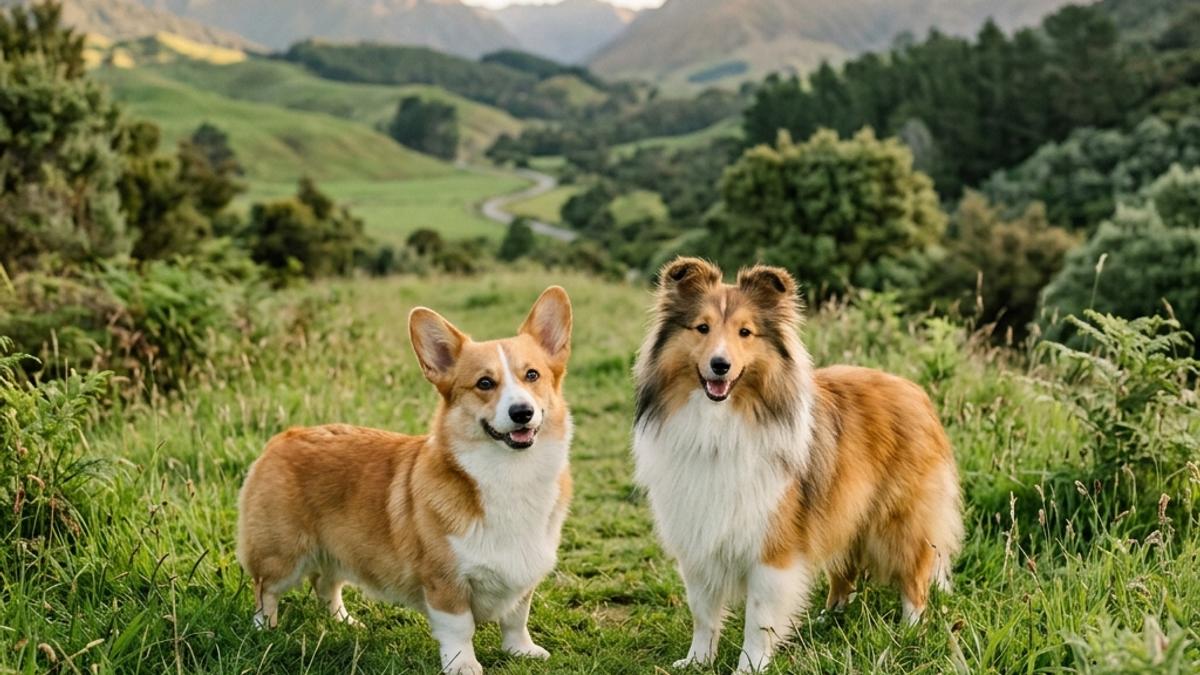
Shetland Sheepdog: more sensitive and biddable. Shelties are deeply attuned to their owner's emotions and moods — they're often described as having a "shadow" quality, following their person and checking in constantly. They're gentle with people they trust but can be reserved with strangers — some Shelties are genuinely shy, particularly around loud or sudden stimuli. Shelties respond very well to positive, gentle training; harsh corrections create anxiety. They're affectionate and soft in a way Corgis typically aren't.
For NZ families with young children: both need supervision around running children due to heel-nipping tendency. The Corgi's bolder temperament can be easier to manage consistently; the Sheltie's sensitivity means it can be easily overwhelmed by a very chaotic household.
Exercise and mental stimulation
Both breeds need at least 45–60 minutes of real exercise daily plus mental engagement. They're not big dogs but they have working-dog energy and intelligence.
Corgi: loves to run, play fetch and engage physically. Their long body and short legs are deceptive — they're fast and have real stamina. Swimming is fine (some Corgis enjoy it) but their low centre of gravity makes them less natural swimmers than long-legged breeds.
Sheltie: enjoys agility, fetch and herding sports. They're quick and light-footed. Off-leash reliability depends heavily on training — both breeds have enough working-dog instinct to be distracted by birds, bicycles and other moving targets. Reliable recall training is important for both. See our dog recall training NZ guide.
Barking
Both breeds bark more than average. This is worth taking seriously in NZ's denser urban and apartment environments.
Corgi: alerts to visitors, sounds and movement. With training and mental stimulation, barking can be reduced to manageable levels. "Quiet" commands respond well to reward training.
Sheltie: more persistent and reactive barkers. Shelties are classic alert-barkers — they will announce anything they consider suspicious, including neighbours walking past, distant sounds and birds landing in the garden. This is one of the most common complaints from Sheltie owners in urban NZ environments. If NZ council noise bylaws or thin apartment walls are a concern, the Corgi is the more manageable choice.
Grooming
Corgi: the thick double coat sheds heavily, particularly in spring and autumn. Weekly brushing, more frequently during blow-outs. The coat is shorter than a Sheltie's and easier to manage. Bath every 4–6 weeks.
Sheltie: the long, rough outer coat and dense undercoat require brushing 2–3 times weekly to prevent matting, particularly in the collar region (the "mane") and behind the ears. Seasonal shedding is heavy. Professional grooming every 2–3 months is recommended for owners who want a well-presented coat. Both breeds benefit from a deshedding tool during coat change season. See our dog brush types NZ guide.
Health
*General information only — consult a registered NZ vet for your dog's specific health care.*
Pembroke Welsh Corgi is prone to hip dysplasia, degenerative myelopathy (DM — a progressive neurological disease; DNA testable), and intervertebral disc disease (IVDD) linked to their long-spine structure. Some lines also carry a gene mutation (MDR1/ABCB1) affecting drug metabolism — relevant for NZ flea, tick and heartworm treatments. Buy from DM-tested, hip-scored lines and inform your vet of MDR1 status. Average lifespan 12–15 years.
Shetland Sheepdog is prone to Collie Eye Anomaly (CEA — DNA testable), progressive retinal atrophy (PRA), hip dysplasia and MDR1/ABCB1 drug sensitivity (same as Corgi, very common in herding breeds). Reputable NZ Sheltie breeders DNA screen for CEA and PRA. Average lifespan 12–15 years.
Which breed suits you?
Choose a Corgi if:
- You want a confident, bold, opinionated small herding breed with a more independent streak
- Barking is a concern and you want the more manageable option of the two
- You prefer a shorter coat that's easier to brush (though still heavy shedding)
- You like the Corgi's physical look and bold personality
Choose a Shetland Sheepdog if:
- You want a highly sensitive, biddable herding dog that's responsive to gentle training
- You're interested in dog sports (agility, obedience) where Shelties excel
- You don't mind (or enjoy) the emotional attunement — they'll know when you're upset
- You accept the heavier grooming commitment and persistent barking tendency
Quick takeaways
- Both are intelligent, active, vocal herding dogs — not low-maintenance small breeds
- Corgis are bolder and more independent; Shelties are more sensitive and biddable but louder
- Both nip at heels of running children due to herding instinct — early training is essential
- Shelties are heavier barkers than Corgis — relevant for NZ apartments and close-packed suburban homes
- Both carry MDR1/ABCB1 drug sensitivity gene — inform your NZ vet
- Grooming: Corgi is easier; Sheltie needs more frequent brushing to prevent mats
Related reading
- Pembroke Welsh Corgi breed profile NZ
- Shetland Sheepdog breed profile NZ
- Dog Recall Training NZ
- Dog Brush Types NZ
- Best Family Dog Breeds NZ
- Find your perfect breed
---
Two health points worth knowing before you choose
Shetland Sheepdog — MDR1 (ABCB1) drug sensitivity. Shelties are one of the herding breeds that carry the ABCB1-1∆ mutation, which stops the P-glycoprotein transporter clearing certain drugs from the brain. Affected dogs can react badly to some worming, antiparasitic, sedative and anti-cancer medicines at ordinary doses. It is a simple cheek-swab DNA test — ask any NZ Sheltie breeder whether the parents were tested, and tell your vet the breed before any prescription.
Pembroke Welsh Corgi — the back. The corgi's short legs come from chondrodystrophy, the same build that makes short-legged breeds the ones most commonly affected by intervertebral disk disease. Practically, that means discouraging repeated jumping down off furniture or out of cars, keeping weight off, and taking any sudden reluctance to jump, wobbliness or yelping to a vet promptly rather than waiting.
References
- American Kennel Club — Pembroke Welsh Corgi breed standard, checked 2026-07-08: https://www.akc.org/dog-breeds/pembroke-welsh-corgi/
- American Kennel Club — Shetland Sheepdog breed standard (size, coat, herding temperament): https://www.akc.org/dog-breeds/shetland-sheepdog/
- Cornell University College of Veterinary Medicine, Riney Canine Health Center — Drug sensitivity: MDR1 (Shetland Sheepdogs listed among affected breeds; affected drug classes): https://www.vet.cornell.edu/departments-centers-and-institutes/riney-canine-health-center/canine-health-topics/drug-sensitivity-mdr1
- Merck Veterinary Manual — Degenerative Diseases of the Spinal Column and Cord in Animals (intervertebral disk disease in chondrodystrophoid breeds): https://www.merckvetmanual.com/nervous-system/diseases-of-the-spinal-column-and-cord/degenerative-diseases-of-the-spinal-column-and-cord-in-animals
---
*This guide provides general breed-comparison information for NZ prospective dog owners. Health information is general only — consult a registered NZ vet for advice specific to your dog.*
Free PetMall tools
Related guides
petmall.co.nz
Shop at PetMall
The products below are practical support items for your pet. PetMall ships across New Zealand.
- Dog FoodStart with food that matches your dog's life stage and activity level — and change brands slowly over 7–10 days.
- Dog TreatsTraining rewards and everyday treats — small, soft pieces work best for consistent reinforcement.
- Dog ToysA small rotation of chew, fetch, and puzzle toys usually works better than buying a large variety at once.
- Dog GroomingA gentle brush and the right shampoo make maintenance easier — especially for dogs that get muddy on walks.
- Leads & HarnessesComfort matters: padded contact points and adjustable fit help reduce rubbing on longer walks or tramping weekends.
- Flea & Worm TreatmentFor NZ conditions, look for protection that fits your routine (monthly vs longer-lasting) and your dog's weight range.