Rough Collie vs Old English Sheepdog NZ: Two Gorgeous Herding Dogs Compared
Rough Collie (Lassie dog) or Old English Sheepdog in NZ? Both need serious grooming, but they're very different in trainability, size, and temperament. Here's which suits your household.
Both the Rough Collie and the Old English Sheepdog (OES) are iconic long-coated herding breeds — visually striking, instantly recognisable, and both associated with significant grooming commitments. If you're drawn to either breed's look and wondering which is actually the better fit, here's how they genuinely differ.
At a glance
| Rough Collie | Old English Sheepdog | |
|---|---|---|
| Weight | 18–34 kg | M: 32–45 kg / F: 27–39 kg |
| Lifespan | 12–14 years | 10–12 years |
| NZ price (registered breeder) | $1,500–$3,500+ | $1,500–$4,000 |
| Friendliness | ★★★★★ | ★★★★ |
| Trainability | ★★★★★ | ★★★★ |
| Energy | ★★★ | ★★★ |
| Grooming needs | ★★★★★ | ★★★★★ |
| Apartment life | ★★★ | ★★ |
| With kids | ★★★★★ | ★★★★★ |
| With other pets | ★★★★ | ★★★★ |
The trainability difference
Both score 4–5 stars on trainability, but the difference matters. The Rough Collie scores 5/5; the OES scores 4/5.
Rough Collie: Widely regarded as one of the most responsive herding breeds to human direction. The Lassie films reflect something real — Rough Collies are attentive, eager to please, and remarkably sensitive to their owner's emotional state and cues. Training sessions with a Rough Collie tend to progress quickly; they retain commands well and are forgiving of novice training mistakes.
Old English Sheepdog: Intelligent and trainable, but more independently-minded. They can be clownish and distracted during training — requiring more patience and consistency than a Rough Collie. Experienced dog owners often enjoy this character; first-time owners may find it frustrating. An OES that hasn't had consistent early training is noticeably harder to manage at maturity.
The trainability difference is particularly relevant in New Zealand's off-lead environments (parks, beaches, DOC tracks). Rough Collies generally develop more reliable recall; OES dogs require ongoing reinforcement.
Size difference
Rough Collie: 18–34 kg — a wide range that reflects the variation between lean working lines and heavier show lines. Most NZ pet Rough Collies fall in the 20–28 kg range.
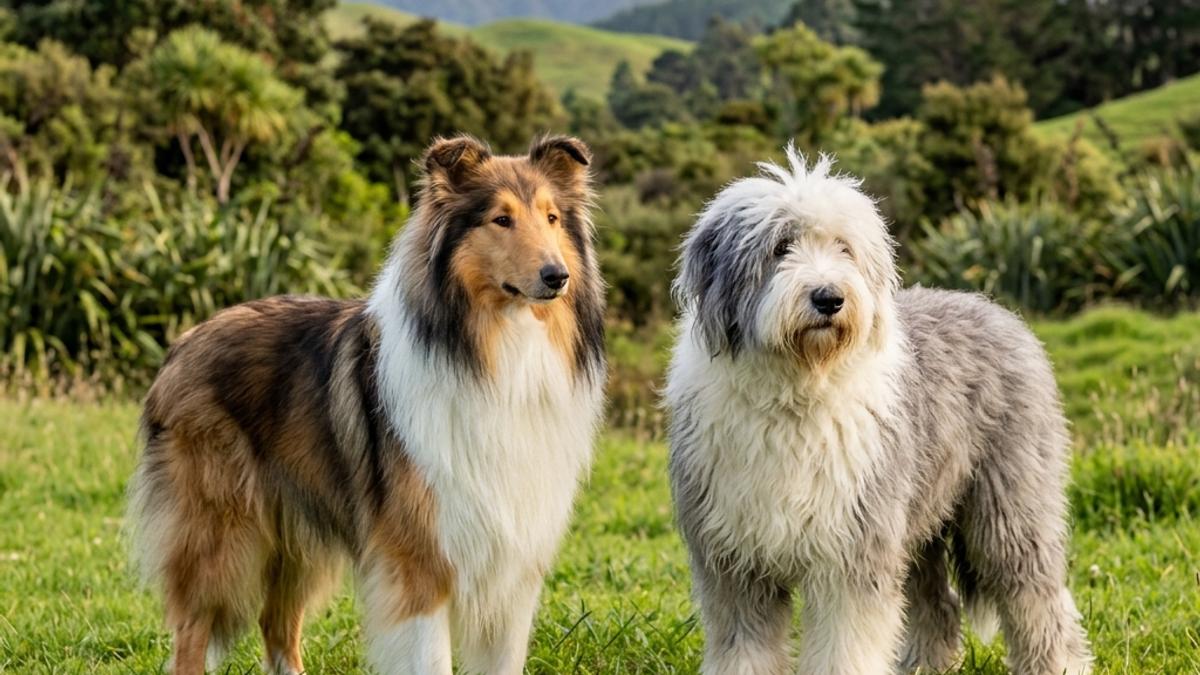
Old English Sheepdog: 32–45 kg (males) — noticeably larger and heavier than most Rough Collies. This matters for apartment suitability (OES scores 2/5 vs Rough Collie's 3/5), food costs, and the physical strength required to walk and manage them.
Grooming: both are maximum-commitment coats
Both breeds score 5/5 on grooming — the maximum. Neither is a sensible choice for an owner who isn't prepared for regular significant grooming commitment.
Rough Collie: The long, harsh outer coat with a soft, dense undercoat requires brushing to the skin 3–4 times a week. Without this, the dense undercoat mats at the skin level in a way that is not visible from above — by the time you see a problem on the surface, the mat is already severe underneath. In NZ's damp winters (particularly Wellington, Otago, Canterbury), a damp coat that isn't dried and brushed properly can develop skin issues beneath the mat.
Old English Sheepdog: Similar requirement — daily brushing is not an exaggeration during heavy shedding, and several times a week at minimum otherwise. The OES coat is even more prone to matting than the Rough Collie's. Professional grooming every 6–8 weeks is strongly recommended for NZ OES owners who can't maintain the coat themselves. Many owners opt to clip the OES coat shorter for manageability — this is aesthetically a departure from the iconic shaggy look but significantly reduces maintenance burden.
Both breeds shed heavily during seasonal changes. NZ homes with light-coloured flooring or light-coloured furniture will show this.
Sensitivity differences
Rough Collie: Notably sensitive to household tension, raised voices, and rough handling. They respond poorly to harsh training methods — punishment-based approaches cause shutdown behaviours rather than compliance. They thrive with calm, consistent, reward-based training and owners who understand this sensitivity.
Old English Sheepdog: Still sensitive, but generally less reactive to environmental stressors than Rough Collies. Their bouncier, more clownish personality handles chaos better.
NZ availability
Both breeds are present in New Zealand but not common. Rough Collie breeders in NZ are more numerous than OES breeders, but still fewer than mainstream breeds. Waiting lists exist for both. Check Dogs New Zealand (NZKC) for current registered breeders.
Which is right for you?
Choose a Rough Collie if:
- You want the most trainable, responsive long-coated herding dog
- You have (or want to learn) the grooming commitment required
- You prefer a lighter, leaner dog
- You can provide a calm, consistent training environment
- You want a longer average lifespan (12–14 years vs 10–12)
Choose an Old English Sheepdog if:
- You want a larger, bolder herding breed with a clownish personality
- You enjoy a dog that's less sensitive and more adaptable to busier households
- The OES's distinctive appearance is specifically what draws you
- You're prepared to invest in professional grooming (the OES coat particularly benefits from it)
Neither is right if:
- You're not genuinely prepared for the grooming commitment (both breeds will develop painful skin problems if not properly maintained)
- You want a low-shed, low-maintenance breed
- You live in an apartment without a generous outdoor space
NZ herding breed context
Both breeds have herding instincts that can manifest as circling or nudging behaviour with children. This is instinct, not aggression — but it needs management and training from puppyhood. In NZ suburban sections, both breeds do well; both need secure fencing for the herding drive.
Related guides
- Best family dog breeds NZ
- Best dog breeds for cold South Island homes NZ
- How to groom your dog at home NZ
- Dog brush types NZ
- Find a breed tool
- Compare breeds tool
---
One thing to tell your vet before any worming or anaesthetic
Rough Collies are the breed most associated with the MDR1 (ABCB1) gene variant, which changes how a dog clears several commonly used drugs — including some parasite treatments and sedatives. Cornell's Riney Canine Health Center explains that affected dogs can react severely to doses other breeds tolerate, and that a simple cheek-swab DNA test identifies carriers and affected dogs. The variant has been found in several herding breeds, so it is worth asking about for either breed.
For a New Zealand owner the practical step is small: test before you need the information, and tell your vet the result before a worming, heartworm-prevention or anaesthetic protocol is chosen — not after.
References
- Dog Control Act 1996: https://www.legislation.govt.nz/act/public/1996/0013/latest/whole.html
- American Kennel Club — Collie breed page (size, coat, temperament, exercise needs): https://www.akc.org/dog-breeds/collie/
- American Kennel Club — Old English Sheepdog breed page: https://www.akc.org/dog-breeds/old-english-sheepdog/
- Cornell University Riney Canine Health Center — MDR1 drug sensitivity: https://www.vet.cornell.edu/departments-centers-and-institutes/riney-canine-health-center/canine-health-topics/drug-sensitivity-mdr1
---
*Profile scores sourced from PetMall breed profiles. NZ price ranges are indicative; confirm with current registered breeders. Not a substitute for veterinary or groomer advice.*
Free PetMall tools
Related guides
petmall.co.nz
Shop at PetMall
The products below are practical support items for your pet. PetMall ships across New Zealand.
- Dog FoodStart with food that matches your dog's life stage and activity level — and change brands slowly over 7–10 days.
- Dog TreatsTraining rewards and everyday treats — small, soft pieces work best for consistent reinforcement.
- Dog ToysA small rotation of chew, fetch, and puzzle toys usually works better than buying a large variety at once.
- Dog GroomingA gentle brush and the right shampoo make maintenance easier — especially for dogs that get muddy on walks.
- Leads & HarnessesComfort matters: padded contact points and adjustable fit help reduce rubbing on longer walks or tramping weekends.
- Flea & Worm TreatmentFor NZ conditions, look for protection that fits your routine (monthly vs longer-lasting) and your dog's weight range.