Why Does My Cat Scratch the Furniture? NZ Guide to Redirecting It
Cats scratch furniture for normal, healthy reasons. Why they do it and how to redirect scratching onto a post — without punishment. NZ owner's guide.
The quick answer: scratching is a normal, healthy, necessary cat behaviour — not naughtiness or spite. Cats scratch to maintain their claws, stretch their muscles, and mark territory with scent and visible marks. You can't (and shouldn't) stop it; the goal is to redirect it onto something better than your couch. Declawing is not the answer — it's an amputation and is not part of responsible cat care in New Zealand.
Why cats scratch
- Claw care — sheds the outer nail husk and keeps claws healthy.
- Stretching — a full-body stretch through the shoulders and back.
- Marking — paws have scent glands; scratch marks are both a scent and a visual "I was here".
- Feeling good — it's satisfying and helps cats de-stress.
So a scratching cat is a normal cat. The job is to give it the *right* target.
How to redirect it
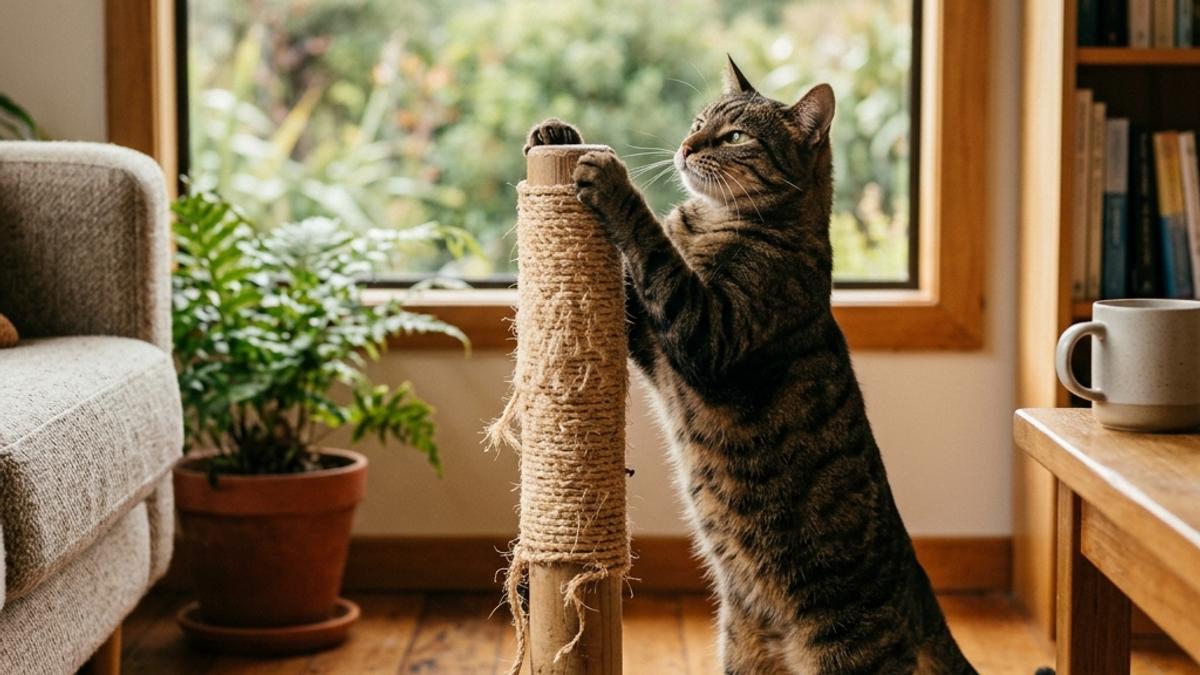
- Provide the right posts. Offer both tall, sturdy vertical posts (tall enough for a full stretch and stable enough not to wobble) and horizontal scratchers (cardboard or sisal mats) — cats have preferences. A cat tree covers both.
- Put them where it matters. Place a post right next to the furniture they target, and near sleeping spots (cats love to scratch after waking).
- Make the post the better option. Use sisal rope or cardboard (textures cats love), and make it appealing with catnip or play around it. Reward your cat for using it.
- Make the furniture boring. Temporarily cover targeted spots with double-sided sticky tape or a throw, or use a feline pheromone product. Once the cat prefers the post, remove the deterrents.
- Keep claws trimmed. Regular trims reduce damage (and snagging).
What NOT to do
- Don't punish, yell or use water sprays — it causes fear and stress and doesn't teach where to scratch. Stressed cats often scratch *more*.
- Don't declaw. It removes the last bone of each toe, causes pain and long-term problems, and is rejected by NZ welfare and veterinary best practice.
When to take note
A sudden surge in scratching, or scratching paired with spraying/urine marking, often signals stress (a new pet, baby, move, or neighbourhood cat). Address the stressor and add enrichment. If your cat seems anxious or the change is sudden, a vet or feline behaviourist can help. For other body-language cues, see why do cats knead.
Quick takeaways
- Scratching is normal and necessary — redirect it, don't punish it.
- Offer tall vertical posts and horizontal scratchers near the targeted furniture.
- Make the post appealing (sisal, catnip) and the furniture boring (tape/throw).
- Never declaw — it's an amputation, not nail care.
- A sudden spike in scratching can signal stress → add enrichment, see a vet/behaviourist.
Shop related categories at PetMall
Looking for sturdy scratching posts and cat trees in New Zealand? Browse the PetMall cat range for current options and nationwide delivery.
Related reading
References
- VCA Animal Hospitals — Scratching Behavior in Cats: Various Approaches (scratching is normal; redirect onto posts, declawing not supported), checked 2026-07-09: https://vcahospitals.com/know-your-pet/scratching-behavior-in-cats
- International Cat Care — Scratching on furniture and carpets (offer an alternative matching the targeted surface's texture and vertical/horizontal orientation), checked 2026-07-09: https://icatcare.org/articles/scratching-on-furniture-and-carpets
Important notice
*General behaviour information for NZ owners. A sudden change in scratching or marking can have stress or medical causes — see a registered NZ vet.*
Free PetMall tools
Related guides
petmall.co.nz
Shop at PetMall
The products below are practical support items for your pet. PetMall ships across New Zealand.
- Cat FoodStart with food that matches your cat's life stage — change brands slowly over 7–10 days to avoid digestive upset.
- Cat LitterClumping or crystal, most cats prefer an unscented litter and a clean tray — one tray per cat plus one spare is the NZ rule of thumb.
- Cat TreatsGreat for bonding and training — keep treats under 10% of daily calories to protect your cat's waistline.
- Cat ToysA small rotation of toys (feather wand, puzzle feeder, and comfort toy) usually works better than buying many at once.
- Cat GroomingRegular brushing cuts hairballs and shedding — essential for long-haired breeds like Ragdolls and British Longhairs.
- Flea & Worm TreatmentFor NZ conditions, choose protection that fits your cat's weight and lifestyle (indoor vs outdoor) and keep it regular.