Turkish Angora vs RagaMuffin NZ: Which Silky Long-Haired Cat Is Right for You?
Turkish Angora or RagaMuffin? Both are silky-coated, affectionate NZ cats — but very different in energy level and personality. Compare to find your match.
Two beautiful, silky-coated cats that appeal to NZ owners who want an elegant long-haired breed without the extreme grooming demands of a Persian. The Turkish Angora and the RagaMuffin (a close relative of the Ragdoll) share a soft, flowing coat — but their personalities sit at opposite ends of the activity spectrum. One is lively, athletic and interactive; the other is famously docile and lap-focused.
Quick comparison
| Turkish Angora | RagaMuffin | |
|---|---|---|
| Build | Medium, athletic, fine-boned | Large, muscular, substantial |
| Coat | Medium-long, single silky coat | Long, plush dense coat |
| Energy level | High — active and playful | Low–moderate — famously calm |
| Temperament | Curious, intelligent, interactive | Extremely gentle, lap-focused |
| Vocality | Moderate — soft and musical | Quiet |
| Good with kids? | Yes, with active children | Excellent — very tolerant |
| Good with other pets? | Yes, adaptable | Yes — gentle with all |
| NZ price estimate | $1,200–$2,500 | $1,500–$2,800 |
| Grooming | Moderate — minimal matting (single coat) | Low–moderate — coat resists matting; weekly combing (CFA) |
Full profiles: Turkish Angora · RagaMuffin
Appearance
Turkish Angora: one of the oldest natural cat breeds — originating in Turkey where white was the historical standard, though NZ and international lines now come in many colours (solid, tabby, tortoiseshell). They're elegantly built — fine-boned, long-tailed and athletic-looking. The single silky coat drapes the body without the Persian's volume. Classic Turkish Angoras have striking eyes (including odd-eye — one blue, one amber — in white cats).
RagaMuffin: a large-to-massive breed with a broad head, wide chest and dense, plush coat. They look like a fluffier, somewhat heavier Ragdoll (which is essentially what they are — the RagaMuffin was developed from Ragdoll lines). Their eyes are large and walnut-shaped. They come in a wide range of colours and patterns. The overall impression is of a soft, round, substantial cat.
The personality difference
Turkish Angora: lively, intelligent and interactive. Turkish Angoras are often compared to dogs in their engagement — they follow their owners around, learn to fetch, are fascinated by moving objects, and will investigate anything new in their environment. They're affectionate but on their own terms — they'll engage enthusiastically when they want to, and move on when something more interesting presents. They enjoy play and need mental stimulation; a bored Turkish Angora will find its own entertainment.
RagaMuffin: among the most placid of all cat breeds. RagaMuffins are known for going "limp" when picked up (the same characteristic as the Ragdoll), complete acceptance of handling, and genuine contentment to sit on laps or be held for extended periods. They're not demanding, not destructive when under-stimulated and not particularly vocal. What they are: deeply affectionate, reliably gentle and very easy to live with.
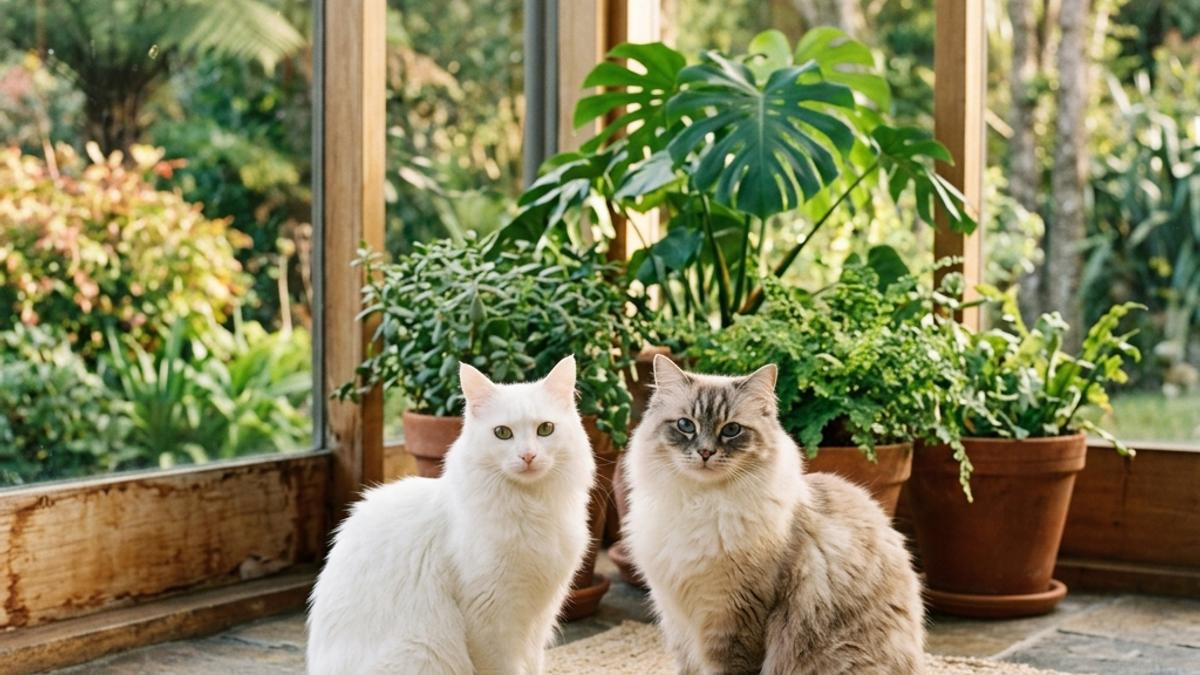
For NZ families: the RagaMuffin suits households that want a reliably calm, child-friendly lap cat. The Turkish Angora suits households that want an active, engaging companion who participates in daily life.
Grooming
Turkish Angora: the single-layer silky coat is a significant advantage — it doesn't mat the way a Persian or RagaMuffin double coat does. Brushing 2–3 times weekly is generally sufficient. Seasonal shedding is moderate. This is one of the lower-maintenance long-haired breeds in terms of actual grooming effort.
RagaMuffin: less work than the plush coat suggests. The CFA breed page is explicit that, despite the long coat, RagaMuffins do not need daily grooming because the fur tends to resist tangles and mats — weekly combing with a long-toothed comb is the recommended routine, and bathing is not usually needed. In practice, still check the friction points (armpits, belly, behind the collar) each week, because those areas mat first on any long-haired cat regardless of coat type.
In NZ's humid northern regions (Auckland, Northland), both long-haired breeds benefit from more frequent brushing during summer — humidity can make coats more prone to tangling.
Exercise and enrichment
Turkish Angora: needs daily interactive play and mental engagement. Puzzle toys, fetch games and cat trees with perching options keep a Turkish Angora content. Without stimulation, they'll become restless and inventive in undesirable ways (opening cupboards, knocking things off surfaces). A companion cat who matches their energy level works well.
RagaMuffin: genuinely low-key. Short daily play sessions are appreciated but a RagaMuffin is not distressed by a quiet day. They enjoy toys but don't demand them. They do well as the only cat in a household if their owner provides affection and calm interaction. They're not destructive when bored the way a Turkish Angora can be.
Health considerations
*General information only — consult a registered NZ vet for your cat's specific health care.*
Turkish Angora: generally a healthy, long-lived breed. The one thing to check before you buy is hearing. The Merck Veterinary Manual describes congenital deafness as highly prevalent in white cats carrying the dominant white pigmentation gene, especially those with blue eyes (blue-eyed Siamese and related breeds are a noted exception). The mechanism explains why the two travel together: the pigment gene suppresses the melanocytes the inner ear depends on, the stria vascularis degenerates in the first 1–3 weeks of life, and the cochlea follows. This is a purchase decision more than a management problem — a deaf cat needs to live indoors or in a fully cat-proofed run. Merck notes hearing testing becomes reliable from about 3–4 weeks of age, when a kitten's responses to sound are predictable, and that a BAER (brainstem auditory evoked response) test at a referral centre is the most accurate method — behavioural "does it turn to a clap" checks miss one-sided deafness entirely. Average lifespan 12–18 years.
RagaMuffin: the CFA describes the breed as sturdy and healthy with no breed-specific genetic disease, thanks to the wide domestic-longhair background it was built from — but the same page notes RagaMuffins can still carry the two heritable conditions their Ragdoll-side ancestry is known for, which is why responsible breeders genetic-test breeding cats:
- Hypertrophic cardiomyopathy (HCM) — the most common feline heart disease, affecting as many as one cat in seven, and largely silent: Merck notes that many affected cats show no clinical signs until heart failure, an aortic thromboembolism, or sudden death. Mutations in the cardiac myosin-binding protein C gene (*MYBPC3*) have been identified in Ragdolls and Maine Coons, so a Ragdoll-derived breed is a reasonable place to ask about screening.
- Polycystic kidney disease (PKD) — an autosomal dominant inherited trait in Persian, Persian-cross and domestic longhair cats per Merck, with liver cysts in some affected animals. Because it is dominant, one affected parent is enough; a DNA test on the parents settles it.
Average lifespan 12–16 years.
What to ask an NZ breeder
- White Turkish Angora kitten: "Has this kitten had a BAER hearing test, and can I see the result for both ears?" (One-sided deafness is invisible without it.)
- RagaMuffin: "Are both parents PKD DNA-tested, and has either parent had a cardiologist echocardiogram?" A DNA test rules PKD in or out permanently; HCM screening is a point-in-time echo, so ask when it was last done rather than treating one clear scan as lifetime cover.
- Either breed: ask what the breeder does if a health problem shows up after purchase — a written health guarantee is normal practice with NZCF-registered breeders.
Cost in NZ
Both are specialty breeds:
- Turkish Angora: $1,200–$2,500 from reputable NZ breeders; less common than Ragdolls, potentially with longer waitlists
- RagaMuffin: $1,500–$2,800 from health-tested NZ breeders
Which breed suits you?
Choose a Turkish Angora if:
- You want an active, interactive, intelligent cat that participates in daily life
- Lower-maintenance grooming (single coat, less matting) is appealing
- You enjoy the elegance of a slender, athletic long-haired cat
- You're prepared for enrichment and play time as a daily requirement
Choose a RagaMuffin if:
- You want the calmest, most docile large cat available
- Children or elderly household members need a very tolerant, gentle companion
- You prefer a cat that's happy to be lap-focused and unhurried
- Weekly combing suits you (the RagaMuffin coat resists matting, but it is still a long-haired cat)
Quick takeaways
- Turkish Angora: active, intelligent, interactive — lower-matting single coat but needs daily play and enrichment
- RagaMuffin: calm, docile, lap-focused — the easiest large cat temperamentally, and the coat resists matting (weekly combing per CFA)
- Both are silky long-haired breeds suitable for NZ apartments and families
- Turkish Angora white cats with blue eyes: congenital deafness is highly prevalent in this group (Merck) — insist on a BAER test result for both ears
- RagaMuffin: ask for a PKD DNA test on both parents and a dated cardiologist echocardiogram for HCM
- Both are long-lived (12–18 years) with manageable health profiles from quality lines
Related reading
- Turkish Angora breed profile NZ
- RagaMuffin breed profile NZ
- Persian vs Norwegian Forest Cat NZ
- Maine Coon vs Ragdoll NZ
- Best Cat Breeds for First-Time Owners NZ
- Cat hub — breeds and guides
---
References
- TICA — Turkish Angora breed standard, checked 2026-07-08: https://tica.org/breed/turkish-angora/
- Cat Fanciers' Association — RagaMuffin breed page (coat care, health, temperament), checked 2026-08-26: https://cfa.org/breed/ragamuffin/
- Merck Veterinary Manual — Deafness in Animals (white cats with blue eyes; stria vascularis mechanism; BAER testing), checked 2026-08-26: https://www.merckvetmanual.com/ear-disorders/deafness/deafness-in-animals
- Merck Veterinary Manual — Deafness in Cats (hearing testing reliable from 3–4 weeks), checked 2026-08-26: https://www.merckvetmanual.com/cat-owners/ear-disorders-of-cats/deafness-in-cats
- Merck Veterinary Manual — Hypertrophic Cardiomyopathy in Dogs and Cats (prevalence, MYBPC3 in Ragdoll/Maine Coon), checked 2026-08-26: https://www.merckvetmanual.com/circulatory-system/cardiomyopathy-in-dogs-and-cats/hypertrophic-cardiomyopathy-in-dogs-and-cats
- Merck Veterinary Manual — Renal Anomalies in Animals (polycystic kidneys, autosomal dominant in Persian and domestic longhair cats), checked 2026-08-26: https://www.merckvetmanual.com/urinary-system/congenital-and-inherited-anomalies-of-the-urinary-system/renal-anomalies-in-animals
---
*This guide provides general breed-comparison information for NZ cat owners. Health information is general only — consult a registered NZ vet for advice specific to your cat.*
Free PetMall tools
Related guides
petmall.co.nz
Shop at PetMall
The products below are practical support items for your pet. PetMall ships across New Zealand.
- Cat FoodStart with food that matches your cat's life stage — change brands slowly over 7–10 days to avoid digestive upset.
- Cat LitterClumping or crystal, most cats prefer an unscented litter and a clean tray — one tray per cat plus one spare is the NZ rule of thumb.
- Cat TreatsGreat for bonding and training — keep treats under 10% of daily calories to protect your cat's waistline.
- Cat ToysA small rotation of toys (feather wand, puzzle feeder, and comfort toy) usually works better than buying many at once.
- Cat GroomingRegular brushing cuts hairballs and shedding — essential for long-haired breeds like Ragdolls and British Longhairs.
- Flea & Worm TreatmentFor NZ conditions, choose protection that fits your cat's weight and lifestyle (indoor vs outdoor) and keep it regular.