Puppy vs Adult Dog in NZ: Which Should You Get?
Puppy or adult dog in NZ? Compare time, cost, training and predictability to choose the right fit for your household — plus adoption considerations.
The quick answer: a puppy suits households with time and energy for intensive early training, socialisation and toilet training, and who want to shape a dog from the start. An adult dog suits people who want a more predictable temperament and size, less round-the-clock work, and often a faster, calmer settling-in — many adult rescues are already house-trained. Neither is "better"; it depends on your time, budget and what you can commit to.
Quick comparison
| Factor | Puppy | Adult dog |
|---|---|---|
| Time in first months | Very high (toilet training, nights, socialisation) | Lower; often already house-trained |
| Temperament/size | Unknown until grown | Known and visible now |
| First-year cost | Higher (desexing, vaccines, gear) | Often lower, especially via adoption |
| Training | Blank slate, but constant work | May need re-training, but often calmer |
| Settling in | Weeks of routine-building | Often quicker, though some need decompression |
Choosing a puppy
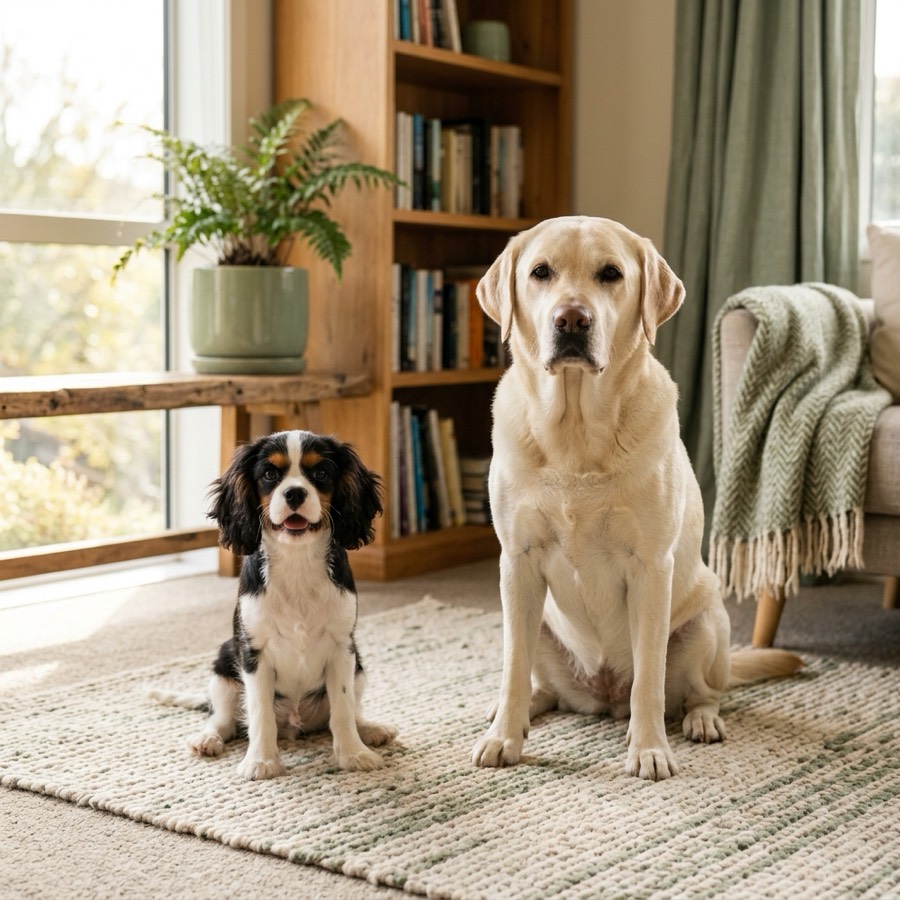
Pros: you shape early socialisation and habits; you get the full journey. Cons: it's a big time commitment — frequent toileting, broken nights, teething, and a critical socialisation window before ~16 weeks. Adult size and temperament are still a prediction. Budget for a higher first year. See how much does a dog cost in NZ? and the new dog owner first 30 days NZ guide.
Choosing an adult dog
Pros: what you see is closer to what you get — size, coat and broad temperament are visible. Many adult dogs (especially rescues) are already toilet-trained and past the chewing-everything stage, so daily life can be easier sooner. Cons: there may be unknown history or learned habits to work through, and some need a quiet "decompression" period to settle. Adoption fees are usually lower and often include desexing, microchipping and vaccinations.
NZ context
Whichever you choose: register with your council by 3 months (puppies) or promptly (adults), microchip, and budget for ongoing costs. If you're still deciding which breed or type fits your home, our best dogs for first-time owners NZ list and the Find a Breed tool help narrow it down.
Quick takeaways
- Puppy = maximum shaping, maximum early work and unknown adult outcome.
- Adult dog = more predictable, often easier sooner, frequently lower cost via adoption.
- Be honest about your time in the first few months — that's the deciding factor.
- Either way: register, microchip and budget for ongoing care.
Related reading
- How Much Does a Dog Cost in NZ?
- New Dog Owner First 30 Days NZ
- Best Dogs for First-Time Owners NZ
- Dog breeds in NZ
References
- AAHA — 2019 Canine Life Stage Guidelines (puppy = birth to end of rapid growth ~6–9 months; young adult until physical/social maturity ~3–4 years), checked 2026-07-09: https://www.aaha.org/resources/life-stage-canine-2019/
- AVSAB — Puppy Socialization Position Statement (the primary socialization window is the first three months of life), checked 2026-07-09: https://avsab.org/wp-content/uploads/2018/03/Puppy_Socialization_Position_Statement_Download_-_10-3-14.pdf
Important notice
*General information for NZ pet owners. For temperament or health assessment of a specific dog, consult a registered NZ vet or the rescue organisation.*
Free PetMall tools
Related guides
petmall.co.nz
Shop at PetMall
The products below are practical support items for your pet. PetMall ships across New Zealand.
- Dog FoodStart with food that matches your dog's life stage and activity level — and change brands slowly over 7–10 days.
- Dog TreatsTraining rewards and everyday treats — small, soft pieces work best for consistent reinforcement.
- Dog ToysA small rotation of chew, fetch, and puzzle toys usually works better than buying a large variety at once.
- Dog GroomingA gentle brush and the right shampoo make maintenance easier — especially for dogs that get muddy on walks.
- Leads & HarnessesComfort matters: padded contact points and adjustable fit help reduce rubbing on longer walks or tramping weekends.
- Flea & Worm TreatmentFor NZ conditions, look for protection that fits your routine (monthly vs longer-lasting) and your dog's weight range.