Flea & Worm Treatment for Cats NZ (2026): Spot-On vs Oral, What Works
Complete guide to flea and worm treatments for NZ cats. Compare spot-on vs oral options, understand permethrin toxicity risks, and master whole-home control.
Managing fleas and internal parasites in New Zealand cats requires a consistent, multi-layered approach. Both topical spot-on applications and oral treatments provide highly effective parasite control, provided they use registered active ingredients, are administered continuously year-round, and are paired with thorough home environmental management. Because over ninety percent of a flea population exists in carpets, bedding, and furnishings as eggs and larvae, treating the cat alone without cleaning the living environment inevitably leads to persistent re-infestation.
Understanding the differences between product formats, seasonal parasite dynamics, and critical feline safety rules ensures your cat remains protected throughout every life stage.
---
Spot-on vs Oral vs Extended-Duration Treatments
Modern feline parasiticides target external ectoparasites (fleas, ticks, and mites) as well as internal endoparasites (roundworms, hookworms, and tapeworms). Choosing the most suitable format depends on your cat's temperament, lifestyle, and administration preferences:
1. Topical Spot-On Solutions
Topical spot-on treatments remain the most widely used format for domestic cats. The liquid is applied directly to the skin at the base of the skull or back of the neck, where the cat cannot groom it off.
- Mechanism: Depending on the active ingredient, the compound either translocates across the skin's lipid layer to kill fleas on contact (such as fipronil or imidacloprid) or is absorbed systemically into the bloodstream to target both external fleas and internal nematodes (such as selamectin or moxidectin).
- Best For: Cats that strongly resist taking oral tablets or chews, and households seeking broad-spectrum all-in-one monthly coverage.
2. Oral Tablets and Chewables
Oral flea and worm treatments are ingested and absorbed into the cat's systemic circulation.
- Mechanism: Adult fleas absorb the active compound while taking a blood meal, rapidly disrupting their nervous system before they can lay viable eggs.
- Best For: Multi-pet households where cats groom each other, families with young children where topical skin residues are a concern, and cats with skin sensitivities.
3. Extended-Duration Formulations
Advances in isoxazoline chemistry (such as fluralaner) have introduced extended-duration formulations that provide multi-month protective windows from a single administration. These formulations help eliminate coverage gaps caused by forgotten doses. Consult your veterinary team to evaluate which delivery format aligns best with your cat's specific health profile.
---
⚠️ Critical Warning: Dog Flea Treatments Are Lethal to Cats (Permethrin Toxicity)
The single most dangerous parasite control mistake in a multi-pet home is applying canine flea products to cats. High-concentration permethrin and related synthetic pyrethroids are commonly included in over-the-counter dog spot-on treatments to repel and kill ticks and fleas.
However, permethrin is extremely toxic to felines.
The Biological Mechanism
Cats have a unique liver metabolism characterised by a severe deficiency in the glucuronosyltransferase enzyme pathway. While dogs easily metabolise and excrete permethrin, the feline liver cannot break it down. When exposed, the compound accumulates rapidly, binding to voltage-gated sodium channels in nerve membranes and causing continuous, uncontrollable nerve excitation.
Clinical Signs of Poisoning
Exposure occurs when an owner mistakenly applies a dog product to a cat, or when a cat grooms a dog that has recently received a canine spot-on treatment. Symptoms develop rapidly and include:
- Severe muscle tremors and twitching (especially around the face and ears)
- Hypersalivation (excessive drooling) and dilated pupils
- Ataxia (loss of coordination and stumbling)
- High body temperature (hyperthermia from muscle tremors) or hypothermia
- Severe generalised seizures and respiratory arrest
Permethrin toxicity is a medical emergency requiring immediate, aggressive veterinary hospitalisation. Rule of thumb: Never use any flea or worm product on a cat unless the packaging explicitly states "For Cats Only." In multi-pet homes, isolate treated dogs from cats until the application site is completely dry.
---
Safe Treatment Protocols for Kittens
Kittens are especially vulnerable to parasite burdens. A heavy flea infestation can rapidly drain a young kitten's red blood cell volume, resulting in life-threatening flea-induced anaemia, lethargy, and hypothermia. Furthermore, roundworms (*Toxocara cati*) are frequently transmitted to kittens via maternal milk.
However, young kittens have delicate organ systems and cannot tolerate adult parasiticide concentrations:
- Check Product Minimums: Every parasiticide has specific, legally mandated minimum age and body weight thresholds printed on the label. Never estimate or guess a kitten's weight.
- Avoid Off-Label Dosing: Never split adult cat pipettes or attempt to administer partial doses to a kitten.
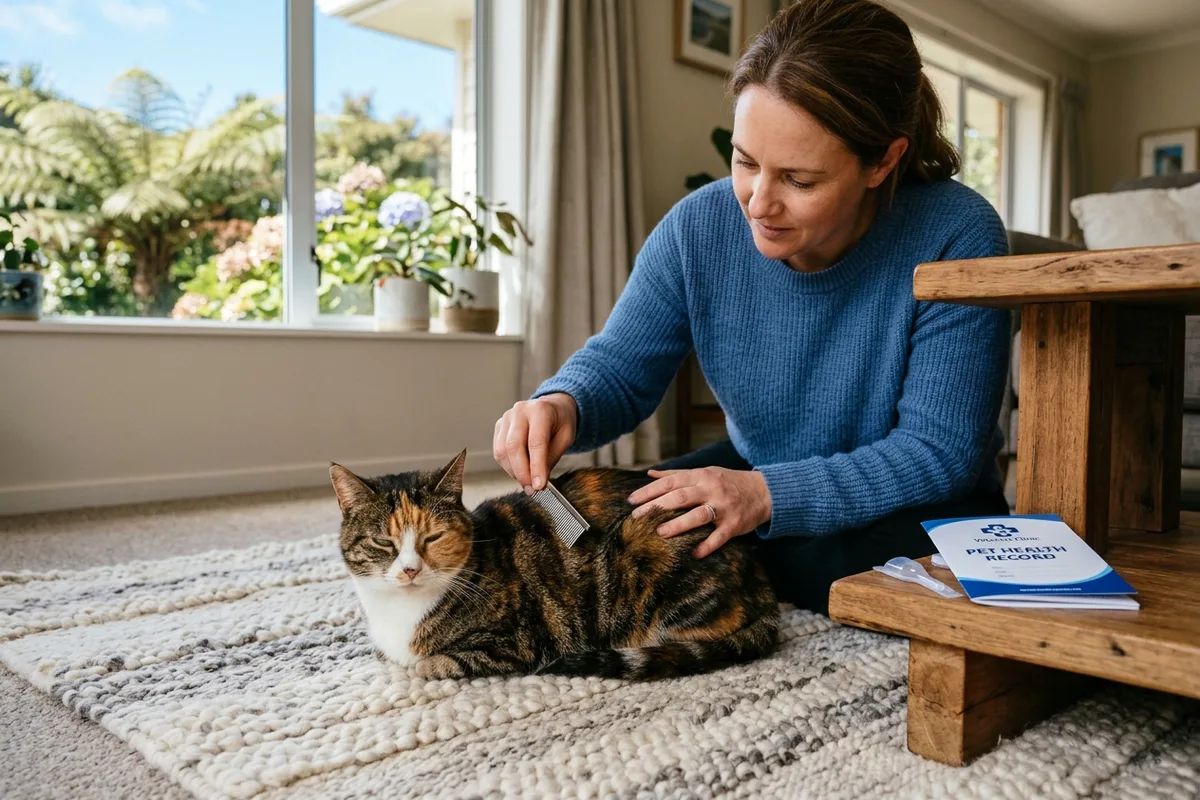
- Physical Control in Young Kittens: If a young kitten falls below the minimum safety threshold for chemical spot-ons, use a fine-toothed metal flea comb twice daily, dipping the comb into warm soapy water to trap fleas, and consult your veterinarian for kitten-safe intervention strategies.
---
Environmental Control: Treating the Home Alongside the Cat
A common frustration is discovering live fleas days after applying treatment. This occurs because adult fleas on the cat represent only five percent of the total infestation. The remaining ninety-five percent lives within your home environment:
- Adult Fleas (5%): Living directly on your pets and actively feeding.
- Flea Eggs (50%): Laid on the pet and scattered into carpets, pet beds, and floorboards.
- Flea Larvae (35%): Burrowing deep into carpet piles and feeding on organic debris.
- Flea Pupae (10%): Encased in resilient, chemical-resistant cocoons waiting to hatch.
Breaking the Environmental Life Cycle
- Wash Bedding Regularly: Wash all pet bedding, blankets, and removable cushion covers in hot water (above 60°C) weekly to destroy eggs and feeding larvae.
- Frequent Vacuuming: Thoroughly vacuum carpets, skirting boards, and underneath furniture. The vibration and warmth of vacuuming stimulate dormant pupae to hatch, exposing them to environmental control or the treated pet. Immediately dispose of the vacuum bag or empty the canister outdoors.
- Synchronise All Household Pets: If you have multiple cats or dogs, treat every animal in the home on the exact same date. An untreated pet acts as an ongoing reservoir.
---
Year-Round Protection in New Zealand's Climate
New Zealand's temperate maritime climate creates unique challenges for parasite management. In regions like Auckland, Northland, and the Bay of Plenty, winter temperatures rarely drop low enough to kill outdoor flea populations. Furthermore, indoor heat pumps, double glazing, and carpeted floors provide ideal microclimates for fleas to reproduce through all twelve months of the year.
Relying solely on "summer-only" flea control creates chronic seasonal infestations. Maintaining consistent, year-round preventive coverage is the most reliable way to prevent flea allergy dermatitis (FAD) and tapeworm transmission. For broader parasite management strategies, explore our comprehensive flea and tick prevention guide and overview of flea treatment types, which apply across common companion breeds including the Domestic Shorthair.
---
Frequently Asked Questions
What is the best flea and worm treatment for cats in NZ?
There is no single "best" brand for every feline. The most effective treatment is one that matches your cat's lifestyle (indoor versus outdoor), covers both internal and external parasites, fits your administration preference (spot-on versus oral), and is applied consistently according to the manufacturer's schedule. Consult your veterinary clinic to select an approved veterinary-grade product.
How often do I need to treat my cat for fleas and worms?
Most standard topical spot-on and oral treatments require application every four weeks (monthly), though some extended-duration formulations last up to three months. Intestinal worming frequency depends on the cat's age, hunting habits, and whether the primary flea product includes an all-in-one anthelmintic component.
Can I use a small amount of dog flea treatment on my cat?
No, absolutely not. Dog flea treatments frequently contain high concentrations of permethrin, which is fatal to cats even in tiny quantities. Never use dog treatments, split dog pipettes, or allow cats to groom dogs with wet topical treatments.
Why does my cat still have fleas after applying treatment?
When flea pupae hatch in carpets and upholstery, newly emerged fleas jump onto your cat before coming into contact with the active ingredient. It can take several weeks of continuous treatment and environmental vacuuming to fully deplete the reservoir of developing pupae in the home.
---
Sources
- Merck Veterinary Manual. Plant-Derived Insecticide Toxicosis in Animals (Permethrin Toxicity in Cats), checked 2026-09-02: https://www.merckvetmanual.com/toxicology/insecticide-and-acaricide-organic-toxicity/plant-derived-insecticide-toxicosis-in-animals
- Merck Veterinary Manual. Ectoparasiticides Used in Small Animals, checked 2026-09-02: https://www.merckvetmanual.com/pharmacology/ectoparasiticides/ectoparasiticides-used-in-small-animals
- Companion Animal Parasite Council (CAPC). General Flea Guidelines and Control Strategies, checked 2026-09-02: https://capcvet.org/guidelines/fleas/
- European Scientific Counsel Companion Animal Parasites (ESCCAP). Guideline 03: Control of Ectoparasites in Dogs and Cats, checked 2026-09-02: https://www.esccap.org/guidelines/gl3/
Free PetMall tools
Related guides
petmall.co.nz
Shop at PetMall
The products below are practical support items for your pet. PetMall ships across New Zealand.
- Flea & Worm TreatmentFor NZ conditions, choose protection that fits your cat's weight and lifestyle (indoor vs outdoor) and keep it regular.
- Flee Flea Natural Flea ControlA natural, diet-and-environment approach to flea control — popular with households avoiding spot-on chemicals.
- Cat FoodStart with food that matches your cat's life stage — change brands slowly over 7–10 days to avoid digestive upset.
- Cat LitterClumping or crystal, most cats prefer an unscented litter and a clean tray — one tray per cat plus one spare is the NZ rule of thumb.
- Cat TreatsGreat for bonding and training — keep treats under 10% of daily calories to protect your cat's waistline.
- Cat ToysA small rotation of toys (feather wand, puzzle feeder, and comfort toy) usually works better than buying many at once.
- Cat GroomingRegular brushing cuts hairballs and shedding — essential for long-haired breeds like Ragdolls and British Longhairs.