Flea Treatment Types NZ: Spot-On, Oral, Collar and Environmental Options
Flea treatment types NZ draft guide: compare spot-on, oral, collars and home/environment options, with vet-first safety notes for dogs and cats.
Flea treatment types in NZ include spot-on liquids, oral tablets or chews, flea collars, shampoos or sprays, and environmental control for bedding, carpets and outdoor resting areas. The right option depends on species, age, weight, health status, other medicines, household pets and local parasite risk. Because flea products are medicines or pesticide-style treatments, choose with a NZ vet or qualified pet-health professional, especially for cats, puppies, kittens, pregnant animals, seniors or unwell pets.
Quick comparison
| Type | Look for | Avoid |
|---|---|---|
| Spot-on treatment | Correct species and weight band, clear NZ label | Dog products used on cats, guessing weight |
| Oral tablet or chew | Vet-suitable option for the pet's age and health | Giving alongside other meds without advice |
| Flea collar | Safety release where relevant, correct fit, current product | Old collars, tight fit, use on wrong species |
| Shampoo or spray | Short-term support only when appropriate | Treating heavy infestations with shampoo alone |
| Environmental control | Washing bedding, vacuuming, treating the home if advised | Only treating the pet while the house remains infested |
Species safety comes first
Never assume a flea product is safe across species. Cats are not small dogs, and dog-only parasite products can be dangerous to cats. Use the label exactly, match the weight band, and keep treated animals separated if the label says to until the product dries or the risk period has passed.
SPCA NZ's responsible cat ownership advice treats parasite treatment as part of regular cat care, but product choice still needs care. If you are unsure, ask your vet before applying anything.
Spot-on treatments
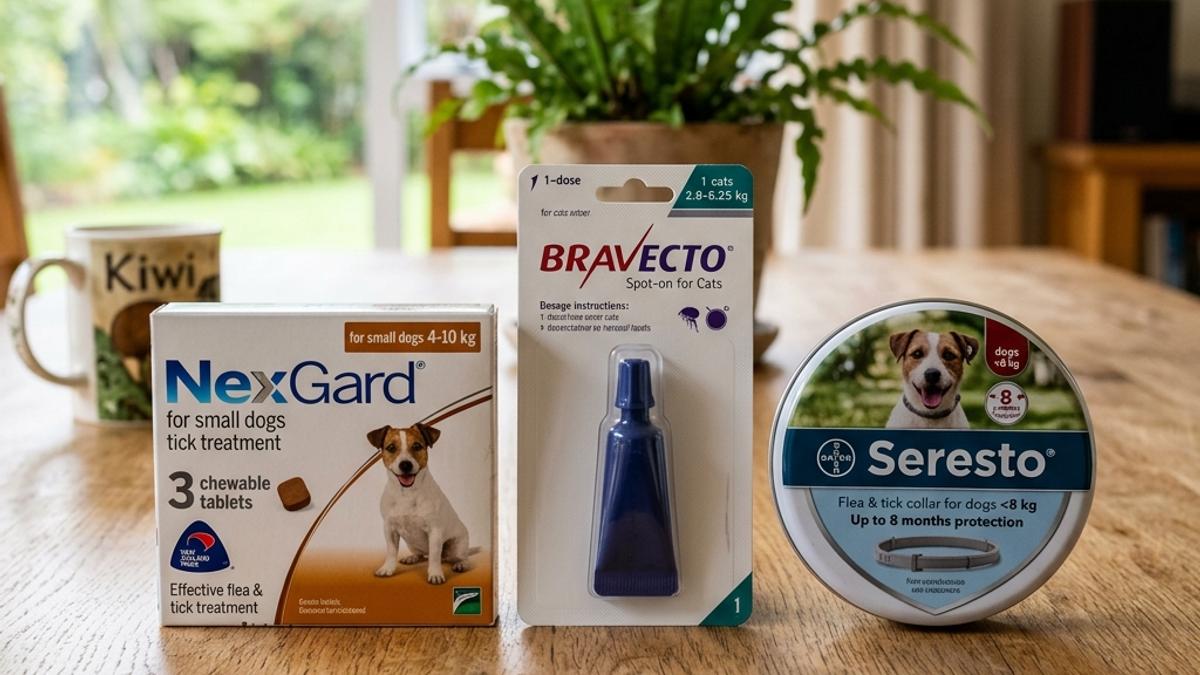
Spot-on treatments are applied to the skin, commonly between the shoulders or along the back depending on product instructions. They are popular because they are easy to use and do not require a tablet. The important checks are species, weight, age, whether the coat is dry, and whether other pets can lick the site.
Avoid splitting large doses between small pets, using expired product, bathing at the wrong time around application, or applying to irritated skin without advice.
Oral treatments
Oral tablets and chews can be tidy for dogs that swim, need frequent baths, or live with cats that might groom treated fur. They still need correct species, weight and health checks. Some pets with food sensitivities, medical conditions or other medicines need vet guidance before oral parasite products.
If a pet vomits after a dose or refuses the chew, ask the clinic or product support line what to do rather than repeating a dose.
Collars, shampoos and sprays
Flea collars vary widely. Some are long-acting parasite products; others are weak or outdated. Check the label, fit and safety features. A collar that is too tight can rub, and one that is too loose can catch or be chewed.
Shampoos and sprays may reduce visible fleas briefly, but they rarely solve a household infestation alone. They can also irritate skin if overused or used on the wrong animal. If the pet is itchy, losing hair, has sores, or is very young or old, get vet advice.
Home and environment control
SPCA NZ summer advice notes that only a small part of a flea population may be visible as adults on the pet, with other life stages in the environment. That is why bedding, carpets, couches, kennels and favourite sleeping spots matter. Wash bedding, vacuum thoroughly and follow professional advice for household products if needed.
In warm, humid NZ homes, fleas can persist beyond obvious summer peaks. Multi-pet homes need a plan for every cat and dog, not just the animal currently scratching.
What to look for
- NZ-appropriate product with clear species, age and weight instructions.
- Vet guidance for cats, puppies, kittens, pregnant pets, seniors and unwell pets.
- A whole-house plan if fleas are already established.
- Calendar reminders so treatment is not forgotten.
- Skin checks after use, especially in pets with previous reactions.
What to avoid
- Dog flea products on cats.
- Guessing weight or dose.
- Combining products without vet advice.
- Using old, expired or unlabelled treatments.
- Relying on shampoo alone for an infestation.
Related reading
Shop category
Quick takeaways
- Flea products are treatment products, so this page needs editorial review before publishing.
- Species and weight matching are non-negotiable.
- Cats need special caution around dog flea products.
- Heavy infestations usually need both pet and environment control.
- Ask a NZ vet before combining products or treating vulnerable pets.
References
- SPCA NZ, Responsible cat ownership, checked 2026-06-13: https://www.spca.nz/advice-and-welfare/article/responsible-cat-ownership
- SPCA NZ, Keeping pets safe in summer, checked 2026-06-13: https://www.spca.nz/advice-and-welfare/article/keeping-pets-safe-in-summer
- Merck Veterinary Manual, "Fleas in Dogs and Cats" — most of a flea population lives off the host as eggs, larvae and pupae in the environment, so complete control of an established infestation typically takes 2–3 months and requires treating every pet in the household; checked 2026-07-07: https://www.merckvetmanual.com/integumentary-system/fleas-and-flea-allergy-dermatitis/fleas-in-dogs-and-cats
Free PetMall tools
Related guides
petmall.co.nz
Shop at PetMall
The products below are practical support items for your pet. PetMall ships across New Zealand.
- Flea & Worm TreatmentFor NZ conditions, look for protection that fits your routine (monthly vs longer-lasting) and your dog's weight range.
- Flee Flea Natural Flea ControlA natural, diet-and-environment approach to flea control — popular with households avoiding spot-on chemicals.
- Dog FoodStart with food that matches your dog's life stage and activity level — and change brands slowly over 7–10 days.
- Dog TreatsTraining rewards and everyday treats — small, soft pieces work best for consistent reinforcement.
- Dog ToysA small rotation of chew, fetch, and puzzle toys usually works better than buying a large variety at once.
- Dog GroomingA gentle brush and the right shampoo make maintenance easier — especially for dogs that get muddy on walks.
- Leads & HarnessesComfort matters: padded contact points and adjustable fit help reduce rubbing on longer walks or tramping weekends.