Can Cats Eat Leeks? NZ Safety Answer
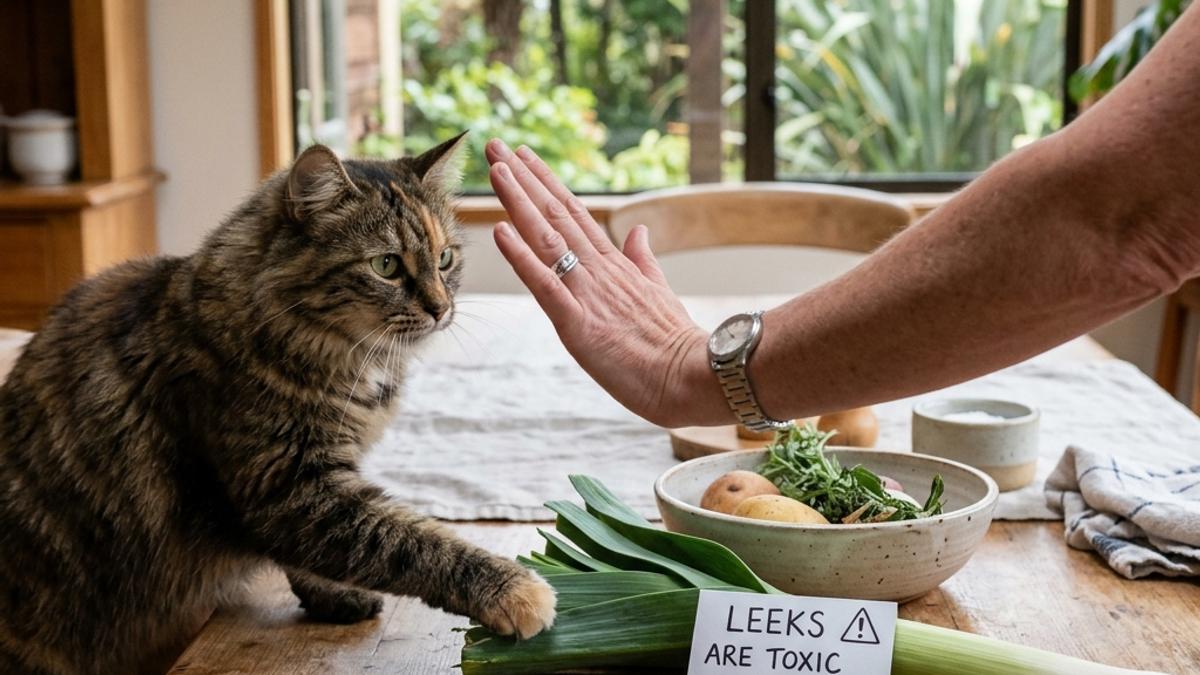
No. Leeks are toxic to cats (ASPCA, Pet Poison Helpline): Allium plants damage red blood cells, and signs of anaemia can take days to show (Merck).
Quick answer
No. Leeks are toxic to cats. ASPCA lists leek (*Allium ampeloprasum*) as toxic to cats, and the Merck Veterinary Manual says cats are the species most susceptible to *Allium* poisoning, which damages red blood cells and can cause Heinz body haemolytic anaemia. If your cat has eaten leek, contact your vet or an after-hours clinic as soon as possible rather than waiting for signs (sources checked 18 November 2026).
What the sources say about leeks and cats
| Source | What it says |
|---|---|
| ASPCA Animal Poison Control | Leek is toxic to cats, dogs and horses. Clinical signs: vomiting, breakdown of red blood cells (haemolytic anaemia, Heinz body anaemia), blood in urine, weakness, high heart rate, panting |
| Pet Poison Helpline | Leeks, onion, garlic and chives are all poisonous to dogs, cats and livestock, and cats are among the animals more sensitive to them |
| Merck Veterinary Manual | *Allium* species include garlic, onions, chives and leeks, although garlic and onions are most commonly associated with poisoning. Cats are the most susceptible species |
| VCA Animal Hospitals | Onions, garlic, chives, shallots, leeks and scallions can cause destruction of red blood cells, resulting in anaemia |
Why leeks are a problem for cats
Merck says sulfur-containing oxidants in *Allium* plants are thought to be responsible. They are released when the plant is chopped, cooked or chewed, and by gut microbes acting on it. Once absorbed, they cause oxidative damage to red blood cells, Heinz body formation and methaemoglobinaemia. Haemolysis (the breakdown of red blood cells) typically follows 3–5 days after exposure.
Merck does not treat cooked *Allium* as safe: cooking is one of the ways the compounds are released, and it reports that cats and dogs have been affected after eating raw, cooked, dehydrated or granulated onions and garlic.
How much leek is a problem
None of the four sources above gives a toxic dose for leek. The figures Merck publishes are for onion: poisoning has been reported in cats after eating less than a teaspoon of cooked onions, or 5 g/kg of raw onions. Merck adds that poisoning in cats and dogs is most commonly associated with concentrated forms such as dehydrated flakes, powders and dry onion soup mixes.
Pet Poison Helpline notes that what is toxic to a particular pet depends on factors such as the amount eaten and the size of the animal. With no published figure for leek, the practical step is the one ASPCA gives for any suspected toxic ingestion: contact your vet as soon as possible.
What happens, and when
| Time after eating | What Merck describes |
|---|---|
| Within 24 hours | Heinz body formation and methaemoglobinaemia begin |
| About 72 hours | These changes peak |
| 3–5 days | Red blood cells typically break down (haemolysis) |
| Usually a few days | Clinical signs are generally not noticed until substantial haemolysis has occurred |
This means the signs of anaemia may not appear until several days after a cat eats an *Allium* plant, so a cat that seems fine is not in the clear.
Signs to watch for
- Stomach upset: nausea, vomiting and diarrhoea (Pet Poison Helpline; ASPCA also lists vomiting).
- Lethargy, weakness, not eating and exercise intolerance (Merck).
- Fast breathing or panting and a fast heart rate (Merck; ASPCA).
- Pallor and jaundice (Merck lists pallor and icterus).
- Blood in the urine (ASPCA; Merck lists haemoglobinuria).
- Collapse. Merck also lists death among the possible outcomes.
If your cat has eaten leek
- Contact your vet or an after-hours emergency clinic as soon as possible. Merck recommends gastrointestinal decontamination when the ingestion is recent, and that is done by a vet.
- You can also call the NZ Animal Poisons Helpline on 0800 869 738. The National Poisons Centre says it is not an expert in animal poisonings and directs pet owners to their vet or this helpline. Charges apply, and the Centre's pet poisoning page lists the helpline's hours as 11am–10pm. Outside those hours, go to your vet or an after-hours clinic.
- Do not try to make your cat vomit at home. VCA says this is not advisable because there are currently no over-the-counter products that safely induce vomiting in cats, and that giving salt or hydrogen peroxide may itself cause poisoning or significant injury. Vets can induce vomiting in the clinic. The National Poisons Centre's first aid advice for an animal that is awake and alert is also "Do NOT induce vomiting".
- Be ready to say what your cat ate and how much. The National Poisons Centre says a vet may ask you to identify the poison and how much the pet has ingested.
Frequently asked questions
Can cats eat leeks?
No. ASPCA lists leek as toxic to cats, and Merck says cats are the species most susceptible to *Allium* poisoning. Eating leek can damage a cat's red blood cells and cause haemolytic anaemia.
Can cats eat leek and potato soup?
No. The soup contains cooked leek, and Merck reports that cats have been affected after eating cooked onions and garlic, which belong to the same plant group. None of the sources we checked gives a safe amount of leek for cats, so contact your vet if your cat has eaten some.
Are leeks poisonous to cats?
Yes. Pet Poison Helpline says leeks, onion, garlic and chives are all poisonous to cats, and ASPCA lists leek as toxic to cats. Signs are generally not noticed until a few days after exposure, according to Merck, so don't wait for them before contacting your vet.
Related reading
- See the full list: Foods Cats Can and Can't Eat NZ
- Cat Food Guide NZ
- Cat Care NZ Complete Guide
- New Kitten Checklist NZ
References
- ASPCA Animal Poison Control, Leek (Allium ampeloprasum): toxic to cats; clinical signs, checked 2026-11-18: https://www.aspca.org/pet-care/aspca-poison-control/toxic-and-non-toxic-plants/leek
- Merck Veterinary Manual, Garlic and Onion (Allium spp) Toxicosis in Animals: species susceptibility, onion doses, timing, clinical signs, decontamination, checked 2026-11-18: https://www.merckvetmanual.com/toxicology/food-hazards/garlic-and-onion-allium-spp-toxicosis-in-animals
- Pet Poison Helpline, Leeks: poisonous to dogs, cats and livestock; cats more sensitive; signs, checked 2026-11-18: https://www.petpoisonhelpline.com/poison/leeks/
- VCA Animal Hospitals, Household Hazards: Toxic Hazards for Cats: Allium foods; do not make cats vomit at home, checked 2026-11-18: https://vcahospitals.com/know-your-pet/household-hazards-toxic-hazards-for-cats
- National Poisons Centre (NZ), Animal Helpline: call your vet or the NZ Animal Poisons Helpline; charges apply, checked 2026-11-18: https://poisons.co.nz/animal-helpline
- National Poisons Centre (NZ), Pets Get Poisoned Too: first aid; helpline hours, checked 2026-11-18: https://poisons.co.nz/articles-and-info/all-articles/view/pets-get-poisoned-too
When to see a vet
If your cat has eaten leek or food containing leek, contact your NZ vet or an after-hours emergency clinic as soon as possible, even if your cat seems well. Do not try to make your cat vomit at home.
Important notice
*General food-safety information for NZ pet owners, checked against ASPCA, the Merck Veterinary Manual, Pet Poison Helpline, VCA and the National Poisons Centre (November 2026). For any suspected poisoning or illness, contact a NZ vet or after-hours emergency clinic.*

Free PetMall tools
Related guides
petmall.co.nz
Shop at PetMall
The products below are practical support items for your pet. PetMall ships across New Zealand.
- Cat FoodStart with food that matches your cat's life stage — change brands slowly over 7–10 days to avoid digestive upset.
- Cat LitterClumping or crystal, most cats prefer an unscented litter and a clean tray — one tray per cat plus one spare is the NZ rule of thumb.
- Cat TreatsGreat for bonding and training — keep treats under 10% of daily calories to protect your cat's waistline.
- Cat ToysA small rotation of toys (feather wand, puzzle feeder, and comfort toy) usually works better than buying many at once.
- Cat GroomingRegular brushing cuts hairballs and shedding — essential for long-haired breeds like Ragdolls and British Longhairs.
- Flea & Worm TreatmentFor NZ conditions, choose protection that fits your cat's weight and lifestyle (indoor vs outdoor) and keep it regular.