Can Cats Eat Garlic? NZ Safety Answer
Can cats eat garlic in NZ? No. Garlic is extremely toxic to cats, destroying red blood cells and causing life-threatening Heinz body anemia.
Quick answer
No. Cats should not eat garlic. Garlic is highly toxic to cats and causes oxidative damage to red blood cells, leading to hemolytic anemia.
Why
Garlic (*Allium sativum*) is one of the most toxic kitchen ingredients for cats. It belongs to the *Allium* family, which also includes onions, chives, leeks, and spring onions. Garlic is considered significantly more toxic than onions—often cited as being three to five times more potent. The toxic principles in garlic are organosulfur compounds (such as N-propyl disulfide). When ingested, these compounds are absorbed into the bloodstream, where they cause oxidative damage to the cat's red blood cells. This damage leads to the formation of Heinz bodies, making the red blood cells fragile and causing them to burst (hemolytic anemia). Because a cat's hemoglobin is particularly sensitive to oxidative damage, even tiny amounts of garlic—whether raw, cooked, dehydrated, or in powder form—can be highly dangerous.
How much is a problem
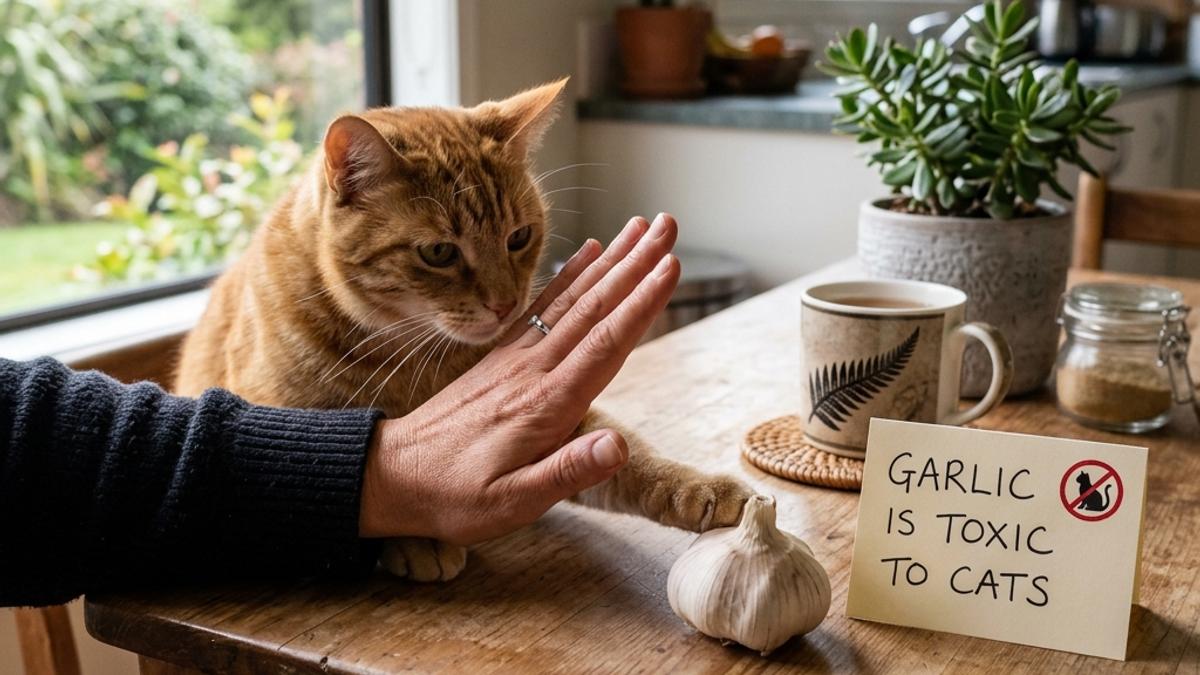
There is no safe amount of garlic for a cat. Ingestion of a single clove of garlic, or foods seasoned with garlic powder (like garlic bread, pasta sauce, or marinades), can easily cause severe allium toxicity. Symptoms can develop from a single concentrated ingestion or from small, repeated exposures over time.
If your cat has eaten it
If you know or suspect your cat ate garlic or garlic-seasoned leftovers, do not wait for symptoms to appear, as they can take 12 hours to 5 days to develop. Monitor them for signs of hemolytic anemia: pale or yellowish gums, lethargy, weakness, rapid heart rate, rapid breathing or panting, and dark orange or red-colored urine. Gastrointestinal upset (vomiting, diarrhea, drooling) may also occur.
Safer alternatives
Stick strictly to complete cat food and pet-specific treats. Avoid sharing any human table scraps that contain seasoning.
Related reading
- See the full list: Foods Cats Can and Can't Eat NZ
- Cat Food Guide NZ
- Cat Care NZ Complete Guide
- New Kitten Checklist NZ
References
- ASPCA, Garlic, checked 2026-07-16: https://www.aspca.org/pet-care/animal-poison-control/toxic-and-non-toxic-plants/garlic
- Merck Veterinary Manual, Garlic and Onion (Allium spp.) Toxicosis in Animals, checked 2026-07-16: https://www.merckvetmanual.com/toxicology/food-hazards/garlic-and-onion-allium-spp-toxicosis-in-animals
When to see a vet
If your cat has eaten garlic or garlic powder, contact your NZ vet or an emergency clinic immediately. Do not attempt to induce vomiting at home.
Important notice
*General food-safety information for NZ pet owners, reviewed against ASPCA/VCA guidance (July 2026). For any suspected ingestion or illness, contact a NZ vet, after-hours emergency clinic, or SPCA for advice.*
Free PetMall tools
Related guides
petmall.co.nz
Shop at PetMall
The products below are practical support items for your pet. PetMall ships across New Zealand.
- Cat FoodStart with food that matches your cat's life stage — change brands slowly over 7–10 days to avoid digestive upset.
- Cat LitterClumping or crystal, most cats prefer an unscented litter and a clean tray — one tray per cat plus one spare is the NZ rule of thumb.
- Cat TreatsGreat for bonding and training — keep treats under 10% of daily calories to protect your cat's waistline.
- Cat ToysA small rotation of toys (feather wand, puzzle feeder, and comfort toy) usually works better than buying many at once.
- Cat GroomingRegular brushing cuts hairballs and shedding — essential for long-haired breeds like Ragdolls and British Longhairs.
- Flea & Worm TreatmentFor NZ conditions, choose protection that fits your cat's weight and lifestyle (indoor vs outdoor) and keep it regular.