Best Wet Dog Food NZ (2026): How to Choose
Find the best wet dog food in NZ: clumping vs pâté, cuts in gravy, AAFCO & WSAVA nutrition standards, puppy to senior life stages, and transition tips.
Choosing the right diet for your dog is one of the most critical decisions you will make for their long-term health, joint mobility, and overall vitality. While dry kibble remains a staple in many New Zealand households (see also our full best dog food NZ comparison) due to its convenience and cost-effectiveness, wet dog food is rapidly gaining popularity. High-quality wet food offers a range of benefits, including exceptionally high moisture content to support kidney function, a rich aroma that appeals to picky eaters, and a softer texture that is gentle on aging teeth.
When searching for the best wet dog food in New Zealand, you must balance several essential factors, including nutritional adequacy, ingredient sourcing, life stage appropriateness, and monthly cost. This guide compares wet dog food options, explains how to evaluate ingredients, and helps you choose the healthiest option for your canine companion. For a comprehensive overview of general diet options, see our detailed dog food guide.
---
Types of Wet Dog Food Compared
Wet dog food comes in several formats, each offering different textures, nutritional densities, and price points.
1. Traditional Canned Pâté
Pâté wet food features a smooth, uniform texture where meat, fats, and essential vitamins are blended together.
- Pros: Highly concentrated nutrition, easy to digest, and easy to mix with dry kibble. It is particularly suitable for puppies transitioning to solid food and senior dogs with dental pain or missing teeth.
- Cons: The dense texture is less appealing to some dogs who prefer chunky meat bites.
- NZ Price Range: Typically $3.50 to $7.00 NZD per 400g can.
2. Cuts in Gravy or Jelly
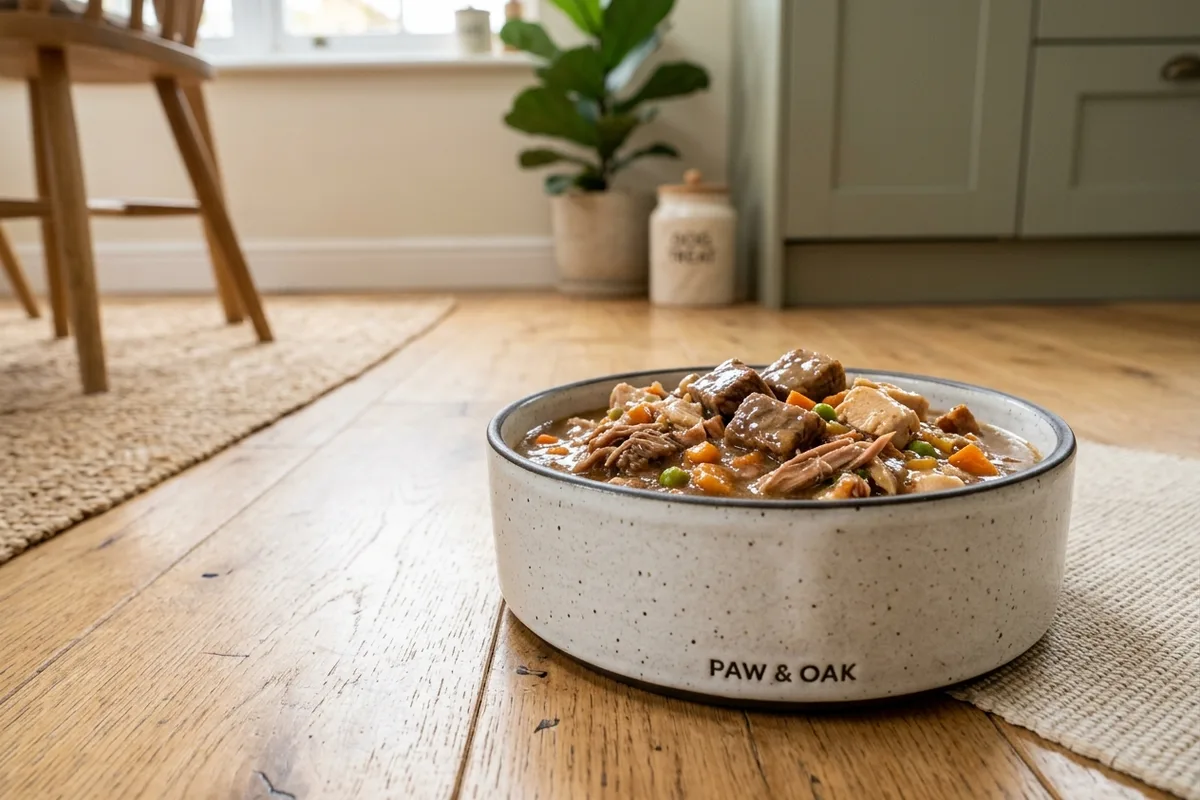
This format consists of sliced or cubed meat chunks suspended in a rich gravy or gelatinous broth.
- Pros: The gravy provides high moisture levels and a rich aroma that appeals to picky eaters. Chunky textures encourage active chewing.
- Cons: Liquid gravy can increase the volume of the product without adding significant nutrient density compared to pâté.
- NZ Price Range: Typically $4.00 to $8.00 NZD per can or pouch.
3. Raw or Fresh Roll (Chilled)
Chilled dog rolls, widely available in New Zealand supermarkets and pet stores, are gently pasteurized and packaged in plastic rolls.
- Pros: Highly convenient, easy to slice, and generally affordable. Many feature NZ-sourced proteins like lamb or beef.
- Cons: Once opened, chilled rolls have a very short shelf life (typically 7–10 days in the fridge) and must be kept refrigerated at all times.
- NZ Price Range: Typically $6.00 to $14.00 NZD per roll.
---
What to Look For (AAFCO & WSAVA Guidelines)
Not all wet dog foods are created equal. To ensure your dog receives complete nutrition, you must look beyond clever packaging and marketing claims:
1. The "Complete and Balanced" Statement
Verify that the food carries a nutritional adequacy statement certified by the Association of American Feed Control Officials (AAFCO). This statement guarantees that the food contains all essential vitamins, minerals, and amino acids in the correct ratios for your dog's life stage. Food labeled as "complementary" or "topper" is not complete and should not exceed 10% of their daily diet. Learn more about labeling rules on the AAFCO website.
2. Lifespan Appropriateness
- Puppies: Require higher protein, fat, and calcium levels to support rapid skeletal and muscle growth. Feeding adult-only wet food to puppies can stunt their growth.
- Adults: Need balanced energy maintenance to prevent obesity while preserving lean muscle mass.
- Seniors: Require lower calorie density to account for slower metabolisms, but need high-quality, easily digestible proteins to prevent muscle wastage.
3. Evaluating the Manufacturer
The World Small Animal Veterinary Association (WSAVA) recommends evaluating pet food manufacturers on their scientific expertise rather than just ingredient lists. Reputable manufacturers employ board-certified veterinary nutritionists (with PhDs or ACVN qualification) and perform rigorous quality control checks on raw materials. Review the WSAVA guidelines on selecting pet food via the WSAVA Global Nutrition Guidelines.
4. Single vs. Multi-Protein Diets
For dogs with sensitive stomachs or suspected food allergies, single-protein wet foods (like 100% lamb or 100% venison) are highly recommended. They allow you to eliminate common allergen triggers (like chicken or beef) from the diet and pinpoint exactly what ingredients cause digestive upset or itchy skin.
---
Common Mistakes to Avoid
- Relying on Unregulated Marketing Terms: Terms like "premium," "holistic," or "gourmet" are unregulated marketing buzzwords. They do not guarantee nutritional quality. Always read the guaranteed analysis and ingredient list instead.
- Neglecting Dental Health: Feeding wet food exclusively can lead to a faster buildup of dental plaque and tartar, as wet food does not offer the mild abrasive scrubbing effect of dry kibble. If feeding wet food, implement a regular teeth-brushing routine.
- Overfeeding: Wet food is highly palatable, making it easy to overfeed. Always measure portions based on your dog's target weight and calorie needs, rather than feeding by eye.
- Mixing with Table Scraps: Mixing wet food with human table scraps alters the delicate calcium-to-phosphorus ratio of the complete diet. Over time, this imbalance can lead to skeletal issues or metabolic problems.
---
NZ-Specific Storage & Winter Feeding
New Zealand's climate and household heating habits require special considerations when feeding wet dog food:
- Summer Storage: Wet food spoils rapidly once opened. In warm NZ summer months, do not leave wet food in your dog's bowl for more than 30 to 45 minutes. Any leftovers must be covered, refrigerated, and consumed within 2 to 3 days.
- Winter Feeding Temperature: Cold food straight from the fridge can be unappealing to dogs and may upset sensitive stomachs, particularly in colder regions during winter. Gently warm refrigerated wet food to room temperature before serving to enhance its natural aroma and palatability.
- Slicing Chilled Rolls: If using chilled rolls, slice the portion you need, then wrap the exposed end of the roll tightly in bees-wax wrap or cling film to prevent it from drying out or absorbing fridge odours.
---
Switching to Wet Food Safely
A sudden change in diet will disrupt your dog’s gastrointestinal system, leading to vomiting, diarrhea, or gas. Transition your dog to wet food gradually over 7 to 10 days using the following mixing ratio:
- Days 1–3: Feed 75% of the old food mixed with 25% of the new wet food.
- Days 4–6: Feed 50% of the old food and 50% of the new wet food.
- Days 7–9: Feed 25% of the old food and 75% of the new wet food.
- Day 10+: Feed 100% of the new wet food.
Monitor your dog's stool quality throughout the transition. If they experience loose stools, hold the current ratio for an extra 2–3 days before increasing the wet food portion.
---
Conclusion
Finding the best wet dog food in New Zealand means choosing a complete and balanced formula that matches your dog's life stage, backed by AAFCO and WSAVA standards. Whether used as a complete meal or a tasty topper for kibble, high-quality wet food supports hydration and muscle maintenance. To read more about dog nutrition, check our comprehensive dog food guide or visit our dogs channel for more care guides.
---
Sources
- Association of American Feed Control Officials (AAFCO). Reading labels and understanding pet food, checked 2026-06-29: https://www.aafco.org/consumers/understanding-pet-food/
- World Small Animal Veterinary Association (WSAVA). Global nutrition guidelines and selecting pet foods, checked 2026-06-29: https://wsava.org/global-guidelines/global-nutrition-guidelines/
Related guides
petmall.co.nz
Shop at PetMall
The products below are practical support items for your pet. PetMall ships across New Zealand.
- Dog FoodStart with food that matches your dog's life stage and activity level — and change brands slowly over 7–10 days.
- Dog TreatsTraining rewards and everyday treats — small, soft pieces work best for consistent reinforcement.
- Dog ToysA small rotation of chew, fetch, and puzzle toys usually works better than buying a large variety at once.
- Dog GroomingA gentle brush and the right shampoo make maintenance easier — especially for dogs that get muddy on walks.
- Leads & HarnessesComfort matters: padded contact points and adjustable fit help reduce rubbing on longer walks or tramping weekends.
- Flea & Worm TreatmentFor NZ conditions, look for protection that fits your routine (monthly vs longer-lasting) and your dog's weight range.