Why Does My Dog Bark at Nothing? NZ Guide
Why does your dog bark at nothing? Learn common NZ home triggers, what to check, and when sudden barking needs a vet or behaviour professional.
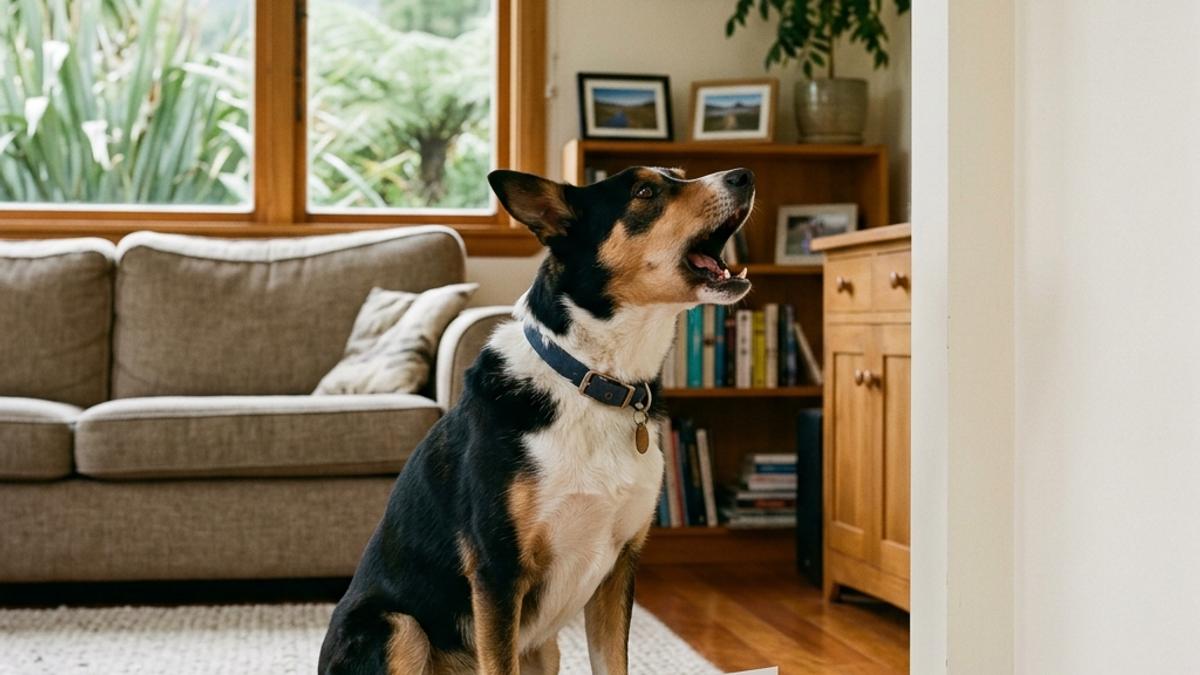
The quick answer: your dog is probably not barking at nothing. Dogs can hear, smell and notice tiny changes long before people do, so the trigger may be a neighbour, courier, possum, cat, car door, reflection, appliance noise or past association. The goal is to identify the pattern, reduce rehearsal and reward calm behaviour.
Common reasons dogs bark at "nothing"
In NZ homes, apparently random barking often comes from:
- noises outside the fence, hallway, lift or shared driveway
- birds, cats, hedgehogs or possums moving after dark
- reflections in windows or ranch sliders
- alert barking at couriers, visitors and tradies
- frustration when the dog can see something but cannot reach it
- boredom at the same time each day
- a startle response after the dog was asleep
Start with the broader behaviour plan in Dog Training and Behaviour NZ. If barking is the main issue, also read How to Stop a Dog Barking NZ, Dog Recall Training NZ and Puppy Socialisation NZ.
What to do first
Keep a simple log for three days: time, location, what the dog was doing, what happened outside and how quickly they settled. Patterns usually appear fast. Night barking may match cats on the fence, neighbour noise, wind in a gate or reflections on glass.
Do not shout back. For many dogs, human shouting sounds like joining in. Instead, calmly interrupt, move the dog away from the trigger, cue an easy behaviour such as a hand touch or mat settle, then reward quiet moments. RSPCA dog training advice focuses on reward-based teaching; the AVSAB humane training position statement also supports humane, reward-based methods over punishment.
Prevent rehearsal
Close curtains at trigger times, use white noise, block fence-line viewing, move the dog bed away from busy windows, or give a safe chew before courier hours. If your dog barks because they are bored, add sniff walks, food puzzles and short training bursts before the noisy time of day.
If the barking is alert-based, teach a predictable routine: "thank you", call away, reward, settle. The dog learns that one or two alerts are enough because you take over.
When to get help
Contact a NZ vet if barking is sudden, intense, paired with confusion, pain signs, hearing or vision change, pacing at night, appetite change or other illness signs. If the dog is fearful, reactive or hard to interrupt, work with a qualified force-free trainer or veterinary behaviour professional.
Quick takeaways
- Dogs rarely bark at truly nothing.
- Look for time, place and trigger patterns before changing the plan.
- Reward calm away-from-trigger choices instead of shouting.
- Sudden barking with health or anxiety signs needs a NZ vet or behaviour professional.
Related reading
- Dog Training and Behaviour NZ
- How to Stop a Dog Barking NZ
- Dog Recall Training NZ
- Puppy Socialisation NZ
References
- RSPCA, Training your dog, checked 2026-06-13: https://www.rspca.org.uk/adviceandwelfare/pets/dogs/training
- American Veterinary Society of Animal Behavior, Humane Dog Training Position Statement, checked 2026-06-13: https://avsab.org/wp-content/uploads/2021/08/AVSAB-Humane-Dog-Training-Position-Statement-2021.pdf
Important notice
*General dog behaviour information for NZ owners. Sudden barking, confusion, pain signs, night pacing, appetite change or escalating fear needs a NZ vet or qualified behaviour professional.*
Free PetMall tools
Related guides
petmall.co.nz
Shop at PetMall
The products below are practical support items for your pet. PetMall ships across New Zealand.
- Dog FoodStart with food that matches your dog's life stage and activity level — and change brands slowly over 7–10 days.
- Dog TreatsTraining rewards and everyday treats — small, soft pieces work best for consistent reinforcement.
- Dog ToysA small rotation of chew, fetch, and puzzle toys usually works better than buying a large variety at once.
- Dog GroomingA gentle brush and the right shampoo make maintenance easier — especially for dogs that get muddy on walks.
- Leads & HarnessesComfort matters: padded contact points and adjustable fit help reduce rubbing on longer walks or tramping weekends.
- Flea & Worm TreatmentFor NZ conditions, look for protection that fits your routine (monthly vs longer-lasting) and your dog's weight range.