Vizsla vs German Shorthaired Pointer NZ: Two High-Energy Hunters Compared
Vizsla vs German Shorthaired Pointer in New Zealand — energy, temperament, price and lifestyle fit. Which sporting breed suits active Kiwi owners?
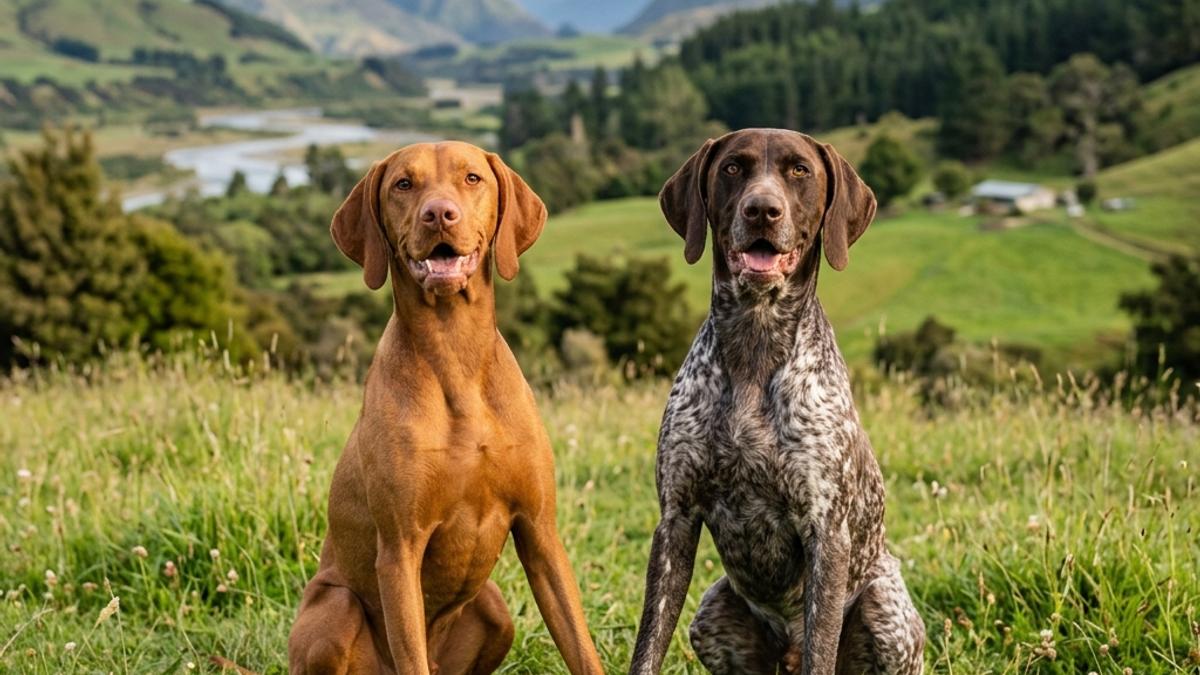
If you're an active Kiwi who wants a working dog that can join you on trail runs, hunting trips, or long beach walks, the Vizsla and the German Shorthaired Pointer (GSP) are two of the most capable breeds available in New Zealand. Both are built for all-day endurance, both bond intensely with their families, and both will demand a serious exercise commitment. But they have distinct personalities and care needs — here's how they compare.
Quick Comparison
| Vizsla | German Shorthaired Pointer (GSP) | |
|---|---|---|
| Weight | 20–27 kg | 20–32 kg |
| Lifespan | 12–14 years | 10–12 years |
| NZ price (registered breeder) | $2,500–$4,000 | $1,800–$3,500 |
| Energy level | 5/5 | 5/5 |
| Trainability | 4/5 | 4/5 |
| Good with kids | 5/5 | 5/5 |
| Good with other pets | 4/5 | 4/5 |
| Coat | Short, golden-rust | Short, liver/ticked |
| Grooming | Very low | Very low |
The Vizsla
Temperament
The Vizsla is often called the "Velcro dog" — they attach themselves to their person and do not thrive with long periods alone. Originally bred in Hungary for pointing and retrieving, they are one of the most affectionate sporting breeds. In New Zealand, Vizslas have found popularity with active families and hunters, particularly in the North Island where pheasant and rabbit work is common.
Unlike many hunting breeds, Vizslas are sensitive dogs. Harsh training methods backfire; positive reinforcement and patience produce the best results. They are highly responsive to their owner's emotions, which makes them wonderful family dogs but challenging if the household is frequently tense.
Exercise Needs in NZ
A Vizsla needs at least 90 minutes of vigorous exercise daily — not just a stroll around the block. They excel at running alongside a bike on the Port Hills trails, dock diving at the local lake, or open-country hunting. A bored Vizsla in a suburban section will find creative and destructive ways to entertain itself.
Price and Availability
Registered breeders in New Zealand charge $2,500–$4,000 for a Vizsla puppy. The breed is less common than the GSP; expect a waiting list from reputable breeders listed on the Dogs New Zealand website.
Best For
- Runners, cyclists, hunters and outdoor enthusiasts
- Families where someone is home most of the day
- First-time sporting-dog owners (more forgiving temperament than some working breeds)
The German Shorthaired Pointer (GSP)
Temperament
The GSP is driven, versatile and — bluntly — a high-maintenance dog if under-exercised. Where the Vizsla is affectionate, the GSP is driven; their focus on work and scent is intense. They make superb hunting companions and field trial dogs. As a family pet, they are loving and playful but can be boisterous with small children unless well-managed.
GSPs have a stronger prey drive than Vizslas and will chase cats, rabbits and native birds. In NZ, this matters near coastal areas with nesting dotterels or kiwi sanctuaries — keep them under control in DOC managed land.
Exercise Needs in NZ
Like the Vizsla, a GSP needs 90+ minutes of vigorous daily exercise. They are tireless athletes that particularly enjoy swimming — a strong selling point for Kiwi families near lakes or beaches.
Price and Availability
NZ registered breeders charge $1,800–$3,500, making GSPs somewhat more affordable than Vizslas. The breed has a more established breeding community in NZ, particularly in rural hunting communities.
Best For
- Experienced dog owners or hunters
- Families with a large fenced property or rural land
- Those who want a versatile gundog for New Zealand conditions
- Active households where the dog will get daily vigorous exercise
Key Differences
Sensitivity vs Drive
The Vizsla is the more emotionally attuned dog — better suited to a first-time sporting-breed owner. The GSP is more independently driven; excellent for experienced handlers and hunters but harder for owners who want a relaxed house dog.
Separation Anxiety
Vizslas are more prone to separation anxiety than GSPs. If you work long hours, neither breed is ideal, but the GSP may manage better with crate training and enrichment.
Coat and Cold
Both have short, low-maintenance coats. In South Island winters or highland hunting conditions, neither dog has an insulating double coat — they'll feel the cold on early morning hunts. A well-fitted dog coat is worthwhile for winter hunting trips in the Mackenzie Basin or Otago highlands.
Which Breed Suits Your NZ Life?
Choose the Vizsla if you are an active owner who wants an affectionate, devoted dog that will follow you everywhere — from morning runs to the couch.
Choose the GSP if you are an experienced owner or hunter wanting a high-drive, versatile field dog who is tougher and slightly more independent.
Both breeds will thrive in the right hands; both will be a handful in the wrong ones.
Key Takeaways
- Both are high-energy sporting breeds (5/5) needing 90+ minutes of exercise daily
- Vizslas are more affectionate and sensitive; GSPs are more driven and independent
- GSPs are slightly more affordable in NZ ($1,800–$3,500 vs $2,500–$4,000)
- Both have short, low-maintenance coats — but minimal protection in cold NZ winters
- Both have strong prey drives — fencing and recall training are non-negotiable
References
---
*See full breed data at our Vizsla profile and German Shorthaired Pointer profile. Also compare runners' dogs in our best dogs for active Kiwis guide, and use the find a breed tool to explore more.*
Free PetMall tools
Related guides
petmall.co.nz
Shop at PetMall
The products below are practical support items for your pet. PetMall ships across New Zealand.
- Dog FoodStart with food that matches your dog's life stage and activity level — and change brands slowly over 7–10 days.
- Dog TreatsTraining rewards and everyday treats — small, soft pieces work best for consistent reinforcement.
- Dog ToysA small rotation of chew, fetch, and puzzle toys usually works better than buying a large variety at once.
- Dog GroomingA gentle brush and the right shampoo make maintenance easier — especially for dogs that get muddy on walks.
- Leads & HarnessesComfort matters: padded contact points and adjustable fit help reduce rubbing on longer walks or tramping weekends.
- Flea & Worm TreatmentFor NZ conditions, look for protection that fits your routine (monthly vs longer-lasting) and your dog's weight range.