How to Walk a Cat on a Harness: NZ Safety Guide
How to walk a cat on a harness in NZ: indoor harness training, safe locations, wildlife boundaries, stress signs, and escape prevention.
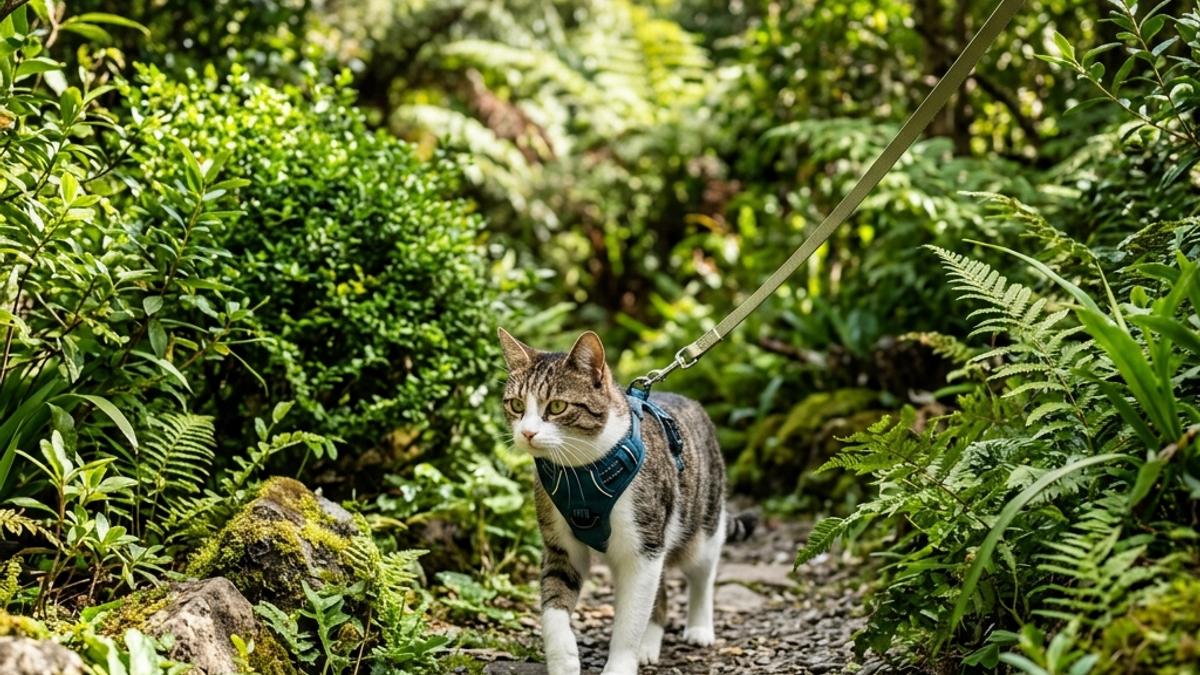
The quick answer: some cats can enjoy harness walks, but only if training is gradual, reward-based and the cat stays relaxed. Start indoors, use a well-fitted cat harness rather than a collar, practise recall and carrier backup, then choose quiet places away from dogs, traffic and sensitive wildlife. Stop if your cat shows stress.
Is your cat a good candidate?
Harness walking is not for every cat. It may suit a confident, curious cat who enjoys new sights and food rewards. It is often wrong for a cat who freezes, panics, hides from visitors, or hates handling.
If you are deciding between indoor enrichment and outdoor access, read indoor vs outdoor cat NZ.
Choose the right setup
- Use a secure cat harness, not a leash clipped to a collar.
- Check the fit indoors before every outing.
- Keep the lead light and short enough to avoid tangles.
- Bring a carrier or backpack-style safe retreat with good ventilation.
- Make sure microchip and ID details are up to date.
For ID basics, see cat collar types NZ, but remember the leash attaches to the harness.
Indoor training steps
- Harness near food. Let the harness appear near meals or treats.
- Touch and reward. Touch the harness to your cat's shoulder, reward, remove it.
- Put it on briefly. A few seconds is enough at first.
- Move normally indoors. Use toys and food so your cat walks, not just flops.
- Attach the lead indoors. Let it drag under supervision, then hold it gently.
- Practise recall. Call your cat to you for high-value rewards.
For enrichment that does not require leaving home, see cat toys guide NZ.
First outdoor trips
Start in a quiet enclosed section, not a busy beach, dog park, shared driveway or street verge. Let your cat choose direction. Keep trips short and end while your cat is still relaxed.
NZ wildlife matters. Do not take cats to National Parks or sensitive wildlife areas, and keep them away from dunes, seabird nesting areas and places with native wildlife. A harness is not a free pass to explore conservation land.
Stress signs mean stop
Stop and go home if your cat crouches low, pants, freezes, thrashes, hides, refuses food, growls, or tries to bolt. No harness is escape-proof.
Quick takeaways
- Use a cat harness, not a collar, for lead walking.
- Train indoors first with rewards and tiny steps.
- Start outside in a quiet enclosed place.
- Avoid dogs, roads, National Parks and sensitive wildlife areas.
- Stop immediately if your cat shows stress.
Shop related categories at PetMall
Looking for harness-friendly cat travel and enrichment options in New Zealand? Browse the PetMall cat range for current options and nationwide delivery.
Related reading
References
- SPCA New Zealand, cats in harnesses and on leashes, checked 2026-06-05: https://www.spca.nz/advice-and-welfare/article/cats-in-harness-on-leashes
- SPCA New Zealand, responsible cat ownership, checked 2026-06-05: https://www.spca.nz/advice-and-welfare/article/responsible-cat-ownership
- MPI, Code of Welfare: Companion Cats, checked 2026-06-05: https://www.mpi.govt.nz/animals/animal-welfare/codes/all-animal-welfare-codes/code-of-welfare-companion-cats/
Important notice
*General harness-training information for NZ cat owners. If your cat panics, bolts, pants, freezes or seems unwell, stop the outing and seek vet or qualified behaviour advice as needed.*
Free PetMall tools
Related guides
petmall.co.nz
Shop at PetMall
The products below are practical support items for your pet. PetMall ships across New Zealand.
- Cat FoodStart with food that matches your cat's life stage — change brands slowly over 7–10 days to avoid digestive upset.
- Cat LitterClumping or crystal, most cats prefer an unscented litter and a clean tray — one tray per cat plus one spare is the NZ rule of thumb.
- Cat TreatsGreat for bonding and training — keep treats under 10% of daily calories to protect your cat's waistline.
- Cat ToysA small rotation of toys (feather wand, puzzle feeder, and comfort toy) usually works better than buying many at once.
- Cat GroomingRegular brushing cuts hairballs and shedding — essential for long-haired breeds like Ragdolls and British Longhairs.
- Flea & Worm TreatmentFor NZ conditions, choose protection that fits your cat's weight and lifestyle (indoor vs outdoor) and keep it regular.