Crate Training a Puppy: A Calm NZ Step-by-Step Guide
Crate training done kindly: how to size a crate, build positive associations, and use it for toilet training and calm rest. NZ step-by-step for new owners.
The quick answer: done kindly, a crate becomes your puppy's safe den — a place to rest, settle and feel secure, and a big help with toilet training. The golden rule is that the crate must always be a good place: never used for punishment, never a place of fear, and never somewhere a puppy is shut for too long. Build the association slowly and most puppies come to love it.
Why crate train
- Toilet training — dogs avoid soiling where they sleep, so a correctly sized crate helps them learn to hold on and toilet outside.
- Safe rest — a quiet den helps an overtired or overstimulated puppy switch off (overtired puppies are the bitiest and naughtiest).
- Safety — stops chewing hazards while you can't supervise.
- Travel & vet stays — a crate-happy dog copes far better with car trips, the ferry, or a night at the vet.
Get the size right
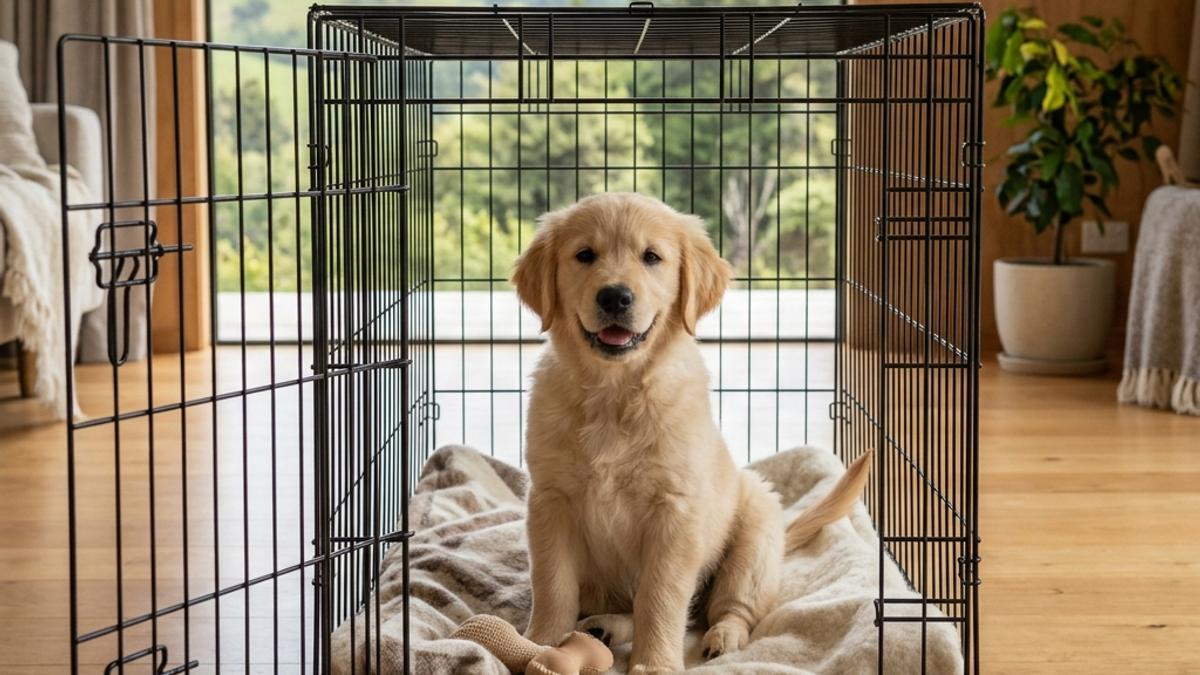
The crate should let an adult dog stand, turn around and lie down fully — no bigger. Too large and a puppy will toilet in one corner and sleep in the other. For a growing pup, buy adult-size and use a divider to shrink the space while they're little.
Step-by-step (go at the puppy's pace)
- Make it inviting. Set it up with comfy bedding in a quiet but not isolated spot. Leave the door open.
- Feed near, then inside. Toss treats in; feed meals just inside, then at the back. Let the puppy come and go freely.
- Add a cue and a chew. Use a word like "bed" and give a safe chew or stuffed toy inside. The crate predicts good things.
- Close the door briefly. Shut it for a few seconds while they chew, then open before they fuss. Slowly build the duration.
- Build to short absences. Leave the room for a minute, then longer. Keep returns calm and boring.
- Overnight. Many pups settle if the crate is near you at first; a toilet break may be needed for very young puppies.
Golden rules
- Never use the crate as punishment.
- Never leave a puppy crated too long — young puppies can only hold on for a couple of hours; they need frequent toilet breaks, play and company. A crate is a bed, not a storage box.
- If the puppy panics, screams or self-injures, stop and get help — forcing it backfires.
When to get help
If your puppy shows real distress or you suspect separation anxiety (panic when alone, not just protest), talk to a force-free NZ trainer or your vet rather than pushing on. For more on settling a nervous dog into a new home, see settling a rescue dog in NZ.
Quick takeaways
- A crate is a safe den, never a punishment.
- Size it for an adult to stand/turn/lie; use a divider for puppies.
- Build the habit slowly with food, chews and a cue word.
- Never crate a young puppy too long — they need toilet breaks and company.
- Real distress or separation anxiety → force-free trainer or vet.
Shop related categories at PetMall
Looking for the right size crate and comfy bedding in New Zealand? Browse the PetMall dog range for current options and nationwide delivery.
Related reading
References
- American Veterinary Society of Animal Behavior (AVSAB), "What Are Reward-Based Training Methods for Dogs (and Cats)?", checked 2026-07-08: https://avsab.org/what-are-reward-based-training-methods-for-dogs-and-cats/
- VCA Animal Hospitals, "How to Crate Train Your Dog", checked 2026-07-08: https://vcahospitals.com/know-your-pet/how-to-crate-train-your-dog
Important notice
*General training information for NZ owners. Signs of panic or separation anxiety should be assessed by a qualified NZ trainer/behaviourist or vet.*
Free PetMall tools
Related guides
petmall.co.nz
Shop at PetMall
The products below are practical support items for your pet. PetMall ships across New Zealand.
- Dog TreatsTraining rewards and everyday treats — small, soft pieces work best for consistent reinforcement.
- Dog FoodStart with food that matches your dog's life stage and activity level — and change brands slowly over 7–10 days.
- Dog ToysA small rotation of chew, fetch, and puzzle toys usually works better than buying a large variety at once.
- Dog GroomingA gentle brush and the right shampoo make maintenance easier — especially for dogs that get muddy on walks.
- Leads & HarnessesComfort matters: padded contact points and adjustable fit help reduce rubbing on longer walks or tramping weekends.
- Flea & Worm TreatmentFor NZ conditions, look for protection that fits your routine (monthly vs longer-lasting) and your dog's weight range.