Pet Breed Guide NZ
Dwarf Hamster
Small, active pet rodents popular worldwide but completely prohibited in New Zealand.
Photo Gallery
NZ Ownership Snapshot
Prohibited in NZ- Noise Level
- quiet
- Social Needs
- pairs
All dwarf hamster species (Campbells, Winter White, Roborovski) are PROHIBITED in New Zealand. Absolute ban, no permits. Legal NZ alternatives: guinea pigs, rats, mice.
Breed Snapshot
- Size
- small
- Lifespan
- 1.5-3 years
- Origin
- Central Asia and Russia
- Care Focus
- Active, fast-moving; more social than Syrian hamsters; can be kept in same-sex pairs
- NZ Price
- NOT AVAILABLE IN NZ — prohibited species
NZ Lifestyle Fit
Completely banned in NZ. All hamster species without exception.
Dwarf Hamsters — including the Campbells Dwarf (Phodopus campbelli), Winter White (Phodopus sungorus), and Roborovski (Phodopus roborovskii) — are popular pets in many countries but completely prohibited in New Zealand under the Biosecurity Act. The ban has no exceptions. Full legal detail — what the law actually says, why there is no lawful supply, and what to do if someone offers to sell you one — is in why hamsters are banned here, and what you can keep instead. Legal NZ alternatives: guinea pigs, fancy rats, or mice.
Related Breeds
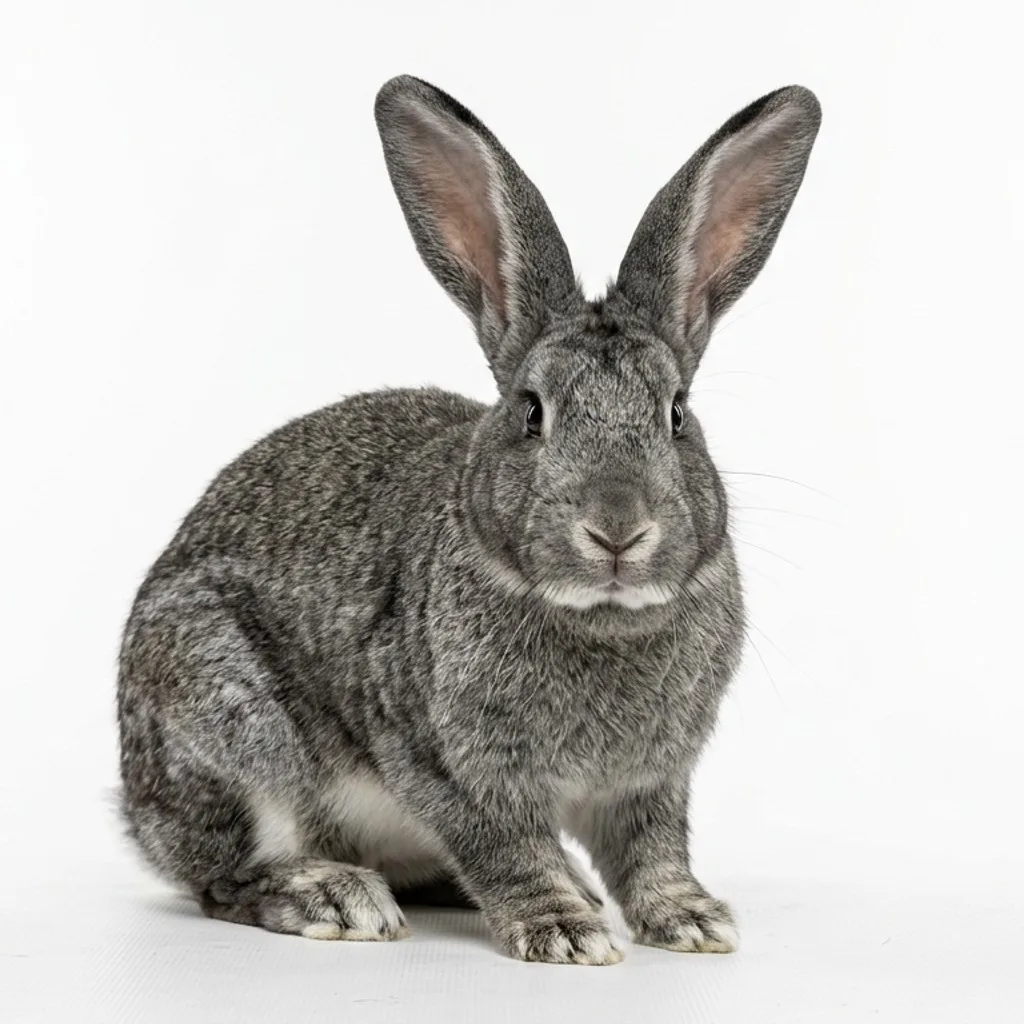
Flemish Giant Rabbit
The Flemish Giant is one of the oldest and largest domestic rabbit breeds, traced to Belgium in the 16th century and widely known as the gentle giant. Adults carry a long, semi-arch body of roughly 6 to 10 kg, erect ears reaching up to 20 cm, and a dense, glossy coat in seven recognised colours: black, blue, fawn, sandy, light grey, steel grey and white. Typical lifespan is 5 to 8 years. Temperament is placid and easy-going, notably less prone to panic than smaller, more skittish breeds, and the breed is bright enough to be litter trained and to learn its name. Size drives the workload: spacious housing, several hours of secure exercise a day, unlimited hay, soft flooring to guard against sore hocks, and weekly checks of teeth, ears, nails and coat. It suits a home with genuine floor space and children old enough to handle a heavy rabbit gently.
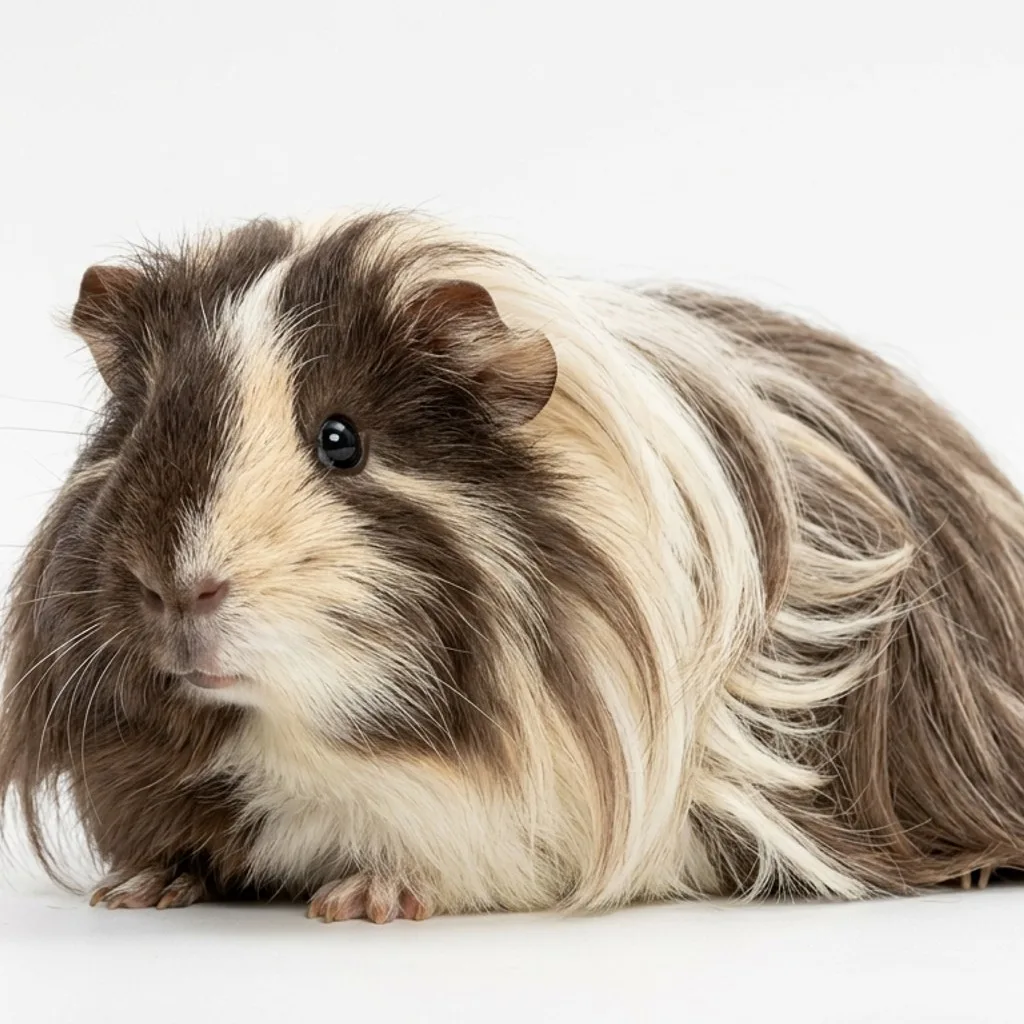
Peruvian Guinea Pig
The Peruvian is the long-haired guinea pig, its silky coat growing continuously to 15 to 20 cm or more, sweeping forward over the head into a fringe or mop-top and backwards from the rump; underneath sits a compact, cobby body of roughly 700 g to 1.2 kg. Coats come in solids, bi-colours and tri-colours, and lifespan is generally 4 to 7 years. Temperament is sweet and gentle, often timid at first, and the breed is highly social, suiting same-sex pairs or small herds rather than life alone. The coat sets this breed apart from short-haired cavies: daily brushing, periodic trimming and scrupulous hygiene, because neglected long hair invites fungal skin infections, mites and lice. Alongside that come a hay-led diet with vegetables rich in vitamin C, daily supervised floor time, and indoor housing, which protects the coat and avoids overheating in humid weather. It suits an owner who genuinely enjoys grooming.
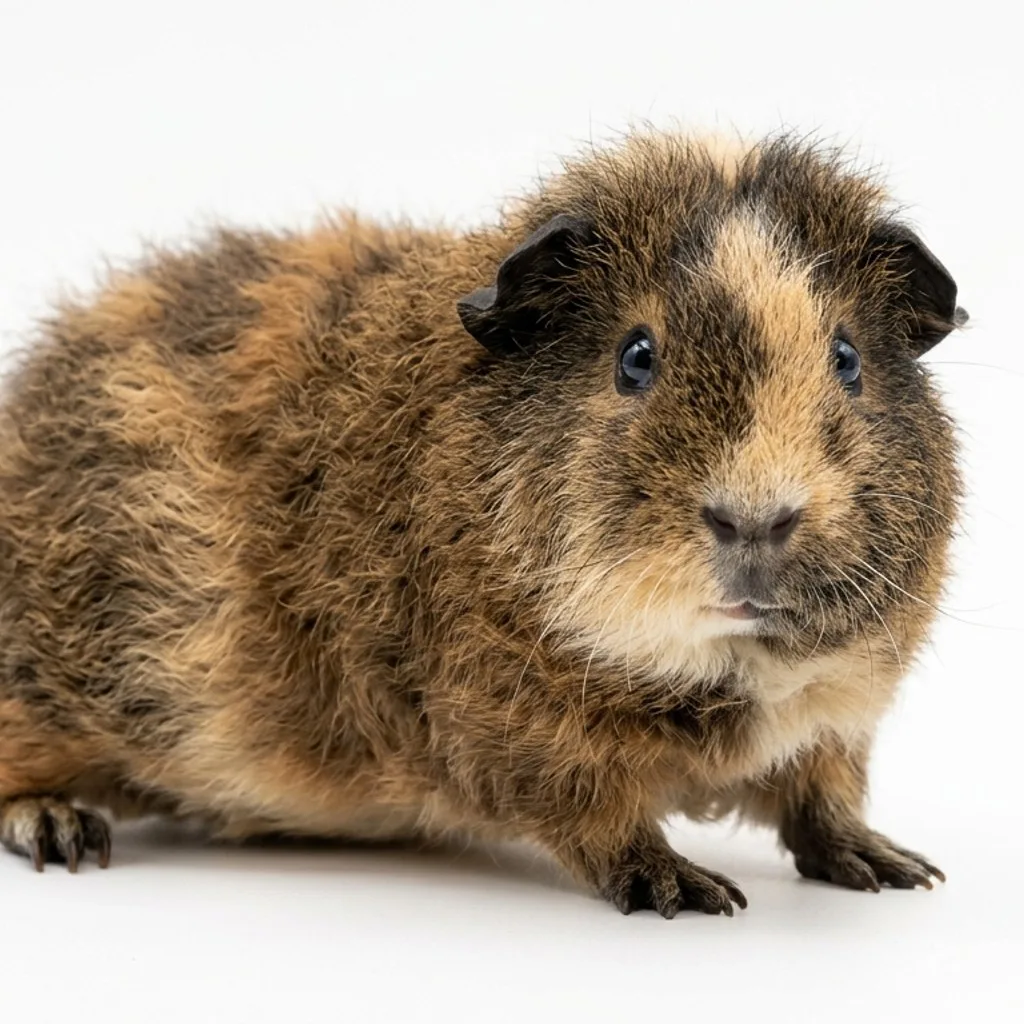
Teddy Guinea Pig
The Teddy is the crinkle-coated guinea pig: short, dense fur that stands upright rather than lying flat, giving the plush, soft-toy look behind the name. Adults weigh about 700 g to 1.2 kg, measure 20 to 30 cm and typically live 4 to 6 years, with coats in solids, agoutis and Himalayans and short, floppy ears. Temperament is friendly, docile and curious: shy at first, then content with lap time and gentle handling. The breed is thoroughly social and does best in same-sex pairs or small herds. Grooming is moderate rather than demanding, so daily care centres on hay, fresh vegetables supplying the vitamin C guinea pigs cannot make themselves, clean water, spot-cleaning, and supervised floor time in a guinea-pig-proofed space. Weekly checks cover nails, teeth and overall condition. It suits first-time small-pet keepers and families able to house at least two indoors.
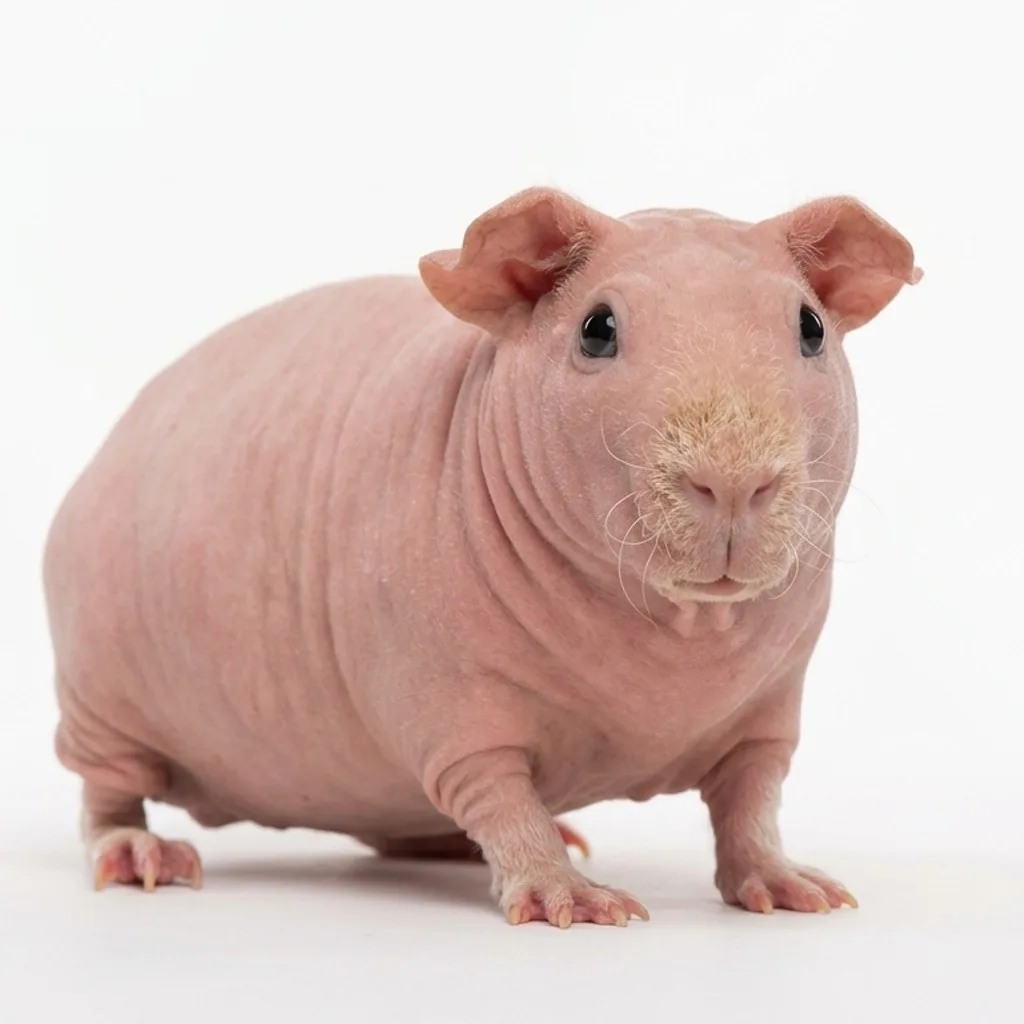
Skinny Pig (Hairless Guinea Pig)
The Skinny Pig is a near-hairless guinea pig, smooth-skinned apart from a little fuzz on the muzzle, feet and legs, and it comes in colours ranging from pink to black, chocolate and spotted. Developed in Canada, it keeps the stocky build and sociable habits of a coated guinea pig: gentle, curious, rarely inclined to bite, and talkative, wheeking for food and purring when settled. Skinny Pigs live roughly four to six years and do best in pairs or small groups, with daily handling and supervised floor time outside the cage. The trade-off is climate control. Bare skin means indoor housing in a warm, draught-free room around 20-24C, out of direct sun, and frequent checks for dryness, cuts and fungal skin trouble. Like all guinea pigs they need unlimited hay and a vitamin C source. Best suited to a household ready for hands-on daily care rather than a low-effort pet.
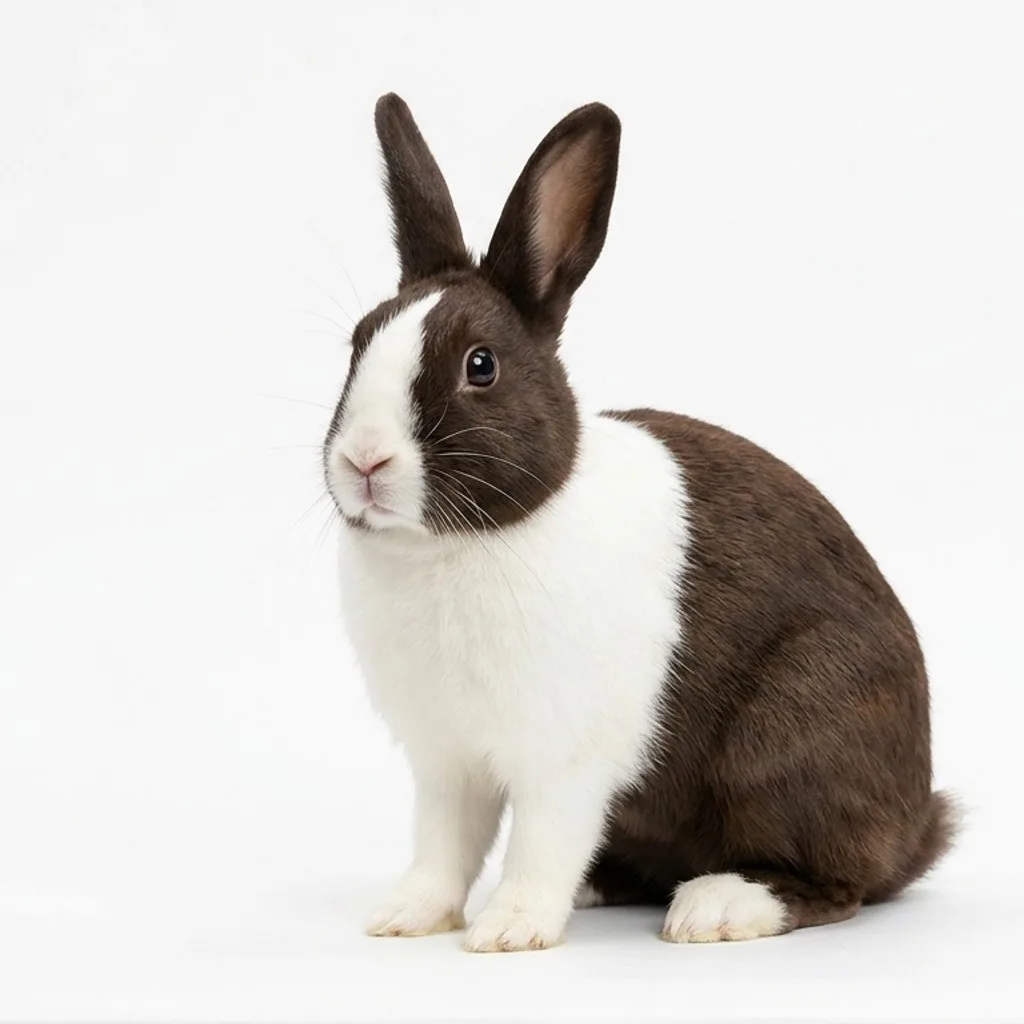
Dutch Rabbit
The Dutch Rabbit is a compact, boldly marked rabbit of roughly 1.8 to 2.5 kilograms, placid and even-tempered enough to suit families wanting a calm small pet. Its pattern is the giveaway: a white blaze running up the face between the eyes and a white saddle across the shoulders and back, meeting cleanly against a coloured head and rear in black, blue, chocolate, grey or tortoise. The short, dense, soft coat keeps grooming light: a weekly brush and nail trims every four to six weeks. Dutch Rabbits are intelligent, curious without being hyperactive, and become genuinely affectionate once settled, particularly where gentle handling starts early. They are social, do best in compatible pairs, take to litter training and settle into a household routine. They need three to four hours of supervised exercise daily in a secure, rabbit-proofed space, with housing that keeps out predators such as stoats and ferrets. Over a lifespan of 8 to 12 years they suit a household able to commit to daily care.
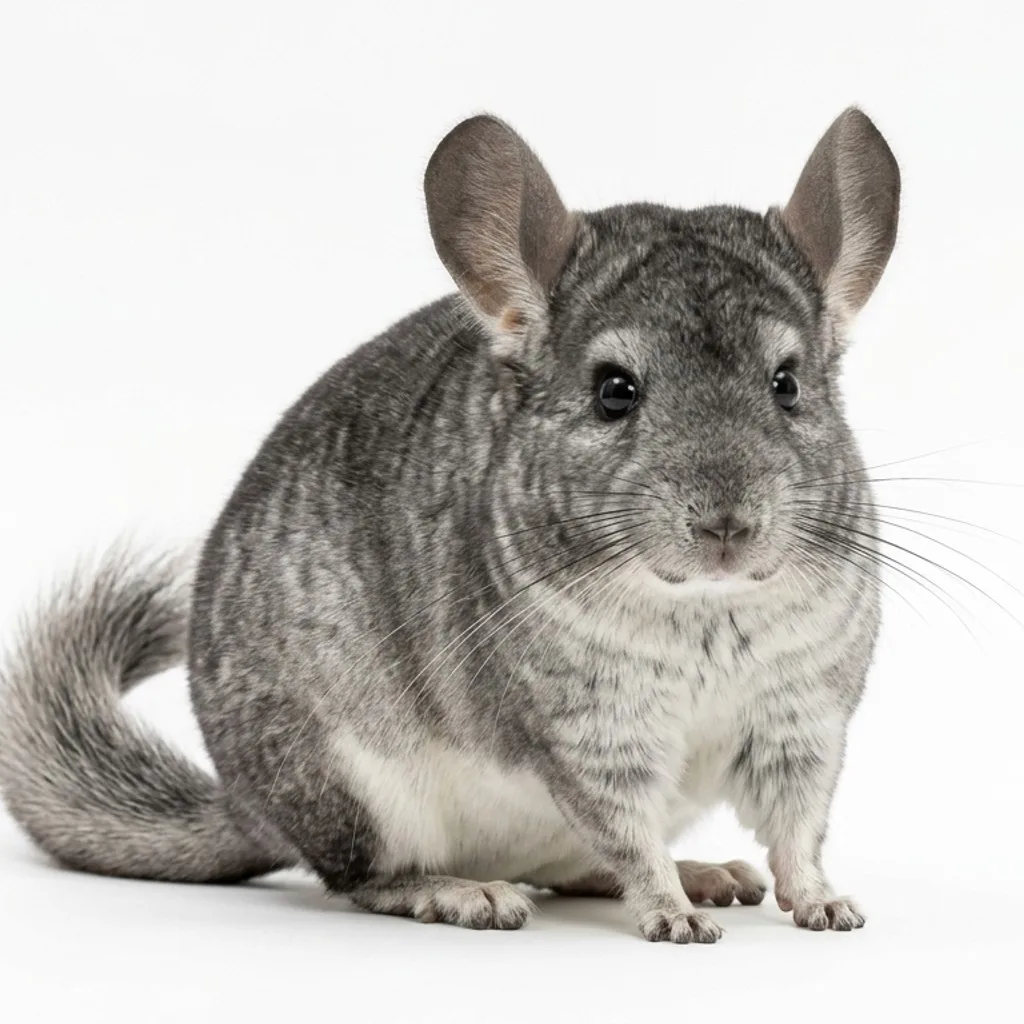
Chinchilla
The Chinchilla is a dense-furred rodent from the Andes of South America, active mainly at dawn and dusk and unusually long-lived for a small pet at fifteen to twenty years. Adults weigh roughly 400 to 800 grams, with a body of 25-35 cm plus a bushy tail, and coats running from the standard grey through beige, white, black and sapphire. Character is curious, agile and playful rather than cuddly: chinchillas would mostly rather climb, explore and chew than sit on a lap, and they turn skittish without calm, regular handling. They are social animals, usually kept in same-sex pairs or small groups. Care is specific, meaning a tall multi-level cage, a daily dust bath of ten to fifteen minutes, unlimited timothy hay with chinchilla-formulated pellets, and a room held below 25C, because heat is genuinely dangerous to them. A long-term pet for a patient household, not a starter animal.