Pet Breed Guide NZ
African Pygmy Hedgehog
The African Pygmy Hedgehog is a unique small pet, known for its distinctive spines covering its back, which it uses as a defence mechanism by curling into a tight ball. These nocturnal creatures are generally quiet and solitary, making them intriguing companions in countries where they are legal. They possess a keen sense of smell and are quite active at night, exploring their environment. Their small size and relatively low maintenance (where legal) contribute to their appeal. However, it is crucial for New Zealanders to understand that the African Pygmy Hedgehog is strictly prohibited in NZ due to significant biosecurity risks to our unique native ecosystem and wildlife.
Photo Gallery
NZ Ownership Snapshot
Prohibited in NZ- Noise Level
- quiet
- Social Needs
- solitary
- Animal Type
- hedgehog
- Diet Type
- Species-specific small pet diet
- UVB Required
- No
Prohibited in practice in New Zealand. There is no lawful route to bring one in: MPI's import rules for pets other than cats and dogs cover only rabbits and guinea pigs (from Australia) and chinchillas (from the UK) — hedgehogs are not on that list. Hedgehogs already in NZ are an introduced pest, not a pet species: DOC lists them as an animal pest that devours endangered species and is accelerating the decline of native wading birds, lizards and invertebrates. Legal NZ small-pet alternatives: guinea pig, rabbit, rat, mouse.
Breed Snapshot
- Size
- small
- Lifespan
- 3-6 years
- Origin
- Africa
- Care Focus
- Nocturnal and solitary animal that needs careful handling and species-specific housing.
- NZ Price
- NOT AVAILABLE IN NZ — no lawful source; keeping one is not legal here
- Annual Vet Cost
- N/A - It is illegal to own African Pygmy Hedgehogs in New Zealand, therefore no legal vet care is available or applicable.
Personality Scores
NZ Lifestyle Fit
The African Pygmy Hedgehog is unequivocally **not suitable** for any home in New Zealand. Due to its classification as an 'unwanted organism' by the Ministry for Primary Industries (MPI) under the Biosecurity Act 1993, it is illegal to import, possess, breed, or sell these animals anywhere in the country. Therefore, no NZ home, whether an Auckland apartment or a South Island bach, is legally suitable for an African Pygmy Hedgehog. Climate considerations, regional restrictions, or specific housing requirements are irrelevant, as the overarching legal prohibition makes ownership impossible. There are no legal sources to obtain an African Pygmy Hedgehog in New Zealand, and any attempt to do so would be illegal and subject to severe penalties. Kiwis interested in small, exotic-looking pets should instead explore legal alternatives like rats, mice, guinea pigs, or specific gecko species that are permitted and can be sourced responsibly within New Zealand.
Prohibited in practice in New Zealand. There is no lawful route to bring one in: MPI's import rules for pets other than cats and dogs cover only rabbits and guinea pigs (from Australia) and chinchillas (from the UK) — hedgehogs are not on that list. Hedgehogs already in NZ are an introduced pest, not a pet species: DOC lists them as an animal pest that devours endangered species and is accelerating the decline of native wading birds, lizards and invertebrates. Legal NZ small-pet alternatives: guinea pig, rabbit, rat, mouse.
About the African Pygmy Hedgehog
The African Pygmy Hedgehog, despite its name, is not a true wild hedgehog but a hybrid of two species: the Four-toed Hedgehog and the Algerian Hedgehog, selectively bred for the pet trade. Originating from various parts of Africa, these captivating small mammals typically live for 3-6 years in captivity and reach a size of about 15-25 cm, weighing between 300-600 grams. They are insectivores by nature, with a diet primarily consisting of insects and other small invertebrates. While popular pets in many parts of the world, it is vital to note that these animals are not native to New Zealand and pose a severe threat to our biosecurity, making them illegal to import or keep here.
What They Look Like
African Pygmy Hedgehogs are instantly recognisable by the thousands of stiff, hollow quills (spines) that cover their back and sides. These quills are usually white with dark bands, giving them a salt-and-pepper appearance, though various colour mutations exist, including albino, pinto, and cinnamon. Their undersides, face, and legs are covered in soft fur. They have a pointed snout, small, dark eyes, and relatively large, prominent ears. Their legs are short, ending in small paws with five toes on the front feet and four on the hind feet, each equipped with sharp claws for digging.
Personality & Behaviour
These hedgehogs are primarily nocturnal, meaning they are most active during the night. In the wild, they spend their days sleeping in burrows or under cover, emerging at dusk to forage for food. As pets (where legal), they maintain this nocturnal rhythm, often running on wheels and exploring their enclosures overnight. They are generally solitary animals and do not typically seek out companionship from other hedgehogs or pets. When feeling threatened, their primary defence mechanism is to curl into a tight, spiny ball, protecting their vulnerable underbelly. They also exhibit a unique behaviour called 'anointing,' where they create a foamy saliva and spread it over their spines, often after encountering a new or strong scent. This behaviour is not fully understood but is thought to be a way of camouflaging themselves or distributing toxins.
Life in New Zealand
It is imperative to understand that African Pygmy Hedgehogs are PROHIBITED in New Zealand. There is no lawful route to bring one in: MPI's import rules for pets other than cats and dogs cover only rabbits and guinea pigs (from Australia) and chinchillas (from the UK), and hedgehogs are not on that list. Hedgehogs already living wild in NZ are not a pet species either — DOC lists them as an animal pest that devours endangered species and is accelerating the decline of native wading birds, lizards and invertebrates. The prohibition is in place to protect New Zealand's unique native flora and fauna from potential diseases, parasites, and predation. Introducing non-native species like the African Pygmy Hedgehog could have devastating consequences for our vulnerable ecosystems, particularly for native invertebrates and ground-dwelling birds. Any sightings or knowledge of these animals being illegally kept should be reported to MPI.
Is This the Right Pet for You?
For anyone residing in New Zealand, the African Pygmy Hedgehog is unequivocally NOT the right pet for you. Due to their prohibited status, owning one is illegal and carries significant penalties. It is crucial to respect New Zealand's biosecurity laws, which are designed to safeguard our precious natural heritage. If you are seeking a small, unique pet, there are many legal and wonderful alternatives available in New Zealand that can provide companionship without posing a risk to our environment. Consider options like rats, mice, guinea pigs, or even some species of geckos or skinks (sourced legally from reputable breeders) that are permitted under NZ law.
Fun Facts
Fact 1
African Pygmy Hedgehogs are not true wild hedgehogs but a hybrid species bred for the pet trade.
Fact 2
They perform a unique behaviour called 'anointing,' where they spread foamy saliva over their spines after encountering new scents.
Fact 3
Despite their spines, they are surprisingly good swimmers and can float on water.
Fact 4
They are primarily nocturnal, meaning they are most active during the night.
Fact 5
When threatened, they can curl into a tight, spiny ball, protecting their vulnerable underside.
Related Breeds
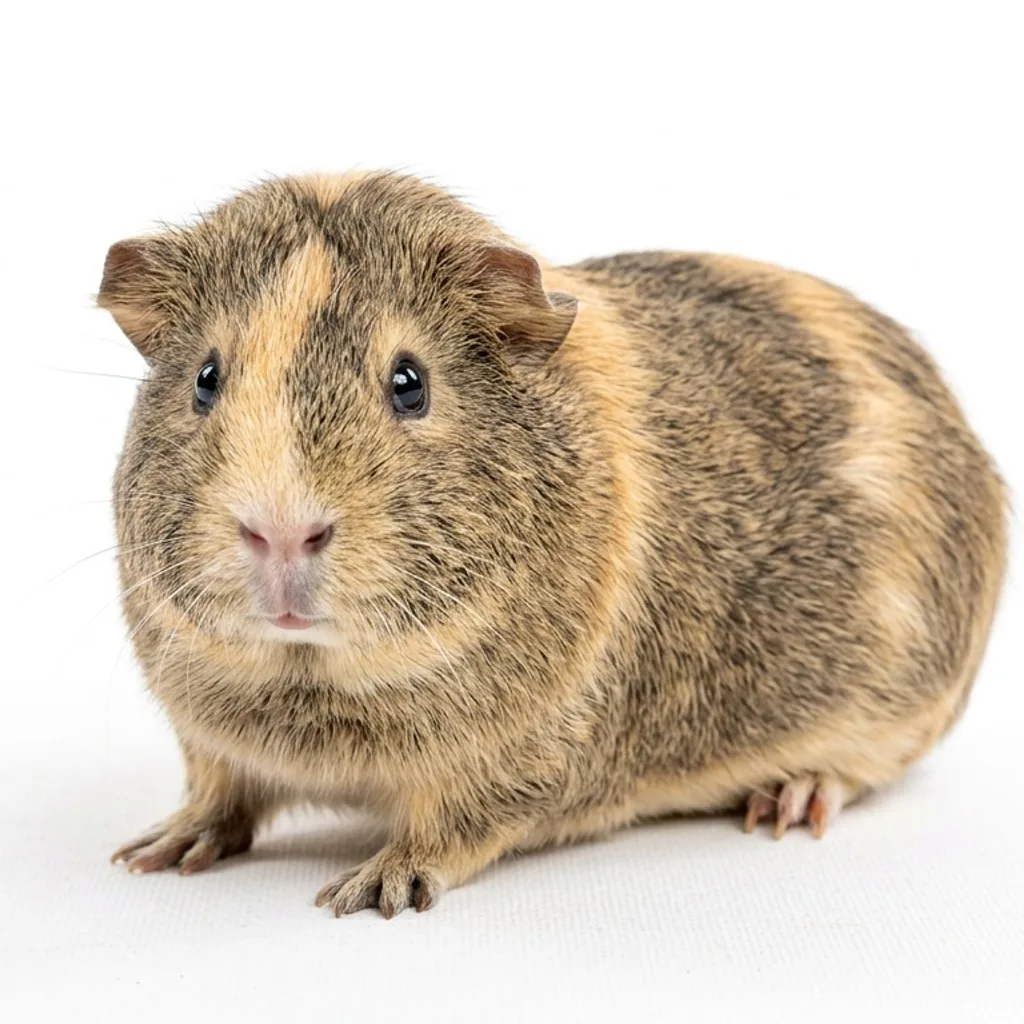
Abyssinian Guinea Pig
The Abyssinian is the rosetted guinea pig: at least eight whorls of coarse, short to medium fur set across the shoulders, back and hips, giving every animal its own tousled pattern in colours from black, white, cream and red through tortoiseshell-and-white and roan. Adults weigh around 700 to 1200 grams and live four to seven years. Abyssinians tend to be more outgoing and mischievous than smooth-coated guinea pigs, busy and talkative animals that wheek at feeding time, purr while being stroked, and popcorn about the cage in sudden joyful jumps. They are strongly social and should live with at least one other guinea pig. Daily needs are straightforward: unlimited hay, vitamin C-rich vegetables such as capsicum and parsley, a measured serving of pellets, spot-cleaning, and an hour of supervised floor time. The coat itself asks little beyond routine checks. A good match for a family wanting an interactive small pet with plenty of personality.
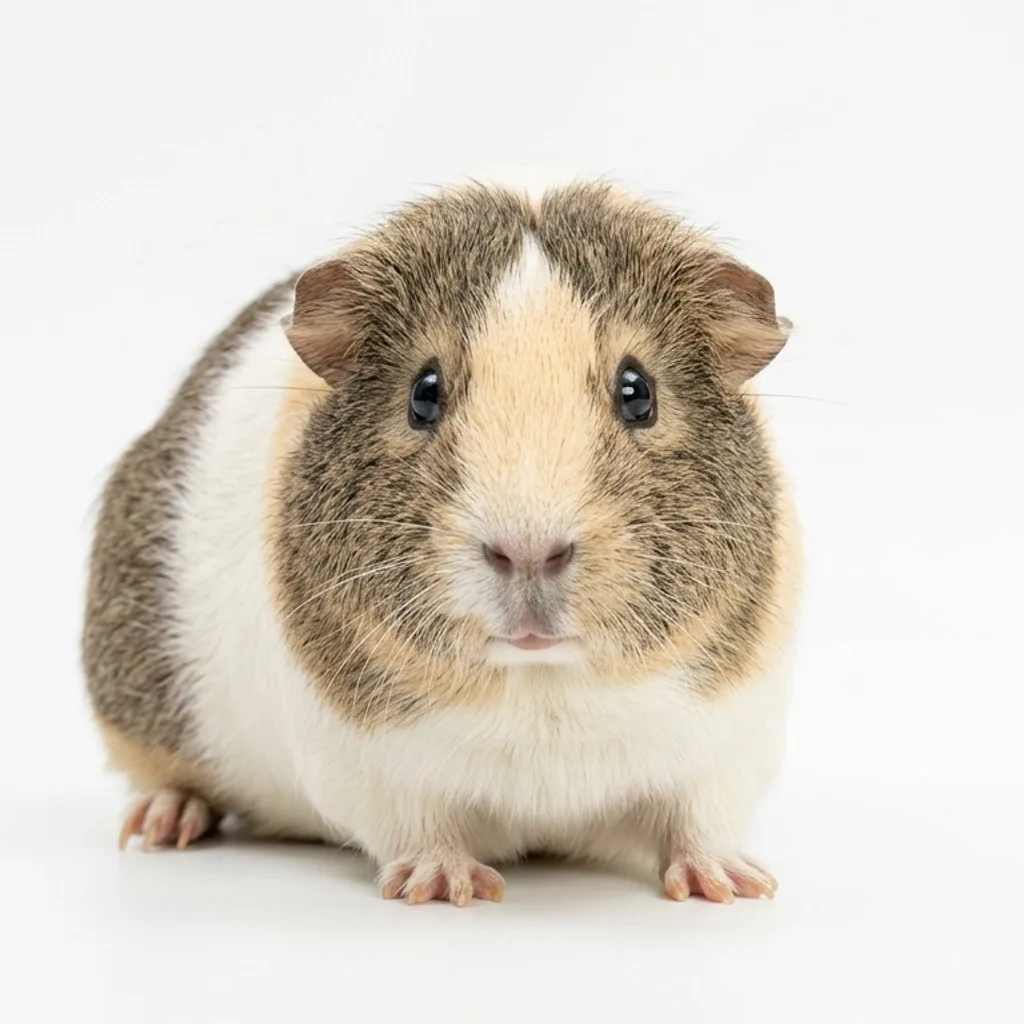
American Guinea Pig
The American is the short-coated cavy, the classic guinea pig: a dense, smooth coat lying flat against a stout, compact body of about 700 g to 1.2 kg and 20 to 25 cm, with short legs and no visible tail. Colours range from solid black, white, cream and red through agouti, roan and brindle, and lifespan is typically 4 to 7 years. Temperament is docile and friendly. These are sociable animals that live best in pairs or small groups, communicating by wheeking, purring and rumbling, and often shy at first until patient handling builds trust. Grooming stays minimal thanks to the short coat, so daily work is diet and hygiene: unlimited hay, fresh vegetables rich in vitamin C such as leafy greens and broccoli, a measured portion of fortified pellets, spot-cleaning, and 30 to 60 minutes of supervised floor time. Nails need trimming monthly. A sound match for first-time small-pet homes and for families with gentle, well-coached children.
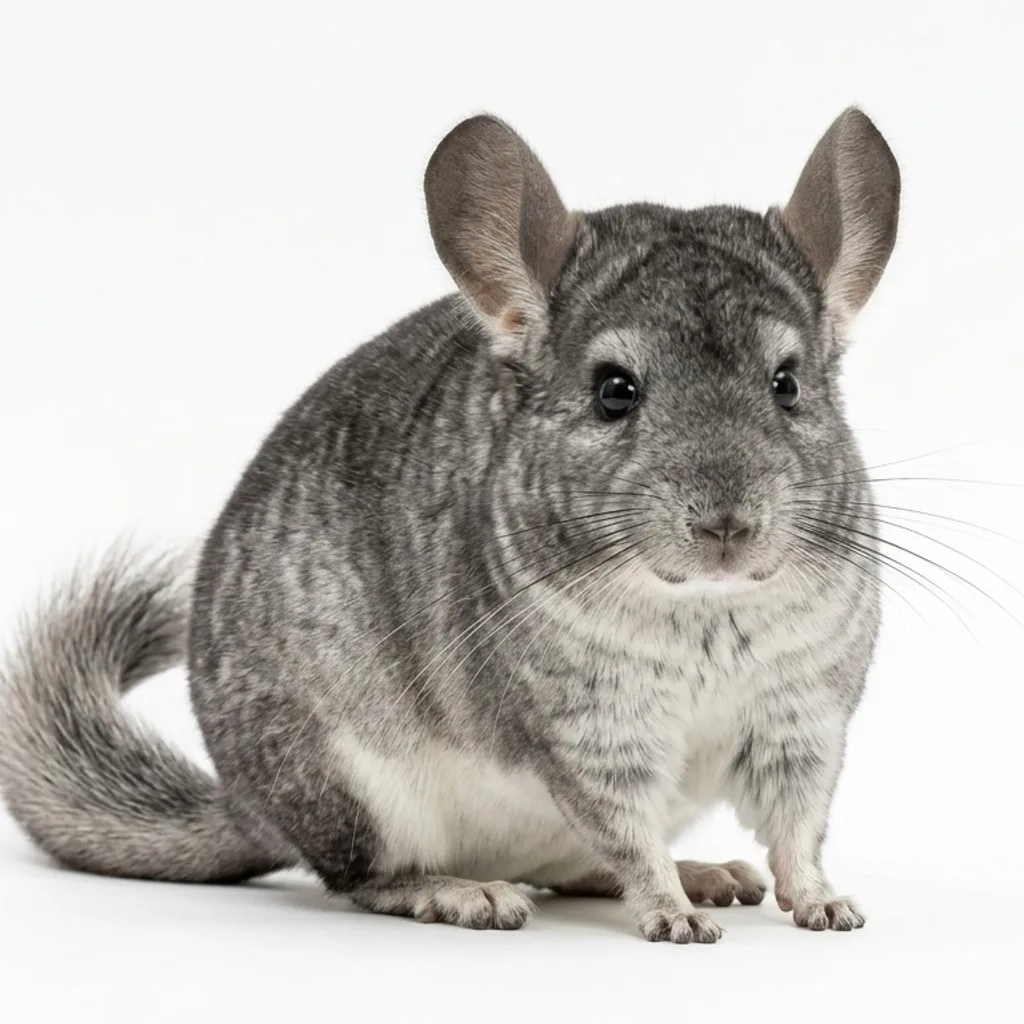
Chinchilla
The Chinchilla is a dense-furred rodent from the Andes of South America, active mainly at dawn and dusk and unusually long-lived for a small pet at fifteen to twenty years. Adults weigh roughly 400 to 800 grams, with a body of 25-35 cm plus a bushy tail, and coats running from the standard grey through beige, white, black and sapphire. Character is curious, agile and playful rather than cuddly: chinchillas would mostly rather climb, explore and chew than sit on a lap, and they turn skittish without calm, regular handling. They are social animals, usually kept in same-sex pairs or small groups. Care is specific, meaning a tall multi-level cage, a daily dust bath of ten to fifteen minutes, unlimited timothy hay with chinchilla-formulated pellets, and a room held below 25C, because heat is genuinely dangerous to them. A long-term pet for a patient household, not a starter animal.
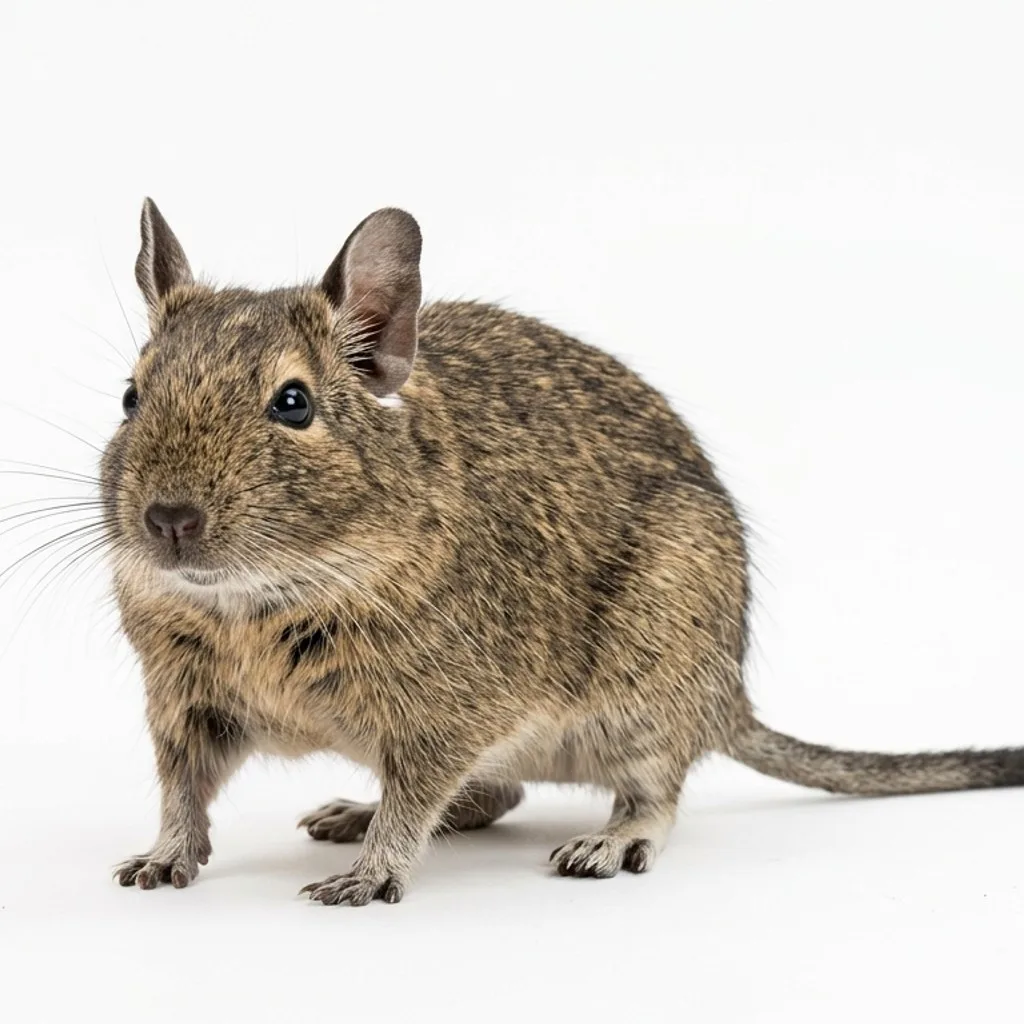
Degu
Degus are a social, diurnal Chilean rodent kept widely overseas — but there is no import health standard covering them from any country, so they cannot be legally brought into New Zealand and are not sold here. Treat what you read about degus from NZ as background: the small social rodents actually available locally are guinea pigs and rabbits. Where degus are kept, the two defining risks are diet-related diabetes and continuously growing teeth.