Are Snakes Legal in NZ? Why New Zealand Has No Pet Snakes
Are snakes legal in NZ? Learn why all snake species are strictly prohibited in New Zealand under the HSNO Act 1996, and discover legal pet reptile alternatives.
No. You cannot have a pet snake in New Zealand: Schedule 2 of the Hazardous Substances and New Organisms (HSNO) Act 1996 lists "any snake of any species whatever" as a prohibited new organism, so no approval can be issued to import one. MPI's pet import rules also exclude snakes.
The quick answer: Can you keep a pet snake in New Zealand?
Corn snakes, ball pythons and every other species are covered, whether you live here or are moving here with a pet snake.
New Zealand has no native land snakes, and DOC says there is no evidence of established wild populations of snakes on land. The law has no pet-owner exception: section 25(2) of the HSNO Act says no approval shall be issued to import, develop, field test or release a Schedule 2 organism.
If you want a reptile, look instead at exotic lizards already kept here, such as bearded dragons, leopard geckos and blue-tongued skinks. Reptiles cannot be imported as pets, so these have to come from within New Zealand, and regional rules can apply (details below).
Prohibited Organism status under the HSNO Act 1996
The legal basis for New Zealand's snake ban is the HSNO Act 1996, and the Biosecurity Act 1993 applies as well.
Schedule 2 of the HSNO Act lists New Zealand's prohibited new organisms. Item 1 of that schedule reads, in full: *"Any snake of any species whatever."* Item 2 adds any venomous reptile, amphibian, fish or invertebrate.
- All snake species banned: The wording covers captive-bred, non-venomous and so-called "beginner" species such as corn snakes and ball pythons, exactly as it covers pit vipers. The EPA's own prohibited organisms list repeats it as "Snakes of any species".
- Import and release: Section 50(1) of the HSNO Act prohibits the importation, release or development of any Schedule 2 organism, and no approval can be issued to import, develop, field test or release one (section 25(2)). Knowingly importing or releasing a new organism in contravention of the Act is an offence (section 109).
- Possession: Knowingly, recklessly or negligently possessing a new organism imported or released in contravention of the Act is also an offence (section 109).
- Sale, breeding and spread: The Biosecurity Act's definition of an unwanted organism includes any organism specified in Schedule 2, so its section 53 (no selling or breeding without permission) and section 52 (no knowing release or spread, apart from listed exceptions) cover snakes too.
Why does New Zealand have no land snakes?
Te Ara, the Encyclopedia of New Zealand, says large, flightless animals generally cannot cross oceans, and gives that as the reason New Zealand has no land snakes. Te Papa says there are no land snakes here and no evidence that they ever existed here.
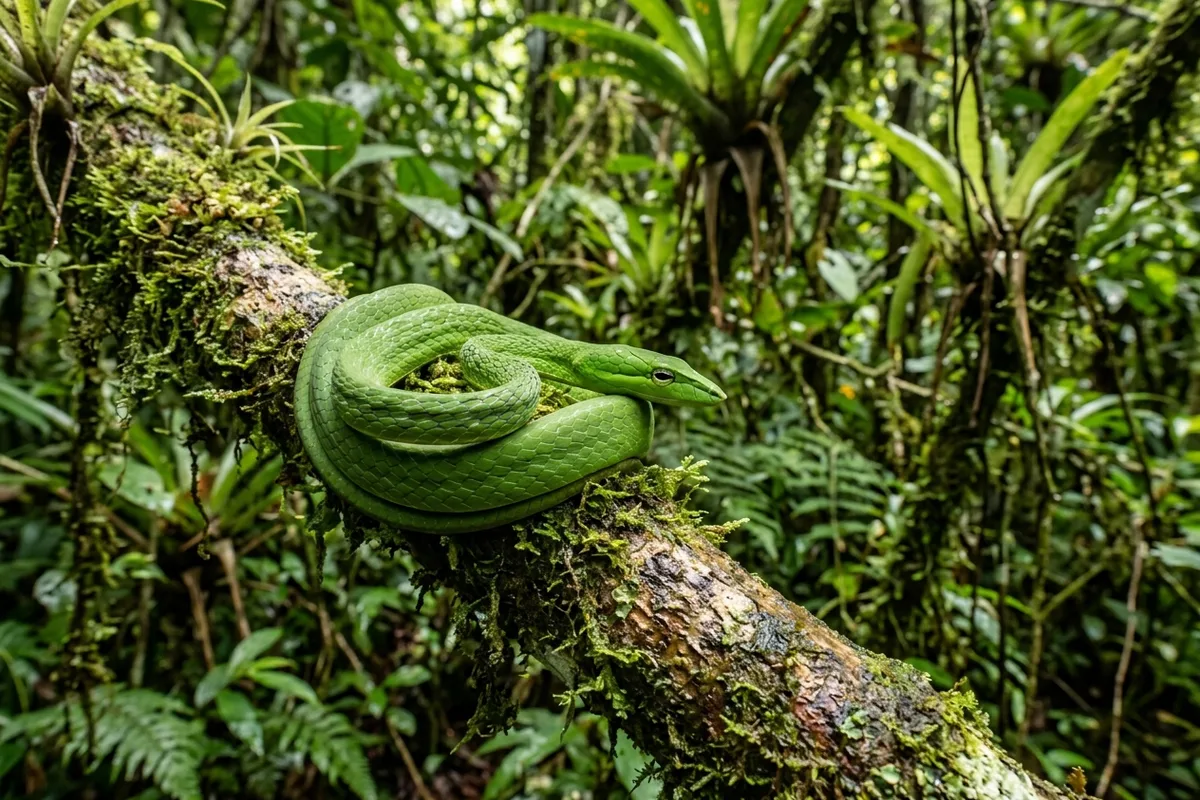
New Zealand is not entirely free of snakes, though. DOC says sea snakes and kraits occasionally visit on ocean currents or after large storms in the Tasman and Pacific. It describes them as non-resident, because the waters here are too cold for them to survive. Around 12 yellow-bellied sea snakes are seen each year, mostly around the north-east coast of the North Island. DOC also says a yellow-lipped sea krait found on Takapuna Beach in 2022 was rehabilitated and is on display at Auckland Zoo.
Sea snakes and kraits are protected under the Wildlife Act 1953. DOC says it is illegal to kill or harass one, or possess one or part of one, without a Wildlife Authority. They are highly venomous, although DOC says there is no record of anyone in New Zealand being bitten. If you find one, keep yourself and any dogs well away and call 0800 DOC HOT (0800 362 468). If you are bitten, get medical attention immediately. The National Poisons Centre also runs a 24/7 service on 0800 POISON.
For a broader look at reptile regulations, read our complete NZ pet reptiles legal guide.
Legal pet reptile alternatives in New Zealand
The NZ Herpetological Society lists exotics commonly held in New Zealand, including the first three lizards below. Reptiles cannot be imported as pets, so these have to come from within New Zealand.
1. Bearded dragons (*Pogona* species)
The NZ Herpetological Society says bearded dragons have become popular pets here. Adults can reach 50–60 cm, and they live for 10–20 years. Regional caveat: Auckland Council says you must not breed, distribute or sell a coastal/eastern bearded dragon (*Pogona barbata*) in the region, release one from containment, or move one to the Aotea/Great Barrier Island group. You may keep, vet-treat and move house with one you already own, provided it stays securely contained. Check your own council's plan before buying or rehoming.
2. Leopard Gecko (*Eublepharis macularius*)
The NZ Herpetological Society says leopard geckos have a life span of 6–10 years and can reach 20 years in captivity. Learn more in our Leopard Gecko breed profile.
3. Blue-Tongue Skink (*Tiliqua scincoides*)
Blue-tongued skinks are an Australian species that live for 10–15 years in captivity, and the NZ Herpetological Society says they are best kept alone to avoid fighting. Regional caveat: Auckland Council says you must not breed, distribute, release or sell a blue-tongued skink within the Auckland region — you may keep, vet-treat and move house with one you already own, provided it stays securely contained. Check your own council's plan before buying or rehoming.
4. Native NZ lizards: not an ordinary pet option
Native lizards are a separate case, not an alternative you can simply buy. All native lizards are absolutely protected. DOC's holding lizards page says holding any protected lizard species in captivity requires a Wildlife Act Authorisation. Its General Authorisation covers only listed geckos in four genera (*Naultinus*, *Dactylocnemis*, *Mokopirirakau* and *Woodworthia*), and no skinks; other species need a separate application. Holders must not release their lizards and may only transfer them to another authorised holder or DOC.
DOC's garden lizards page puts it more narrowly: it says lizards may generally only be kept in captivity or collected for scientific, educational or advocacy purposes, and may not be captured, collected or deliberately disturbed without a permit. We could not find DOC text reconciling the two pages, so ask DOC before applying.
For more details on legal and illegal exotic species in NZ, view our guide to exotic pets banned and restricted in NZ. The same question comes up constantly for two other species: can you own a ferret in NZ and can you get a hamster in NZ.
Summary: Protecting New Zealand's biodiversity
There is no legal route to a pet snake in New Zealand. If you want a reptile, look at the lizards above and check your regional council's rules first.
If you see a land snake or suspect someone is keeping one, call MPI's exotic pest and disease hotline on 0800 80 99 66, which runs 24/7. For a sea snake or krait, call 0800 DOC HOT (0800 362 468) instead.
Frequently asked questions
Can you have a pet snake in NZ?
No. Schedule 2 of the HSNO Act 1996 lists "any snake of any species whatever" as a prohibited new organism, so no approval can be issued to import one. MPI's pet import rules also exclude snakes. The wording covers non-venomous and captive-bred species too.
Are snakes illegal in New Zealand?
As pets, yes. No approval can be issued to import a snake, and knowingly, recklessly or negligently possessing a new organism imported in breach of the HSNO Act is an offence under section 109. Sea snakes and kraits that reach NZ waters are also protected under the Wildlife Act 1953, and possessing one without a Wildlife Authority is illegal.
Why are there no snakes in New Zealand?
Te Ara says large, flightless animals generally cannot cross oceans, and gives that as the reason New Zealand has no land snakes. Te Papa says there is no evidence that land snakes ever existed here. Schedule 2 of the HSNO Act now also bars any approval to import one.
Are there snakes in New Zealand?
There are no land snakes, but sea snakes and kraits do turn up. DOC says New Zealand has no native land snake species and no evidence of established wild populations on land. It describes sea snakes and kraits as non-resident visitors, with around 12 yellow-bellied sea snakes seen each year, mostly around the north-east coast of the North Island.
Are there snakes in NZ zoos?
DOC says a yellow-lipped sea krait found on Takapuna Beach in 2022 was rehabilitated and is on display at Auckland Zoo. That is a rescued marine visitor, not a land snake or a pet. We could not verify any NZ zoo holding a land snake. NZ Customs and MPI both mention an exception for reptiles for zoos, but Schedule 2 has no exception for snakes, and we could not find anything explaining how the two fit together.
What reptiles can you own in NZ?
The NZ Herpetological Society lists exotics commonly held here, including bearded dragons, leopard geckos and blue-tongued skinks. Reptiles cannot be imported as pets, so one has to come from within NZ. Regional rules also apply: Auckland Council says you must not breed, distribute, release or sell a blue-tongued skink in its region. Our NZ pet reptiles legal guide has more.
Sources
- New Zealand Legislation — *Hazardous Substances and New Organisms Act 1996, Schedule 2*: the list of prohibited new organisms (item 1: "Any snake of any species whatever"). https://www.legislation.govt.nz/act/public/1996/0030/latest/DLM386556.html
- New Zealand Legislation — *Hazardous Substances and New Organisms Act 1996, section 25*: no approval for Schedule 2 organisms. https://www.legislation.govt.nz/act/public/1996/0030/latest/DLM383162.html
- New Zealand Legislation — *Hazardous Substances and New Organisms Act 1996, section 50*: importation, release or development of Schedule 2 organisms is prohibited. https://www.legislation.govt.nz/act/public/1996/0030/latest/DLM384044.html
- New Zealand Legislation — *Hazardous Substances and New Organisms Act 1996, section 109*: the offences for importing, releasing or possessing new organisms. https://www.legislation.govt.nz/act/public/1996/0030/latest/DLM384904.html
- New Zealand Legislation — *Biosecurity Act 1993, section 2*: the definition of an unwanted organism includes organisms specified in HSNO Schedule 2. https://www.legislation.govt.nz/act/public/1993/0095/latest/DLM314629.html
- New Zealand Legislation — *Biosecurity Act 1993, section 52*: release or spread of a pest or unwanted organism. https://www.legislation.govt.nz/act/public/1993/0095/latest/DLM315361.html
- New Zealand Legislation — *Biosecurity Act 1993, section 53*: duties of owners of organisms. https://www.legislation.govt.nz/act/public/1993/0095/latest/DLM315364.html
- Environmental Protection Authority — *Prohibited organisms in New Zealand*: the EPA's list, including snakes of any species. https://www.epa.govt.nz/industry-areas/new-organisms/prohibited-organisms-in-new-zealand/
- Ministry for Primary Industries — *Bringing pets to NZ (other than cats and dogs)*: snakes and other reptiles are among the pets that cannot be imported. https://www.mpi.govt.nz/bring-send-to-nz/pets-travelling-to-nz/bringing-pets-to-nz-other-than-cats-and-dogs
- New Zealand Customs Service — *Bringing pets and animals into New Zealand*: animals you can't bring in. https://www.customs.govt.nz/travel-to-and-from-new-zealand/move-to-new-zealand-permanently/import-pets-and-animals
- Department of Conservation — *Sea snakes and kraits*: visits to NZ waters, Wildlife Act protection, what to do if you find one, and the Auckland Zoo krait. https://www.doc.govt.nz/nature/native-animals/marine-fish-and-reptiles/sea-snakes-and-kraits/
- Department of Conservation — *Official Information Act response OIAD-6145* (24 March 2026): no native land snake species, and no evidence of established wild populations on land. https://fyi.org.nz/request/33740/response/141191/attach/html/3/OIAD%206145%20Response%20Hunua.pdf.html
- Te Ara, the Encyclopedia of New Zealand — *Evolution of plants and animals: ecological influences*: why large, flightless animals are missing. https://teara.govt.nz/en/evolution-of-plants-and-animals/page-5
- Museum of New Zealand Te Papa Tongarewa — *Lizards and snakes*: no evidence that land snakes ever existed here. https://collections.tepapa.govt.nz/topic/2865
- New Zealand Herpetological Society — *Exotic pets*: commonly held exotics, with size and lifespan notes. https://www.reptiles.org.nz/herpetofauna/exotic-pets
- Auckland Council, Tiaki Tāmaki Makaurau — *Blue-tongued skink*: regional rules. https://www.tiakitamakimakaurau.nz/protect-and-restore-our-environment/pests-in-auckland/pest-search/tilsci/
- Auckland Council, Tiaki Tāmaki Makaurau — *Bearded dragon*: rules for the coastal/eastern species, including what owners may still do. https://www.tiakitamakimakaurau.nz/protect-and-restore-our-environment/pests-in-auckland/pest-search/ampbar/
- Department of Conservation — *Holding lizards in captivity*: Wildlife Act Authorisations, the General Authorisation species list, and the release and transfer rules. https://www.doc.govt.nz/get-involved/apply-for-permits/interacting-with-wildlife/holding-lizards-in-captivity/
- Department of Conservation — *Attract lizards to your garden*: native lizards may not be captured, collected or deliberately disturbed without a permit, and the purposes for which they may generally be kept. https://www.doc.govt.nz/get-involved/conservation-activities/attract-lizards-to-your-garden/
- Ministry for Primary Industries — *How to report an exotic pest or disease*: the 0800 80 99 66 hotline. https://www.mpi.govt.nz/biosecurity/how-to-find-report-and-prevent-pests-and-diseases/report-a-pest-or-disease
*Checked November 2026.*
Related guides
petmall.co.nz
Shop at PetMall
The products below are practical support items for your pet. PetMall ships across New Zealand.
- Food & FeedingMatch diet to species — feeders, supplements, and the right calcium/D3 dusting keep NZ reptiles healthy.
- Heating & LightingUVB and a proper heat gradient are the foundation of reptile health — get this right before anything else.
- Reptile SuppliesSubstrate, hides, and enclosure gear — stable conditions are the foundation of reptile health in NZ.