Senior Dog Care Tips NZ: Comfort, Routine and Vet Checks
Senior dog care tips for NZ homes: comfort, warmth, gentle exercise, grooming, teeth, routines, and when health changes need a vet.
The quick answer: senior dog care is mostly about comfort, consistency and noticing change early. Keep walks gentle and regular, make beds warm and easy to access, help with grooming and teeth, avoid slippery floors, and book a vet check for new changes in movement, appetite, drinking, toileting, weight, behaviour, lumps, coughing, pain or confusion. This guide is general comfort care, not a disease plan.
When is a dog senior?
There is no single age. Giant breeds often feel older earlier than small breeds, and individual health matters more than the number on a birthday card. Use your dog's behaviour, comfort and vet advice as the guide. For a rough life-stage view, try the dog age calculator NZ.
Make the home easier
- Add a supportive bed in a warm, draught-free spot.
- Use mats or runners on slippery floors.
- Raise food and water only if your vet or physio agrees it suits your dog.
- Keep night routes to the door clear.
- Use ramps or steps for cars and couches if jumping is becoming hard.
- Keep coats dry after wet winter walks.
For bedding choices, see orthopedic dog beds NZ. For cold-weather comfort, see keeping dogs warm in winter NZ.
Keep exercise gentle but regular
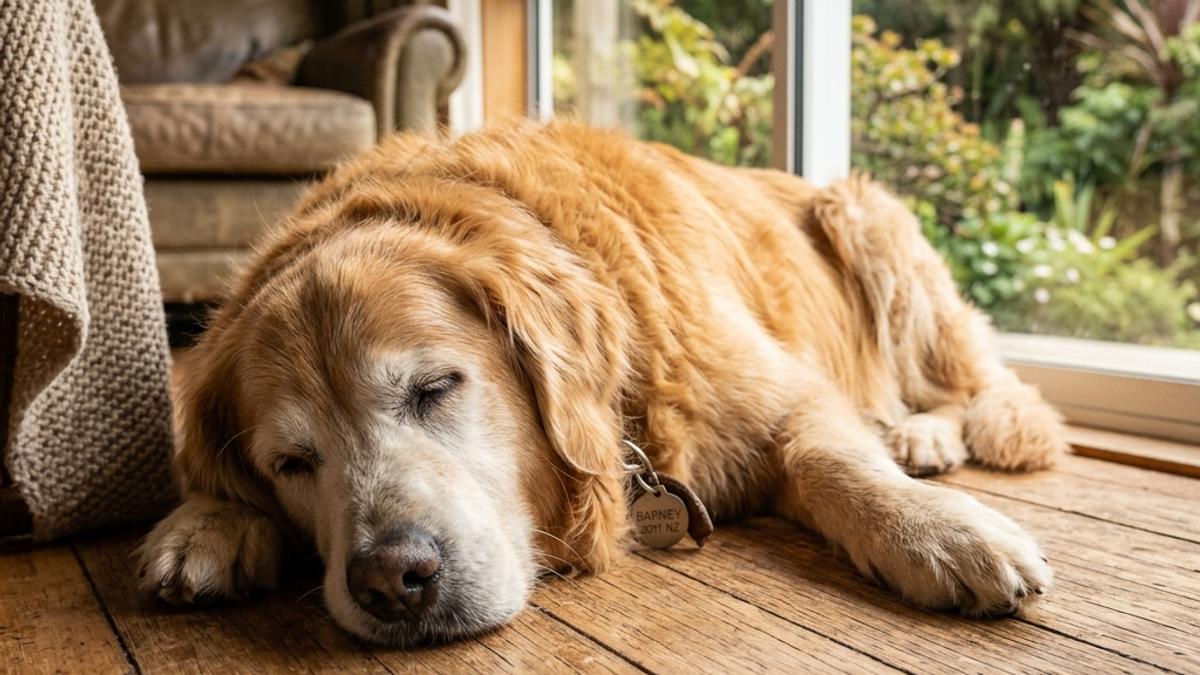
Many older dogs do better with shorter, easier walks than one huge weekend mission. In NZ winter, choose daylight when you can, avoid icy footpaths, and dry paws and coat after wet walks. If your dog slows down suddenly, limps, pants heavily, refuses walks, or seems painful, check with your vet instead of pushing through.
See winter dog walking tips NZ for seasonal setup.
Grooming and teeth still matter
Older dogs may groom less effectively and may wear claws differently if they exercise less on hard surfaces. Keep brushing gentle, check for mats, and keep nails short enough for comfortable walking. Dental care also stays important, but painful mouths need a vet, not more forceful brushing.
Helpful routines:
Food, weight and vet checks
Do not change to a senior diet just because the label sounds right. Ask your vet what suits your dog's body condition, activity and health history. Track weight and appetite, and budget for more frequent checks as your dog ages. Our Cost of Owning a Dog NZ guide can help you plan for routine and unexpected costs.
Changes that need a vet
Contact a NZ vet if you notice new or worsening:
- Limping, stiffness, weakness or pain.
- Drinking, toileting or appetite changes.
- Weight loss or gain.
- Coughing, breathing changes or tiring suddenly.
- Confusion, restlessness at night or unusual anxiety.
- Lumps, skin sores, bad breath or mouth pain.
- Any sudden behaviour change.
This is the line that keeps the article safe: comfort tips are fine, but health changes are for a vet.
Quick takeaways
- Senior care is comfort, routine and noticing change early.
- Use warm bedding, non-slip floors and easier access around the home.
- Keep exercise gentle and regular, not boom-and-bust.
- Grooming, nail care and dental care still matter.
- New health or behaviour changes should be checked by a NZ vet.
Shop related categories at PetMall
Looking for senior-comfort basics, dental care or daily health supplies in New Zealand? Browse the PetMall dog health range for current options and nationwide delivery.
Related reading
References
- MPI, Code of Welfare: Dogs, checked 2026-06-05: https://www.mpi.govt.nz/animals/animal-welfare/codes/all-animal-welfare-codes/code-of-welfare-dogs
- SPCA New Zealand, dog and puppy care, checked 2026-06-05: https://www.spca.nz/dog-care
- Companion Animals New Zealand, elderly dog winter care, checked 2026-06-05: https://www.companionanimals.nz/articles/how-to-ensure-your-elderly-dog-lives-a-good-life-as-we-head-into-winter
- RSPCA UK, caring for older dogs, checked 2026-06-05: https://education.rspca.org.uk/en/web/rspca/adviceandwelfare/pets/dogs/health/seniordogs
- SPCA New Zealand, companion animal dentistry, checked 2026-06-05: https://www.spca.nz/advice-and-welfare/article/companion-animal-dentistry
Important notice
*General comfort and wellbeing information for NZ senior dog owners. New or worsening health, mobility, appetite, drinking, toileting, breathing, weight, pain, lumps or behaviour changes should be assessed by a NZ vet.*
Free PetMall tools
Related guides
petmall.co.nz
Shop at PetMall
The products below are practical support items for your pet. PetMall ships across New Zealand.
- Dog FoodStart with food that matches your dog's life stage and activity level — and change brands slowly over 7–10 days.
- Dog TreatsTraining rewards and everyday treats — small, soft pieces work best for consistent reinforcement.
- Dog ToysA small rotation of chew, fetch, and puzzle toys usually works better than buying a large variety at once.
- Dog GroomingA gentle brush and the right shampoo make maintenance easier — especially for dogs that get muddy on walks.
- Leads & HarnessesComfort matters: padded contact points and adjustable fit help reduce rubbing on longer walks or tramping weekends.
- Flea & Worm TreatmentFor NZ conditions, look for protection that fits your routine (monthly vs longer-lasting) and your dog's weight range.