Great Dane vs Mastiff NZ: Gentle Giants Compared for Kiwi Homes
Great Dane vs Mastiff in New Zealand — size, temperament, lifespan, price and suitability for NZ homes. Which giant breed is right for your family?
Both the Great Dane and the Mastiff are among the largest dog breeds in the world, both are famously gentle with their families, and both carry a shorter lifespan than most breeds — seven to ten years. If you're drawn to a giant breed and are deciding between them, the differences are real: in temperament, drool level, exercise needs, and the practical realities of keeping an 80 kg dog in a New Zealand home.
Quick Comparison
| Great Dane | Mastiff | |
|---|---|---|
| Weight | 50–79 kg | 54–100 kg |
| Lifespan | 7–10 years | 8–10 years |
| NZ price (registered breeder) | Breeders rarely publish prices | No reliable NZ price (Sept 2026) |
| Energy level | 3/5 | 2/5 |
| Trainability | 4/5 | 4/5 |
| Good with kids | 5/5 | 5/5 |
| Good with other pets | 4/5 | 4/5 |
| Build | Tall, lean, elegant | Massive, heavily boned, wrinkled |
| Drool | Moderate | Heavy |
The Great Dane
Temperament
Great Danes are the friendly giants of the dog world — sociable, playful and surprisingly graceful for their size. Called the "Apollo of dogs," they move with a flowing gait that belies their bulk. In NZ homes, they are known for wanting to be lap dogs despite weighing as much as a Kiwi adult. They are gentle with children and generally tolerant of other pets.
Danes are alert without being overly defensive. They are not guard dogs in the traditional sense, though their size alone deters most intruders. Their sociability means they do not tolerate isolation well — they want to be part of the family.
Exercise Needs
Despite their size, Great Danes need only moderate exercise — a couple of 30-minute walks daily is generally sufficient for adults. Puppies and adolescents (up to 18–24 months) must have restricted exercise to protect their developing joints, as rapid growth puts stress on bones. No long runs or jumping until growth plates close.
NZ Lifestyle Considerations
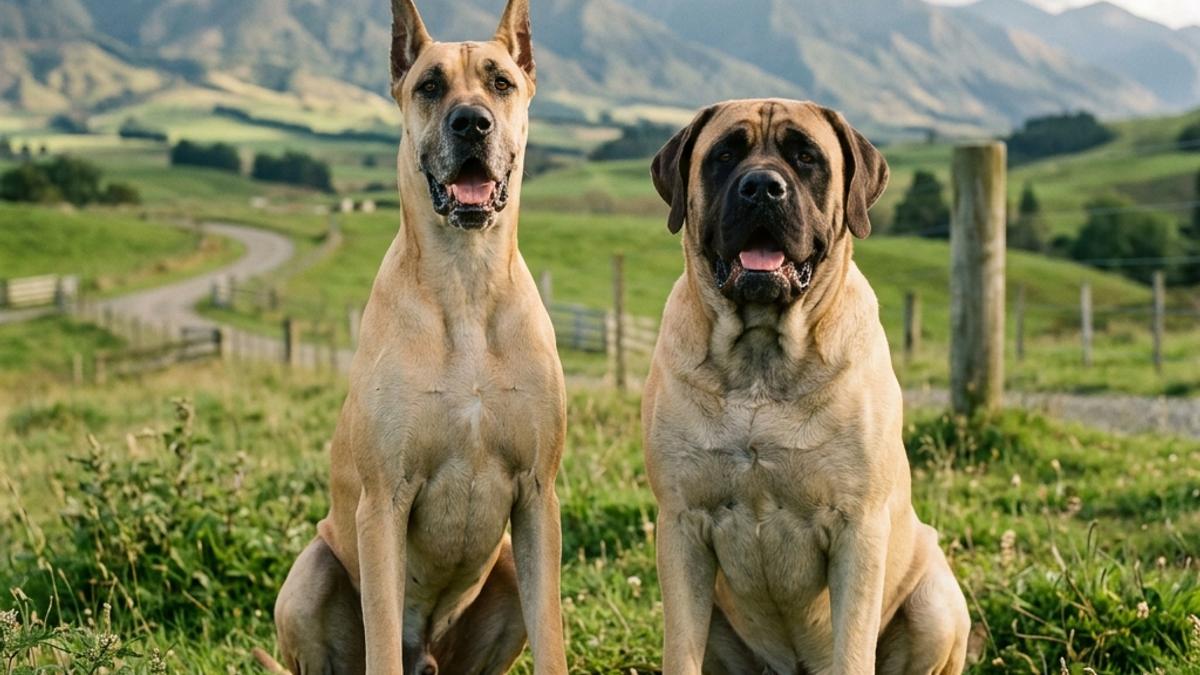
Great Danes need space — a large fenced section and a big, soft dog bed. They are indoor dogs and should not live outside; they feel the cold in South Island winters despite their size. Budget for large-breed food: a Dane can consume 4–6 cups of quality kibble daily. Gastric dilatation-volvulus (bloat/GDV) is a serious risk in large deep-chested breeds — feed two to three small meals daily and avoid vigorous exercise around mealtimes.
NZ Price and Availability
NZ Great Dane breeders rarely advertise prices publicly, so contact registered breeders directly for current pricing. Breed-specific rescues occasionally have adult Danes, which can be a good option for those who want to skip the physically demanding puppy phase.
The Mastiff
Temperament
The Mastiff (English Mastiff) is more reserved than the Great Dane — a dignified, calm giant that can be wary of strangers but is deeply devoted to its family. They are not aggressive by nature but are naturally protective. Early socialisation is essential to prevent excessive guardedness as adults.
Mastiffs are lower energy than Danes — expect a dog happy to spend most of the day resting, with shorter, gentler walks. They are excellent with children but their sheer size means accidental knockdowns are a real consideration in small NZ homes with toddlers.
The Wrinkle Maintenance Factor
Mastiff facial wrinkles need daily cleaning and thorough drying to prevent skin fold infections — a significant commitment that Great Dane owners don't face. In Auckland's humid summer, neglected wrinkles can develop dermatitis quickly.
NZ Lifestyle Considerations
Mastiffs drool substantially — this is not a breed for pristine interiors. They are also more prone to heatstroke than Great Danes due to their flat-ish face (brachycephalic features, though less extreme than Bulldogs). Keep them cool in NZ summers, particularly in the Waikato or Hawke's Bay heat.
NZ Price and Availability
No Mastiff (English Mastiff) puppies were advertised on TradeMe, and Dogs NZ listed no litters or breeders for the breed (Sept 2026), so we can't give a reliable current price; Bullmastiff and Neapolitan Mastiff prices are for different breeds. Adoption is possible through SPCA (fees $75–$399 by age) or breed rescues.
Key Differences
Size
Both are massive, but the Mastiff edges out the Dane in raw weight — a male Mastiff can reach 100 kg. Danes are taller but leaner. Either way, your car, furniture, and vet bills must accommodate an enormous dog.
Activity Level
Great Danes are moderately active; Mastiffs are lower energy. If you want a giant dog that's content with shorter walks, the Mastiff is the calmer choice.
Drool and Maintenance
Mastiffs drool heavily and need wrinkle care; Great Danes are relatively low-maintenance by comparison. Factor this into your daily routine.
Temperament with Strangers
Great Danes are typically friendly and approachable; Mastiffs are more reserved and protective. The latter may benefit from broader socialisation in NZ's busy parks and dog-friendly spaces.
Which Giant Is Right for Your NZ Home?
Choose the Great Dane if you want a sociable, active-yet-moderate, elegant giant that loves people and integrates easily into family life.
Choose the Mastiff if you want a calmer, more protective giant and you're prepared for daily wrinkle care and significant drool management.
Both require:
- A large fenced section or rural property
- A vehicle that can transport them safely
- Giant-breed food and supplementation
- An owner who has considered the shorter lifespan (7–10 years) and will love them deeply through it
Key Takeaways
- Both are giant breeds with similar lifespans (7–10 years); neither has a reliable published NZ price (Sept 2026)
- Great Danes are taller and more sociable; Mastiffs are heavier and more reserved/protective
- Mastiffs drool heavily and need wrinkle cleaning; Great Danes are lower maintenance
- Both share serious GDV/bloat risk — small frequent meals and calm mealtimes are essential
- Neither should live outdoors — both are companion dogs who need to be part of the family
References
---
*Compare in detail at our Great Dane profile and Mastiff profile. Also see the best family dog breeds NZ guide, or use the find a breed tool to explore giant breed options.*
Free PetMall tools
Related guides
petmall.co.nz
Shop at PetMall
The products below are practical support items for your pet. PetMall ships across New Zealand.
- Dog FoodStart with food that matches your dog's life stage and activity level — and change brands slowly over 7–10 days.
- Dog TreatsTraining rewards and everyday treats — small, soft pieces work best for consistent reinforcement.
- Dog ToysA small rotation of chew, fetch, and puzzle toys usually works better than buying a large variety at once.
- Dog GroomingA gentle brush and the right shampoo make maintenance easier — especially for dogs that get muddy on walks.
- Leads & HarnessesComfort matters: padded contact points and adjustable fit help reduce rubbing on longer walks or tramping weekends.
- Flea & Worm TreatmentFor NZ conditions, look for protection that fits your routine (monthly vs longer-lasting) and your dog's weight range.