Are Guinea Pigs Illegal in NZ? No — Here's the Confusion Explained
Are guinea pigs illegal in NZ? No! Clear up the common confusion with hamsters, understand New Zealand cavy ownership rules, housing, and adoption options.
No, guinea pigs are not illegal in New Zealand. Guinea pigs (also known as cavies, *Cavia porcellus*) are completely legal, exceptionally popular, and widely kept throughout the country. You can freely own, adopt, breed, and purchase guinea pigs from rescue organisations, pet stores, and certified breeders across every region of New Zealand without requiring a council permit.
The quick answer: Are guinea pigs permitted in New Zealand?
If you have encountered claims online that guinea pigs cannot be kept in New Zealand, you can rest assured that this information is entirely incorrect. Guinea pigs are one of New Zealand's most beloved and common domestic companion animals.
Tens of thousands of Kiwi households enjoy caring for guinea pigs. They are readily available through animal welfare shelters like the SPCA, local cavy clubs, and pet specialty retailers.
The misconception that guinea pigs are restricted usually stems from confusion with other exotic small rodents, such as hamsters and gerbils, which are indeed prohibited from entering New Zealand under national biosecurity import rules.
Why the confusion? Hamsters vs guinea pigs in New Zealand
The widespread online search query regarding whether guinea pigs are illegal in New Zealand is almost entirely driven by cross-species confusion with hamsters.
Here is why this confusion occurs:
- The Hamster Import Prohibition: Many prospective pet owners moving to New Zealand from North America, Europe, or Asia are surprised to discover that hamsters are completely unavailable in NZ. Because New Zealand has no domestic breeding colonies of hamsters and MPI biosecurity regulations prohibit live hamster imports, they cannot be purchased anywhere in the country.
- Generalised "Pocket Pet" Assumptions: People frequently conflate small companion rodents into a single category. When newcomers hear that "small cage pets like hamsters cannot enter NZ," they often mistakenly assume that guinea pigs are banned as well.
- Distinct Biosecurity Classification: In reality, New Zealand law treats guinea pigs and hamsters very differently. Guinea pigs have a long, well-established domestic history in New Zealand and represent zero biosecurity risk to native flora and fauna.
To understand why hamsters are unavailable while guinea pigs thrive, read our detailed comparison on hamsters versus guinea pigs in NZ or explore our overview of hamsters legal status in NZ.
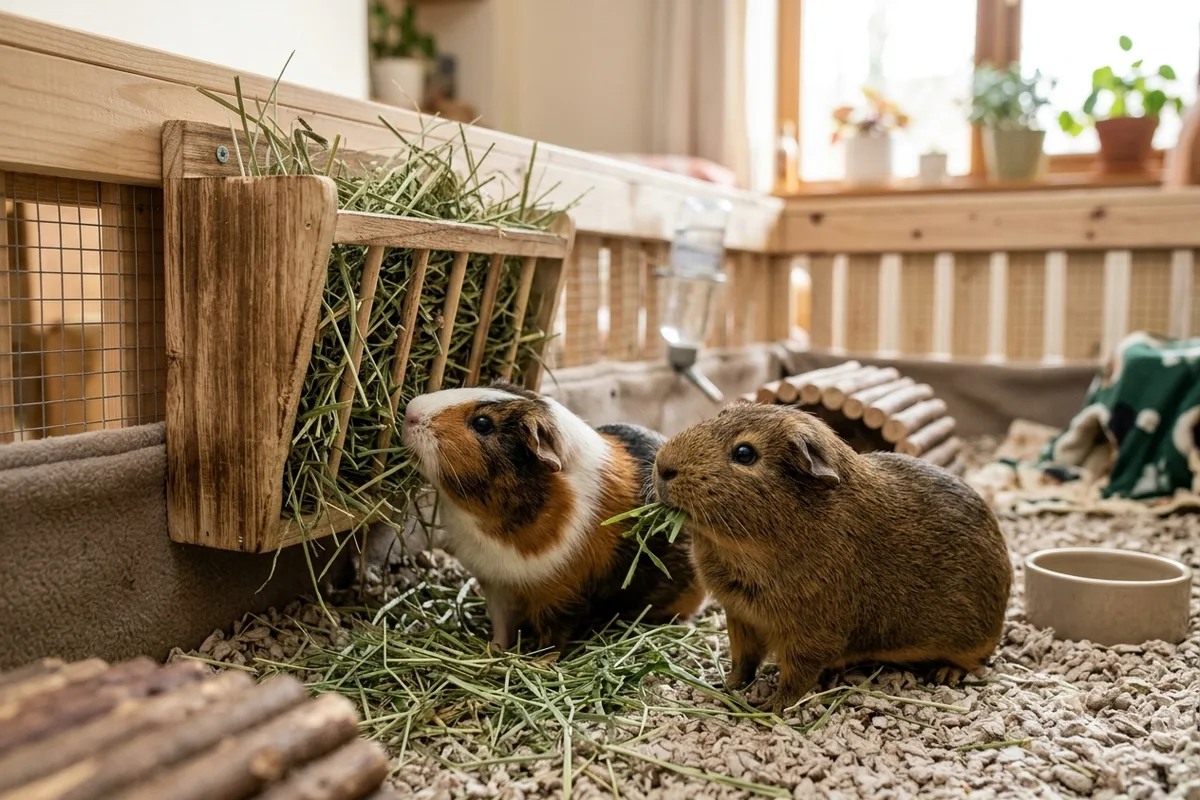
MPI Import Regulations: The Australian import pathway
In addition to having a thriving, self-sustaining domestic population, guinea pigs are recognised under official biosecurity legislation with an approved offshore import standard.
Under the Ministry for Primary Industries (MPI) regulations governing companion animals:
- Approved importation from Australia: Pet guinea pigs may be legally imported into New Zealand directly from Australia under established Import Health Standards.
- Biosecurity requirements: Imported cavies must meet rigorous health checks, veterinary parasite treatments, and residency requirements prior to departure.
- Contrast with other rodents: While guinea pigs and rabbits can enter from Australia (and chinchillas from the UK), species such as gerbils, degus, and hamsters have no import health standard from any country.
For full official details on offshore animal transport requirements, review the MPI non-cat and non-dog pet import page.
Sourcing a guinea pig in NZ: Adoption and ethical breeders
Because guinea pigs are fully legal and well-established throughout New Zealand, prospective owners have excellent ethical sourcing options:
1. Animal welfare adoption (SPCA & local rescues)
The SPCA and regional small animal rescue charities frequently care for bonded pairs of guinea pigs awaiting loving homes. Adopting from a shelter ensures animals receive health checks, initial parasite management, and appropriate sexing to prevent accidental breeding.
2. Certified cavy clubs and breeders
The New Zealand Cavy Club and regional enthusiast associations represent dedicated breeders who maintain high genetic welfare standards across various coat varieties, including American Smooth, Abyssinian, Peruvian, and Rex guinea pigs.
3. Local pricing expectations
In New Zealand, a pet guinea pig typically costs between NZD $30 and $80 per animal when purchased from ethical breeders or pet shops, while shelter adoption fees often range from NZD $20 to $40, frequently supporting essential charitable welfare operations.
Explore breed traits, grooming requirements, and temperaments in our dedicated American Guinea Pig profile.
Essential care standards under New Zealand animal welfare law
Under the Animal Welfare Act 1999 and the relevant codes of welfare, guinea pig owners in New Zealand have a legal responsibility to provide proper care. Crucial husbandry requirements include:
1. Mandatory social companionship
Guinea pigs are herd animals that experience acute stress when housed alone. New Zealand law does not mandate pairs by statute, but SPCA New Zealand's position statement on guinea pigs is explicit: they should be kept as a pair or a larger group of desexed individuals. The combinations that work in practice are two females, or a desexed male with one or more females. Under section 10 of the Animal Welfare Act 1999, meeting an animal's behavioural needs — not just food and shelter — is a legal obligation, and companionship is a behavioural need for a herd species.
*Important note:* Guinea pigs must never be housed with rabbits — the SPCA opposes housing rabbits and guinea pigs together. Rabbits commonly carry *Bordetella bronchiseptica* in their upper airways without being sick themselves, while in guinea pigs that same organism is an aggressive pathogen that can cause severe pneumonia. Rabbits can also injure a guinea pig badly with their hind legs, and the two species have completely different vitamin C requirements.
2. Daily dietary Vitamin C
Like humans, guinea pigs lack the enzyme required to synthesise Vitamin C internally. A deficiency leads rapidly to scurvy, joint swelling, and immune failure. Guardians must provide:
- How much they actually need: the Merck Veterinary Manual puts the maintenance requirement at about 10 mg of vitamin C per kg of bodyweight daily, rising to roughly 30 mg/kg during pregnancy. Deficiency signs can appear within about two weeks without a reliable source.
- Fresh vitamin C greens: daily portions of fresh leafy greens — capsicum is the standout (a few slices of red or green capsicum daily is the easiest reliable source in NZ), plus parsley, silverbeet and small amounts of broccoli.
- Constant feeding hay: unlimited fresh timothy or meadow hay, which should make up around 80% of the daily diet and keeps their continuously growing teeth worn down.
- Don't trust pellets alone: vitamin C in pellets is unstable and degrades with heat, light and moisture, so a bag that has been open for months may have lost most of it. Buy small bags, store them sealed and dark, and treat pellets as a top-up rather than the main source.
Watch for a rough coat, reluctance to move, swollen joints, weight loss or a guinea pig that suddenly stops eating — these can all point to vitamin C deficiency, and they need a vet, not a supermarket supplement guess.
3. Enclosure dimensions and predator safety
Most hutches sold in New Zealand pet shops are smaller than what SPCA New Zealand recommends. SPCA publishes preferred minimum floor sizes for C&C-style cages:
| Guinea pigs | Grids | Floor size |
|---|---|---|
| 1 | 2 × 3 | 70 × 105 cm |
| 2 | 2 × 4 | 70 × 140 cm |
| 3 | 2 × 5 | 70 × 175 cm |
| 4 | 2 × 6 | 70 × 210 cm |
A pair therefore needs close to a square metre of flat floor. Height, ramps and second levels do not substitute for floor space — guinea pigs are ground dwellers, not climbers, and they need a straight run to popcorn and sprint along. Outdoor hutches must be insulated, draught-free, shaded from afternoon sun, and securely predator-proofed against dogs, cats and wild rodents.
To learn more about setting up habitats and nutritional planning, consult our comprehensive guide on small pets and exotics care in NZ.
Summary: Welcoming guinea pigs into your Kiwi home
Guinea pigs are legal, gentle, vocal, and deeply rewarding family pets in New Zealand. By understanding their social needs, dietary requirements, and spacious housing standards, Kiwi families can enjoy many years of joyful companionship with these wonderful animals.
Sources
- Ministry for Primary Industries (MPI) — Bringing pets to NZ (other than cats and dogs): https://www.mpi.govt.nz/bring-send-to-nz/pets-travelling-to-nz/bringing-pets-to-nz-other-than-cats-and-dogs
- Merck Veterinary Manual — Housing and Nutrition of Guinea Pigs (vitamin C requirements, hay, housing): https://www.merckvetmanual.com/exotic-and-laboratory-animals/guinea-pigs/housing-and-nutrition-of-guinea-pigs
- Merck Veterinary Manual — Infectious Diseases of Guinea Pigs (*Bordetella bronchiseptica*; why rabbits and guinea pigs must not share housing): https://www.merckvetmanual.com/exotic-and-laboratory-animals/guinea-pigs/infectious-diseases-of-guinea-pigs
- SPCA New Zealand — Guinea pigs position statement (pairs or groups of desexed individuals): https://www.spca.nz/advocacy/position-statements/article/guinea-pigs
- SPCA New Zealand — Creating a DIY house for your guinea pig (preferred minimum cage sizes): https://www.spca.nz/advice-and-welfare/article/creating-a-diy-house-for-your-guinea-pig
- SPCA New Zealand — Caring for guinea pigs: https://www.spca.nz/advice-and-welfare/article/caring-for-guinea-pigs
- New Zealand Legislation — Animal Welfare Act 1999, section 10 (physical, health, and behavioural needs): https://www.legislation.govt.nz/act/public/1999/0142/latest/DLM50298.html
Related guides
petmall.co.nz
Shop at PetMall
The products below are practical support items for your pet. PetMall ships across New Zealand.