Can Dogs Eat Yoghurt? NZ Safety Answer
Can dogs eat yoghurt in NZ? Best limited. Dairy causes lactose intolerance issues like gas and diarrhea. Avoid flavored or xylitol-sweetened yoghurts.
Quick answer
Best limited, and avoid it if your dog is sensitive to dairy. Most adult dogs have limited lactase, and ASPCA warns that milk and dairy can cause digestive upset in pets.
Why
While yoghurt is often praised for containing probiotics (active beneficial bacteria cultures), most dogs are not equipped to digest dairy products efficiently. As puppies grow into adulthood, they produce less of the enzyme lactase, which is required to break down lactose, the sugar found in milk. Consuming dairy can cause gastrointestinal distress, including bloating, excessive gas, abdominal pain, diarrhea, and vomiting. Additionally, many commercial yoghurts contain high levels of sugar, fat, or dangerous additives. Specifically, artificial sweeteners like xylitol are highly toxic to dogs and can cause life-threatening hypoglycemia and liver failure. Chocolate or certain fruit syrups are also dangerous.
How much is a problem
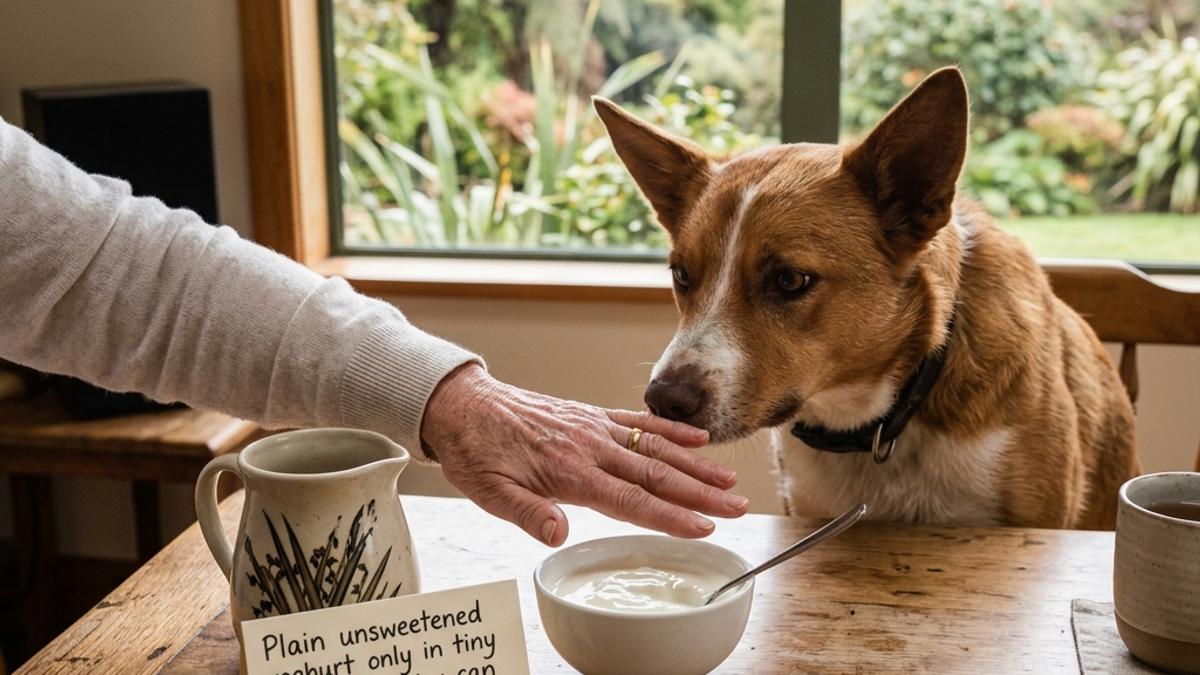
If your dog is not lactose intolerant, a single teaspoon (for small dogs) to a tablespoon (for large dogs) of plain, unsweetened Greek yoghurt can occasionally be offered as a treat or mixed into an enrichment toy. Plain Greek yoghurt is preferred because the straining process removes a large portion of the whey, resulting in lower lactose and sugar levels. However, if your dog shows any signs of soft stools or gas after eating dairy, it should be completely removed from their diet.
If your dog has eaten it
If your dog consumed plain, unsweetened yoghurt, monitor them for signs of digestive discomfort (diarrhea, vomiting, gas). If they consumed a sweetened or flavored yoghurt, read the ingredient list immediately to check for xylitol (often listed as birch sugar or wood sugar) or cocoa/chocolate. If xylitol or chocolate is present, or if your dog consumed a large tub of high-fat dairy, this is a veterinary emergency.
Safer alternatives
If you want to freeze a creamy treat inside a toy, use plain puréed pumpkin, mashed banana, or a pet-specific bone broth.
Related reading
- See the full list: Foods Dogs Can and Can't Eat NZ
- Dog Food Guide NZ
- Pet Emergency Kit NZ Civil Defence Guide
- New Dog Owner: First 30 Days NZ
References
- ASPCA, People Foods to Avoid Feeding Your Pets, checked 2026-07-16: https://www.aspca.org/pet-care/aspca-poison-control/people-foods-avoid-feeding-your-pets
- VCA Animal Hospitals, Gastroenteritis in Dogs, checked 2026-07-16: https://vcahospitals.com/know-your-pet/gastroenteritis-in-dogs
When to see a vet
If your dog has eaten yoghurt containing xylitol, chocolate, or is showing severe vomiting and diarrhoea, contact your NZ vet or an emergency clinic immediately.
Important notice
*General food-safety information for NZ pet owners, reviewed against ASPCA/VCA guidance (July 2026). For any suspected ingestion or illness, contact a NZ vet, after-hours emergency clinic, or SPCA for advice.*
Free PetMall tools
Related guides
petmall.co.nz
Shop at PetMall
The products below are practical support items for your pet. PetMall ships across New Zealand.
- Dog FoodStart with food that matches your dog's life stage and activity level — and change brands slowly over 7–10 days.
- Dog TreatsTraining rewards and everyday treats — small, soft pieces work best for consistent reinforcement.
- Dog ToysA small rotation of chew, fetch, and puzzle toys usually works better than buying a large variety at once.
- Dog GroomingA gentle brush and the right shampoo make maintenance easier — especially for dogs that get muddy on walks.
- Leads & HarnessesComfort matters: padded contact points and adjustable fit help reduce rubbing on longer walks or tramping weekends.
- Flea & Worm TreatmentFor NZ conditions, look for protection that fits your routine (monthly vs longer-lasting) and your dog's weight range.