Russian Blue vs British Shorthair NZ: Which Quiet, Gentle Cat Is Right for You?
Russian Blue or British Shorthair? Both are calm, gentle NZ cats that suit quieter households. Compare personality, independence and suitability for working owners.
Two of the most quietly appealing cat breeds in New Zealand — both low-key, gentle and suitable for households that want a genuinely calm companion. The Russian Blue and the British Shorthair share a calm temperament and minimal grooming needs, but differ in how they relate to their owners and how they handle being alone. For households that want a serene, low-drama cat that doesn't demand constant attention, these two breeds are worth comparing carefully.
Quick comparison
| Russian Blue | British Shorthair | |
|---|---|---|
| Build | Medium, lean, fine-boned | Large, round, cobby |
| Coat | Short, dense blue-grey with silver tips | Short, dense plush — wide colour range |
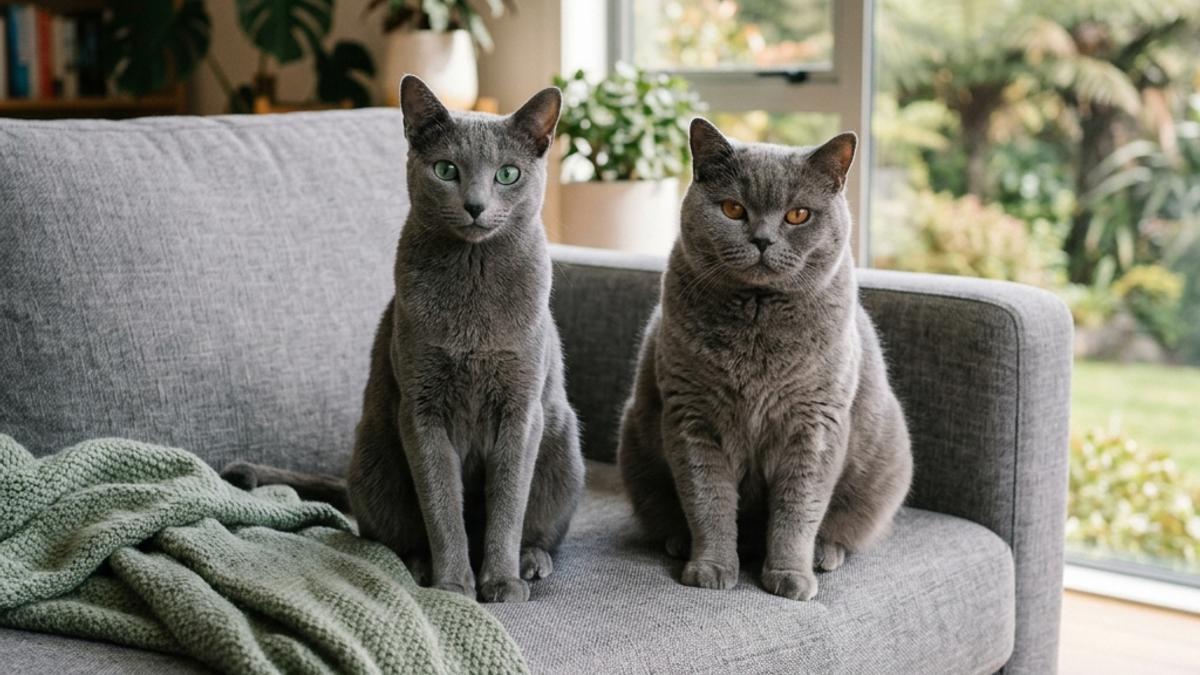
| Eyes | Vivid green | Copper, gold or blue depending on colour |
| Energy level | Moderate — calm but playful | Low–moderate — placid and settled |
| Temperament | Reserved, loyal to close family | Calm, independent, not lap-focused |
| Vocalisation | Quiet | Very quiet |
| Good with strangers? | Reserved — warms slowly | Tolerant but not welcoming |
| Good for working households? | Yes — but needs companion | Excellent — independent |
| NZ price estimate | $1,000–$2,000 | $1,200–$2,500 |
Full profiles: Russian Blue · British Shorthair
Temperament: similar surface, different depth
Russian Blue: devoted but selective. Russian Blues are known for forming deep bonds with their family — but they choose their people and take time to warm to strangers. A Russian Blue that trusts you will follow you quietly around the house, appreciate a gentle fuss and enjoy your company. An unfamiliar person may find the same cat distant or absent. They're gentle, playful in their own quiet way, and low-drama. They're sensitive to household routines — disruption (moving house, new pets, visitors) affects them more than less-attached breeds.
British Shorthair: more independent and less emotionally attached to specific people. British Shorthairs enjoy being in the same room as their family without needing to be *on* them — they're "four-on-the-floor" cats that rarely seek lap time. They're tolerant of handling (without being enthusiastic about it), not bothered by visitors (without being welcoming), and generally content to observe and participate at their own pace. This independence makes them exceptionally well-suited to working households where the cat is alone for periods during the day.
For NZ working professionals with regular long office hours: the British Shorthair handles alone time better. For households that are home regularly and want a loyal, quietly devoted companion: the Russian Blue bonds more deeply.
Exercise and enrichment
Russian Blue: moderate activity needs. They enjoy interactive play sessions and benefit from a cat tree or climbing options, but are not high-demand like a Bengal or Abyssinian. They're intelligent and enjoy puzzle toys — keeping their mind engaged helps manage the sensitivity to routine changes.
British Shorthair: low-moderate activity. They're content with short play sessions and a comfortable perch. They don't demand enrichment the way an active breed does, but they appreciate it. British Shorthairs are one of the most content-with-solitude breeds in the cat world, which is a genuine practical advantage.
Grooming
Both breeds have short, dense, low-maintenance coats.
Russian Blue: the double coat is dense and fine, with a distinctive silver-tipped outer layer that gives it a shimmering quality. Shedding is moderate. Weekly brushing is sufficient. Bath when needed (rarely).
British Shorthair: the plush, dense coat sheds moderately. Weekly brushing, more during seasonal changes. No matting (it's too short and dense to mat). The plush coat feels like a teddy bear and is one of the reasons British Shorthairs are so visually appealing.
Neither breed requires professional grooming. Both are among the easiest cat coats to maintain.
Handling strangers and household changes
This is where the two breeds differ most practically for NZ households.
Russian Blue: reserved and slow to trust. Visitors to the house will often not see the Russian Blue at all — it will be elsewhere waiting for the unfamiliar people to leave. This is not a problem unless you expected a social cat for guests. For the people the Russian Blue has chosen to trust, this selectivity is the point — the loyalty feels earned and specific.
British Shorthair: tolerant of changes, visitors and novelty. They don't bond intensely enough to be disrupted by them. New people in the house? Fine. New cat being introduced? Managed, with appropriate introduction. This makes British Shorthairs somewhat more flexible in dynamic households — though they still appreciate a calm baseline.
Multi-pet households
Russian Blue: generally fine with other cats and dogs they've grown up with. New introductions require patient, gradual introduction. Their sensitive nature means rushed introductions create lasting anxiety.
British Shorthair: tolerant but not enthusiastic. They coexist with other pets without conflict — but they're not seeking companions. A British Shorthair in a two-cat household will usually establish a peaceable distance rather than a close bond.
Health
*General information only — consult a registered NZ vet.*
Russian Blue is generally a healthy breed with few notable hereditary health issues. They can be prone to bladder stones and obesity (they enjoy food and have a good begging technique). Average lifespan is 15–20 years — one of the longest-lived domestic cat breeds.
British Shorthair is prone to hypertrophic cardiomyopathy (HCM — ask breeders for screening), polycystic kidney disease (PKD — DNA testable) and haemophilia B in some lines. Their stocky build can predispose to obesity — weight management through portion control is important. Average lifespan 12–17 years.
Cost in NZ
- Russian Blue: $1,000–$2,000 from reputable NZ breeders
- British Shorthair: $1,200–$2,500 depending on colour and breeder
Both breeds are well-established in NZ with reputable breeders through the New Zealand Cat Fancy.
Which breed suits you?
Choose a Russian Blue if:
- You want a devoted, loyal companion that bonds deeply with its chosen people
- You're home regularly and can provide consistent quiet company
- A cat that's reserved with strangers (and thus not "everyone's cat") suits your lifestyle
- You want an exceptionally long-lived breed
Choose a British Shorthair if:
- You want a calm, independent cat that handles alone time and household changes well
- Your lifestyle involves regular visitors or variable routines
- You appreciate a self-sufficient cat that isn't emotionally demanding
- The plush, round teddy-bear aesthetic specifically appeals to you
Quick takeaways
- Both are quiet, calm, low-maintenance NZ cats — the difference is attachment style
- Russian Blues are devoted to their specific people; British Shorthairs are more independent and adaptable
- Both have easy grooming requirements and minimal vocality
- British Shorthairs suit working households better; Russian Blues suit those who are home regularly
- Russian Blues live exceptionally long (15–20 years); British Shorthairs are 12–17 years
- HCM screening is important for British Shorthairs from reputable NZ breeders
Related reading
- Russian Blue breed profile NZ
- British Shorthair breed profile NZ
- Best Cat Breeds for First-Time Owners NZ
- Best Cats for Seniors NZ
- Cat hub — breeds and guides
---
References
- TICA — Russian Blue breed standard, checked 2026-07-08: https://tica.org/breed/russian-blue/
- Merck Veterinary Manual, Hypertrophic Cardiomyopathy in Dogs and Cats — the most common feline cardiomyopathy, with breed-associated inherited forms, checked 2026-08-03: https://www.merckvetmanual.com/circulatory-system/cardiomyopathy-in-dogs-and-cats/hypertrophic-cardiomyopathy-in-dogs-and-cats
- Merck Veterinary Manual, Urolithiasis in Small Animals — formation, signs and dietary management of urinary stones in cats, checked 2026-08-03: https://www.merckvetmanual.com/urinary-system/urolithiasis-in-small-animals
---
*This guide provides general breed-comparison information for NZ cat owners. Health information is general only — consult a registered NZ vet for advice specific to your cat.*
Free PetMall tools
Related guides
petmall.co.nz
Shop at PetMall
The products below are practical support items for your pet. PetMall ships across New Zealand.
- Cat FoodStart with food that matches your cat's life stage — change brands slowly over 7–10 days to avoid digestive upset.
- Cat LitterClumping or crystal, most cats prefer an unscented litter and a clean tray — one tray per cat plus one spare is the NZ rule of thumb.
- Cat TreatsGreat for bonding and training — keep treats under 10% of daily calories to protect your cat's waistline.
- Cat ToysA small rotation of toys (feather wand, puzzle feeder, and comfort toy) usually works better than buying many at once.
- Cat GroomingRegular brushing cuts hairballs and shedding — essential for long-haired breeds like Ragdolls and British Longhairs.
- Flea & Worm TreatmentFor NZ conditions, choose protection that fits your cat's weight and lifestyle (indoor vs outdoor) and keep it regular.