Golden Retriever Price NZ: $1,800–$3,000 per Puppy
Learn the Golden Retriever price in NZ. TradeMe puppies were advertised at $1,800 - $3,000 (Sept 2026). Discover ongoing expenses, hip screening costs, and adoption alternatives.
Quick answer
In New Zealand, Golden Retriever puppies were advertised at $1,800 to $3,000 NZD on TradeMe when we checked in September 2026 (median $2,200 across 17 litters); only one litter was advertised as Dogs NZ-registered, at $3,000. If a Golden Retriever is available through the SPCA, its standard dog adoption fees apply: $399 for a puppy under 5 months, $149 for a dog aged 5 months to 8 years, or $75 for a senior dog (9+), plus a $2.50 service charge. These figures are indicative ranges only — prices vary by breeder, lines, and region. Always verify current pricing directly.
What drives the price
The price of a Golden Retriever puppy reflects the popularity of the breed and the significant financial investment made by ethical breeders to maintain the health and temperament of their dogs.
Ethical breeders register their dogs with Dogs NZ and follow strict guidelines to ensure they do not pass on genetic diseases. Golden Retrievers are susceptible to hip and elbow dysplasia, which can cause painful arthritis and lameness. To prevent this, breeders must have the parent dogs' hips and elbows X-rayed and scored under the New Zealand Veterinary Association (NZVA) or PennHIP schemes. In the NZVA scheme, joints are graded by specialists (hip scores are out of 106, with lower scores being better, and elbows are graded from 0 to 3). Breeders strive to breed only dogs with scores below the breed average to improve joint health over generations.
Additionally, breeding dogs must undergo annual eye clearance examinations by a registered veterinary ophthalmologist to check for Progressive Retinal Atrophy (PRA) and hereditary cataracts. They also undergo DNA testing for Ichthyosis, a genetic skin condition. Performing these specialist veterinary tests on breeding stock costs thousands of dollars, but it significantly reduces the likelihood of puppies developing chronic health conditions.
Furthermore, importing high-quality bloodlines from overseas (such as Australia or the UK) is frequently done by premium kennels to diversify the gene pool, adding substantial transit and quarantine costs.
Ongoing costs — the real number
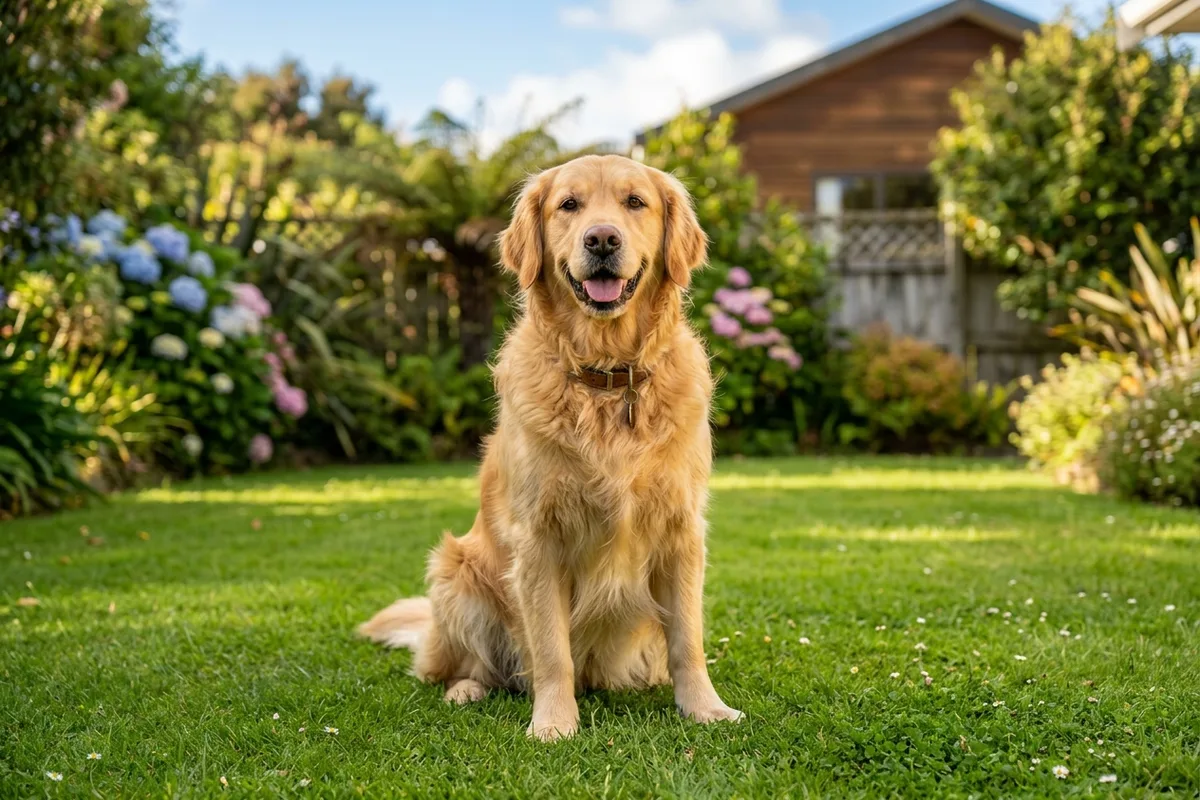
Owning a large, active dog like a Golden Retriever comes with substantial ongoing expenses that will accumulate over the dog's average 10 to 12-year lifespan.
During the first year, owners should plan to spend $1,500 to $2,500 NZD on start-up expenses, including vaccinations, desexing, microchipping, council registration, crate, bed, and toys. Large-breed puppy food is essential during their growth phase to ensure correct bone and joint development.
One of the largest monthly expenses for a Golden Retriever is food. As large dogs, they require a significant volume of high-quality nutrition to support their joints and coat. Feeding a premium commercial diet typically costs $100 to $180 NZD per month.
Routine veterinary care, including annual health checks, booster vaccinations, and flea, tick, and worming preventatives, averages $700 to $1,000 NZD per year.
Additionally, Golden Retrievers have a dense, double coat that sheds heavily, especially during seasonal changes. While many owners groom their dogs at home, professional grooming to manage shedding and keep the coat healthy costs $100 to $160 NZD per session three to four times a year. Owners should invest in quality undercoat rakes and slicker brushes. Home grooming requires dedicated tools like high-velocity dryers (costing $150-$300 NZD) and dematting combs to manage the undercoat and prevent matting.
Due to the risk of joint dysplasia, cancer, and skin allergies, comprehensive pet insurance is highly recommended. For a Golden Retriever puppy in New Zealand, insurance premiums typically range from $80 to $130 NZD per month.
Cost of owning a Golden Retriever vs other breeds
When comparing a Golden Retriever to other popular New Zealand breeds, there are distinct budget differences. Compared to Labrador Retrievers, Golden Retrievers have very similar food and health-insurance costs, but their grooming expenses are significantly higher due to their long double coat, which requires regular professional maintenance to prevent painful matting.
On the other hand, compared to smaller companion dogs like Cavoodles, a Golden Retriever is much more expensive to feed and insure. While small dogs have lower food costs, their veterinary bills for injuries can be smaller, whereas a large dog like a Golden Retriever requires higher medication dosages, which increases all standard veterinary costs.
Adoption: the lower-cost alternative
Adopting a Golden Retriever from a rescue organisation is a wonderful alternative. Organisations like the SPCA NZ and the Golden Retriever Club rescue networks work to rehome dogs that need new families.
SPCA dogs are desexed, microchipped and vaccinated before adoption; other rescues set their own fees. While adopting is highly rewarding, purebred Golden Retrievers are rarely surrendered to shelters. When they do appear, rescue organisations are flooded with applications, so patience is required.
Furthermore, some retired show or breeding dogs are placed in pet homes. These dogs are well-trained and make fantastic companions for those looking to avoid the puppy stage. Breed-specific rescue coordinators work hard to match these adult dogs with suitable homes based on lifestyle.
Avoiding scams and puppy farms
Because of their immense popularity, Golden Retrievers are frequently used as bait by online scammers. Scammers create fake websites using stolen photos of puppies and advertise them at unrealistically low prices (e.g., $1,000). They will ask for payment via bank transfer or gift cards and then cut off communication.
To protect yourself:
- Verify that the breeder is registered with Dogs NZ.
- Ask to see the hip and elbow certificate scores of both parents.
- Request a video call to see the puppies with their mother before paying a deposit.
- Review trusted registries and breeder directories, such as the Golden Retriever Breeders NZ Guide.
Related reading
Sources
- New Zealand Veterinary Association (NZVA), NZVA Elbow Dysplasia Scheme (grading 0–3, run jointly with Dogs New Zealand), checked 2026-07-19: https://nzva.org.nz/clinical-resources/companion-animal/dysplasia
- Merck Veterinary Manual, Hip Dysplasia in Dogs (heritability, radiographic screening incl. PennHIP, clinical signs), checked 2026-07-19: https://www.merckvetmanual.com/musculoskeletal-system/arthropathies-and-related-disorders-in-small-animals/hip-dysplasia-in-dogs
- Dogs New Zealand, Health Testing & Official Schemes, checked 2026-07-18: https://www.dogsnz.org.nz/health/health-testing-forms
Important notice
*Indicative ranges only — prices vary by breeder, lines and region. Always verify current pricing directly. General food-safety and cost information for NZ pet owners, reviewed against local veterinary and breeder resources (July 2026).*
Related guides
petmall.co.nz
Shop at PetMall
The products below are practical support items for your pet. PetMall ships across New Zealand.
- Dog FoodStart with food that matches your dog's life stage and activity level — and change brands slowly over 7–10 days.
- Dog TreatsTraining rewards and everyday treats — small, soft pieces work best for consistent reinforcement.
- Dog ToysA small rotation of chew, fetch, and puzzle toys usually works better than buying a large variety at once.
- Dog GroomingA gentle brush and the right shampoo make maintenance easier — especially for dogs that get muddy on walks.
- Leads & HarnessesComfort matters: padded contact points and adjustable fit help reduce rubbing on longer walks or tramping weekends.
- Flea & Worm TreatmentFor NZ conditions, look for protection that fits your routine (monthly vs longer-lasting) and your dog's weight range.