Pet Breed Guide NZ
Cockatoo (Sulphur-crested)
The Sulphur-crested Cockatoo is an iconic, large parrot renowned for its striking white plumage and distinctive yellow crest. Originating from Australia, these intelligent birds are known for their playful antics, strong personalities, and often boisterous vocalisations. As pets, they form incredibly strong bonds with their owners, often displaying a need for constant interaction and mental stimulation. Their long lifespan means they are a significant, lifelong commitment. In New Zealand, owning a Sulphur-crested Cockatoo requires a permit, underscoring the importance of understanding and adhering to MPI regulations for legal acquisition and responsible ownership.
Photo Gallery
NZ Ownership Snapshot
Restricted in NZ- Noise Level
- loud
- Social Needs
- pairs
- Diet Type
- Seeds, pellets, vegetables, fruit, and species-appropriate enrichment foods
- UVB Required
- No
Restricted regional-pest context: MPI lists sulphur-crested cockatoo in examples of regional pest management plan restrictions. Check regional council rules before keeping, moving, breeding, or selling.
Breed Snapshot
- Size
- large
- Lifespan
- 40-70 years
- Origin
- Australia
- Care Focus
- Highly vocal bird that needs daily enrichment, secure housing, and experienced handling.
- NZ Price
- NZD $2,000 - $5,000+
- Annual Vet Cost
- Estimated annual vet costs can range from NZD $300 - $800+, depending on health status and emergency needs. This can be higher due to the limited availability of exotic animal veterinarians in New Zealand, meaning specialised care may involve travel or higher consultation fees.
Personality Scores
NZ Lifestyle Fit
Sulphur-crested Cockatoos are a significant commitment for any Kiwi household. Their large size and notoriously loud vocalizations make them unsuitable for most urban apartments or homes with close neighbours, unless soundproofing is exceptional. They thrive in spacious environments, ideally with an outdoor aviary or a large indoor cage that allows for flight and climbing, along with plenty of daily supervised out-of-cage time. While adaptable, New Zealand's climate requires consideration; protection from the cold is essential, particularly in the South Island winters, and good ventilation is needed in humid regions like Auckland. There are no specific regional restrictions beyond the national permit requirement. Legally sourcing a Sulphur-crested Cockatoo in NZ means obtaining one from a licensed NZ breeder or keeper who can provide proof of legal acquisition and transfer, and only after you have secured the necessary MPI permits.
Restricted regional-pest context: MPI lists sulphur-crested cockatoo in examples of regional pest management plan restrictions. Check regional council rules before keeping, moving, breeding, or selling.
About the Cockatoo (Sulphur-crested)
Sulphur-crested Cockatoos (Cacatua galerita) are large, striking parrots native to Australia and parts of New Guinea. Recognisable by their brilliant white feathers and a prominent, retractable yellow crest, these birds are highly intelligent and possess complex personalities. They are known for their ability to mimic sounds and words, their strong social bonds, and their often loud vocal repertoire. With an impressive lifespan of 40-70 years, and sometimes even longer in captivity, owning a Sulphur-crested Cockatoo is a serious, long-term commitment, akin to raising a human child in terms of dedication required. Their size, intelligence, and social needs demand a dedicated owner who can provide ample space, enrichment, and daily interaction.
What They Look Like
Sulphur-crested Cockatoos are substantial birds, typically measuring between 45 to 55 centimetres from head to tail and weighing up to 900 grams. Their plumage is predominantly pristine white, providing a stark contrast to their most distinguishing feature: a bright yellow, forward-curving crest that they can raise or lower at will, often as an indicator of their mood or excitement. They have a powerful, dark grey beak designed for cracking nuts and seeds, and strong, grey feet for climbing and grasping. A pale yellow wash can sometimes be seen on the underside of their wings and tail feathers, and they have a blue-grey ring around their eyes. Males and females are visually similar, though some suggest males may have darker eyes and females a reddish-brown iris, this is not a definitive method for sexing.
Personality & Behaviour
These cockatoos are highly social and intelligent creatures, known for their affectionate, playful, and sometimes demanding nature. They thrive on interaction and can become deeply bonded with their human companions, often seeking constant attention. If not adequately stimulated or given enough social interaction, they can develop behavioural issues such as feather plucking, self-mutilation, or excessive screaming. They are incredibly curious and enjoy exploring, chewing, and problem-solving. Their intelligence means they can be trained to perform tricks and mimic speech, but it also means they require consistent mental challenges to prevent boredom. Sulphur-crested Cockatoos are notoriously loud, emitting piercing screeches and squawks, especially during dawn and dusk, or when seeking attention. This noise level is a significant consideration for potential owners, particularly those with close neighbours.
Life in New Zealand
In New Zealand, the Sulphur-crested Cockatoo is classified as a permit-required species. This means prospective owners must obtain specific authorisation from the Ministry for Primary Industries (MPI) before acquiring or keeping one of these birds. It is crucial to understand and adhere to all MPI regulations regarding their possession and sourcing. They are adaptable birds, but in New Zealand's varied climate, they require appropriate housing that protects them from extreme cold, especially in the South Island, and offers good ventilation in humid areas like Auckland. Their long lifespan means they will be a companion for many decades, necessitating careful planning for their care, even beyond an owner's lifetime. Sourcing must always be from legal, licensed breeders or keepers within New Zealand.
Is This the Right Pet for You?
Owning a Sulphur-crested Cockatoo is not for the faint of heart. Their immense intelligence, significant noise level, and demanding social needs require an owner who is prepared for a lifelong commitment. They need a large enclosure, daily out-of-cage time, and constant mental enrichment through toys and interaction. If you live in an apartment or close to neighbours, their loud vocalizations could be a significant issue. They are best suited for experienced bird owners who have ample time, space, and resources to dedicate to their complex needs. A multi-generational household or a plan for their long-term care is also a wise consideration given their incredible longevity. If you are prepared for the challenges and rewards, a Sulphur-crested Cockatoo can be an incredibly loving and engaging companion.
Fun Facts
Fact 1
Sulphur-crested Cockatoos can live for over 70 years, making them one of the longest-lived parrot species.
Fact 2
Their crest is an excellent indicator of their mood; raised when excited or alarmed, flattened when relaxed.
Fact 3
These intelligent birds are known for their ability to mimic human speech and various sounds.
Fact 4
In the wild, they often form large flocks that can number in the hundreds, showcasing their highly social nature.
Fact 5
They are incredibly strong chewers and can destroy wooden furniture if not provided with adequate chew toys.
Related Breeds
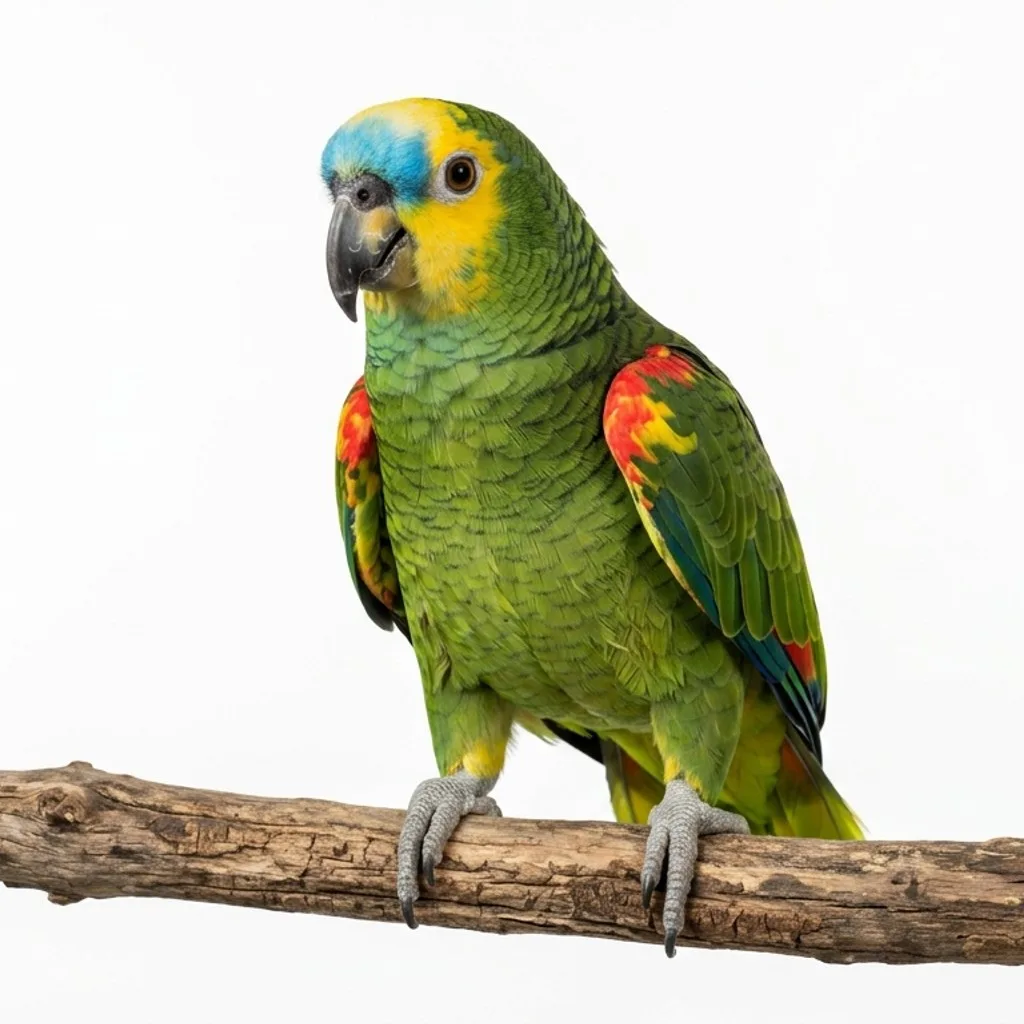
Blue-fronted Amazon Parrot
The Blue-fronted Amazon is a medium-sized green parrot from South America, marked by blue across the forehead and yellow on the crown and cheeks, and it suits experienced keepers rather than first-time bird owners. Outgoing, playful and often boisterous, it is an accomplished talker that can repeat words and phrases with real clarity. It is also genuinely loud, calling most at dawn and dusk, and adolescents commonly move through a bluffing stage that calls for patient, consistent handling. A lifespan of 40 to 60 years makes this a decades-long commitment. Daily care means fresh food and water, spot cleaning, and two to four hours of supervised time out of the cage, with rotating destructible toys and training sessions to head off the boredom that shows up as feather plucking or aggression. Best suited to a settled, experienced household with daily time and tolerance for noise.
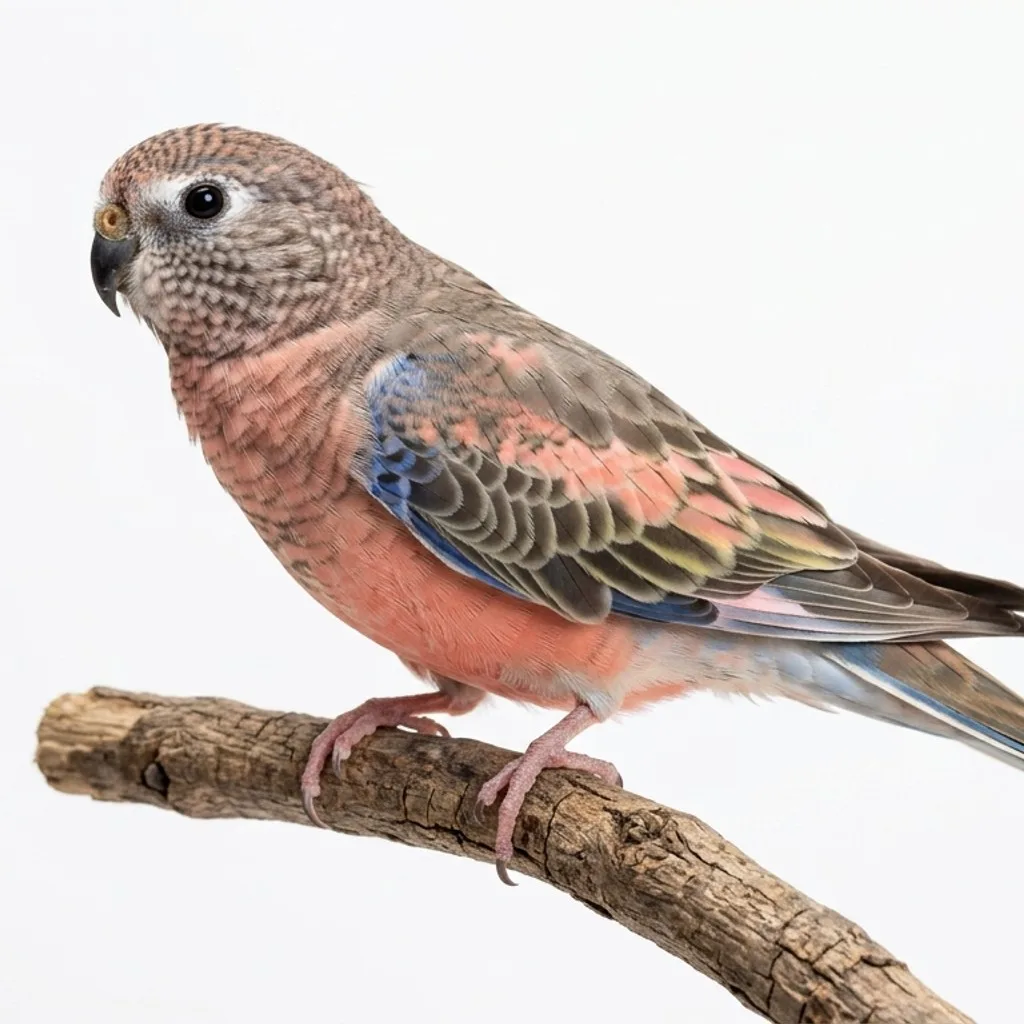
Bourke's Parakeet
Bourke's Parakeet is a small, softly coloured parrot from inland Australia, rosy pink below with a grey-brown back and blue in the wings, and it is one of the gentler options for a first-time bird owner. It is quiet by parakeet standards, offering melodic chirps rather than squawking, and it is crepuscular, so most of its activity falls around dawn and dusk while the day passes in dozing and gentle foraging. Bourkies are docile, rarely bite, and become tame with steady, unhurried handling, though they tend to enjoy company more than cuddling and are not mimics. They do best in pairs or small groups, with a roomy cage, varied perches, chewable toys and supervised flight in a bird-proofed room. A lifespan of 8 to 12 years and soft vocalisations make them workable in flats and quiet homes that want a calm, undemanding bird.
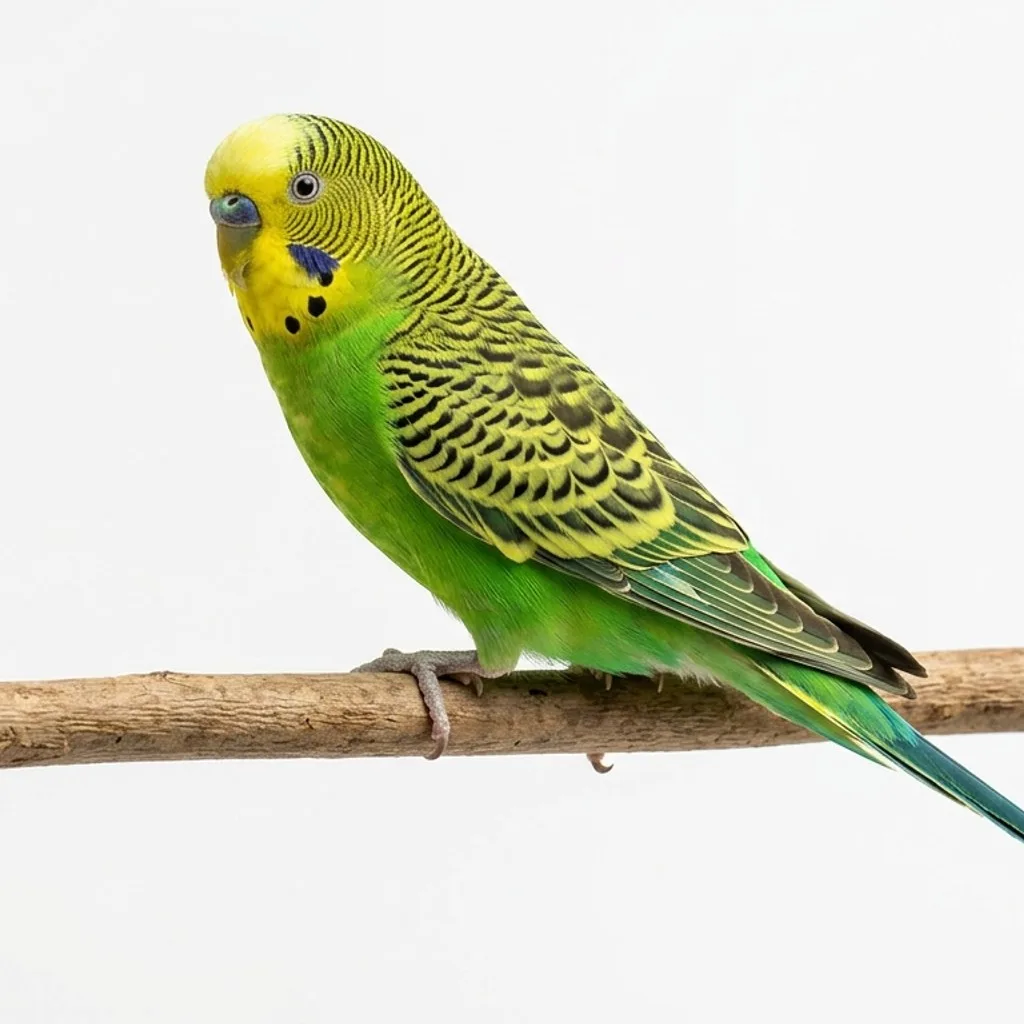
Budgerigar (Budgie)
The Budgerigar, or budgie, is a small long-tailed seed-eating parrot from Australia and one of the most widely kept companion birds in the world. It is lively, inquisitive and intensely social: budgies live in large flocks in the wild, so a single bird needs either a companion budgie or committed daily human interaction to stay settled. They are bright enough to learn to step up, perform simple tricks and mimic speech, males more readily than females. Wild birds are green and yellow with black scalloping on the wings, while selective breeding has produced blue, white, yellow, grey and pied colour mutations. Care is straightforward rather than trivial: fresh food and water twice daily, a pellet-based diet with seed as a treat, spot cleaning, and 30 to 60 minutes of supervised flight in a bird-safe room. Their small size suits apartments, though near-constant chirping makes them a poor match for a noise-sensitive household.
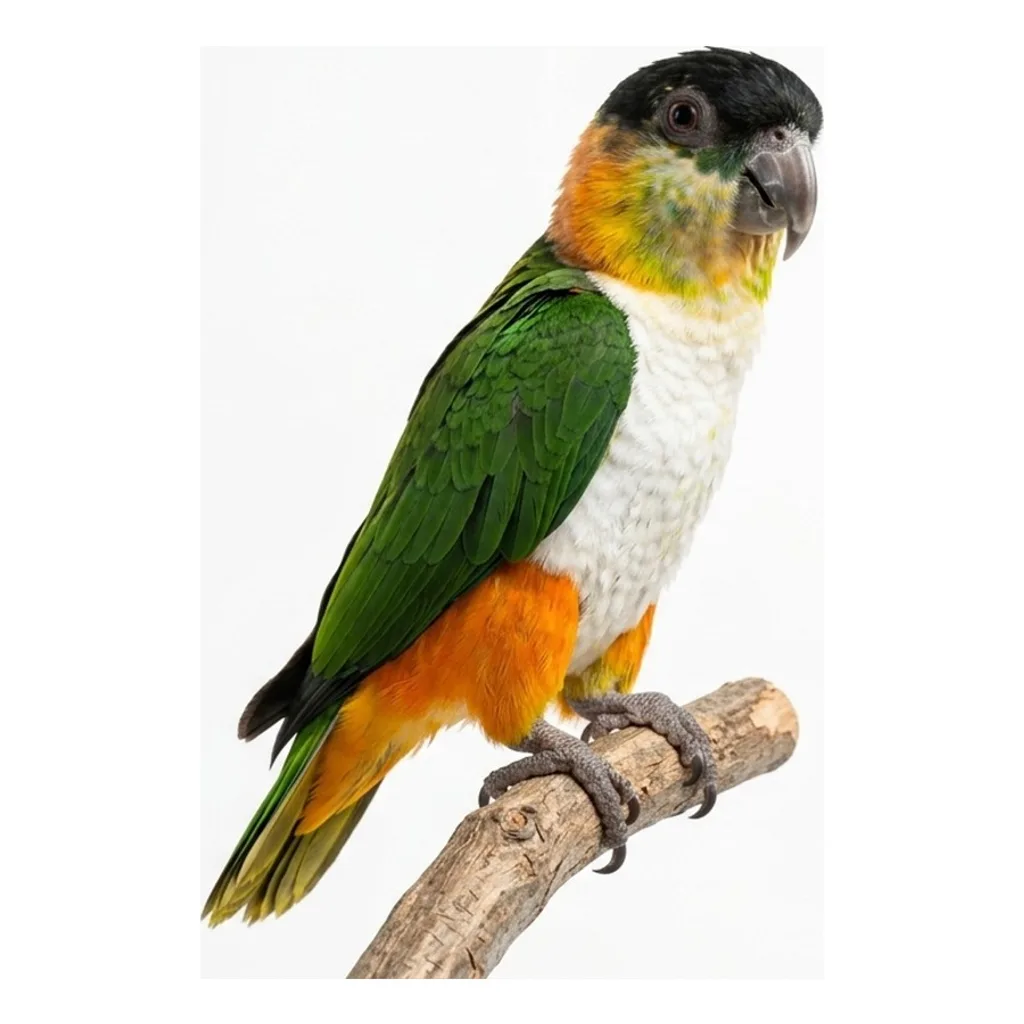
Caique
The Caique is a small, stocky South American parrot represented by two species, the Black-headed and the White-bellied, both bold, comical and relentlessly busy. Roughly 23 to 25 cm long and 150 to 170 grams, it carries a large personality in a compact frame and is better known for its hopping gait across flat surfaces than for talking, although it mimics sounds and chirps freely. Noise sits at a moderate level rather than a piercing one. A Caique needs at least two to four hours of supervised time out of the cage each day, the largest enclosure a home can fit, and a steady rotation of chewable and foraging toys, since a bored bird slides quickly into plucking or aggression. With a lifespan of 25 to 40 years, it fits an active, sociable household that is home often and ready for a decades-long companion.