Pet Breed Guide NZ
Red-rumped Parakeet
The Red-rumped Parakeet, often admired for its striking plumage and relatively placid temperament, makes a charming addition to many aviaries. Hailing from Australia, these small birds are known for the male's vibrant green body contrasted with a distinctive red patch on its rump, while females sport a duller green. They are generally quiet compared to other parakeet species, making them suitable for owners who appreciate a more serene avian companion. With a lifespan of 10-15 years, they offer long-term companionship. In New Zealand, the Red-rumped Parakeet is a legal species to keep, but prospective Kiwi owners must always verify current MPI guidelines and local council regulations before acquiring one.
Photo Gallery
NZ Ownership Snapshot
Verified NZ Status- Noise Level
- moderate
- Social Needs
- groups
- Diet Type
- Seeds, pellets, vegetables, fruit, and species-appropriate enrichment foods
- UVB Required
- No
Verified NZ domestic pet-bird context: MPI recognises parrots/parakeets as pet birds in NZ. This supports local captive-keeping context only; live bird imports are not allowed, and owners must still check species-specific and regional pest rules.
Breed Snapshot
- Size
- small
- Lifespan
- 10-15 years
- Origin
- Australia
- Care Focus
- Social and vocal bird that needs daily enrichment, safe handling, and secure housing.
- NZ Price
- NZD $80 - $200
- Annual Vet Cost
- Estimated annual vet/care costs for a Red-rumped Parakeet in New Zealand can range from NZD $100 - $300, depending on the bird's health and the availability of exotic vets. Initial health checks, potential wing/nail trims, and any unexpected illnesses contribute to this. It's important to note that access to avian-specialist exotic vets can be limited outside of major cities in NZ, potentially incurring higher travel costs or requiring general practice vets to consult with specialists.
Personality Scores
NZ Lifestyle Fit
Red-rumped Parakeets are well-suited to various New Zealand home types, from suburban sections with outdoor aviaries to larger properties. While they can tolerate a range of climates, from Auckland's humidity to the South Island's colder temperatures, adequate shelter from wind, rain, and extreme cold is crucial. An insulated shelter within an aviary is highly recommended, especially in regions prone to frost. There are no specific regional restrictions on keeping Red-rumped Parakeets within New Zealand, but local council bylaws regarding aviary size, noise, and placement should always be checked. Legally sourcing these birds in NZ is typically done through reputable avian breeders, bird clubs, or sometimes through pet stores that specialise in birds. The NZ Bird Society can be a good resource for finding ethical breeders and understanding local aviculture practices, ensuring you acquire a healthy, well-adjusted bird.
Verified NZ domestic pet-bird context: MPI recognises parrots/parakeets as pet birds in NZ. This supports local captive-keeping context only; live bird imports are not allowed, and owners must still check species-specific and regional pest rules.
About the Red-rumped Parakeet
The Red-rumped Parakeet (Psephotus haematonotus), affectionately known as 'Red-rump' in aviculture circles, is a small to medium-sized parrot native to southeastern Australia. These captivating birds are renowned for their vibrant colours and relatively calm disposition, making them a popular choice for both beginner and experienced bird keepers. They thrive in open woodlands, grasslands, and agricultural areas in their native habitat, often seen foraging on the ground for seeds and grasses. With an average lifespan of 10-15 years, a Red-rumped Parakeet can be a long-term companion, offering years of enjoyment to a dedicated owner.
What They Look Like
Red-rumped Parakeets are dimorphic, meaning males and females have distinct appearances. The male is a true showstopper, boasting a brilliant emerald green body, a blue-green head, and striking yellow underparts. His most distinguishing feature, and the origin of the bird's name, is the prominent brick-red patch on his rump. Females, while still attractive, are more subdued in colouration, typically a duller olive-green with a pale blue wash on the wings and no red rump patch. Both sexes have a slender build, long tails, and reach an adult length of approximately 27 cm, including their tail. Their bright eyes and curious expressions add to their appeal.
Personality & Behaviour
Red-rumped Parakeets are generally considered to be one of the more docile and less noisy parakeet species, making them a good option for those seeking a quieter avian pet. They are not typically known for being highly interactive or cuddly like some other parrot species, preferring to observe their surroundings from a perch. However, with consistent gentle handling from a young age, they can become quite tame and even enjoy perching on a hand or shoulder. They are social birds by nature and thrive when kept in pairs or small groups, exhibiting fascinating social dynamics. They enjoy foraging, climbing, and bathing, and require ample space to fly and explore.
Life in New Zealand
For bird enthusiasts in New Zealand, the Red-rumped Parakeet is a legal species to own, making them an accessible option for those looking to expand their aviary. Their adaptability to various climates means they can thrive across New Zealand's diverse weather conditions, from the humid north of Auckland to the colder South Island, provided they have appropriate shelter from extreme elements. They are often available through reputable bird breeders and avian societies across the country. However, as with any exotic pet, prospective Kiwi owners must always ensure they are sourcing their birds legally and ethically, and are compliant with all local council bylaws and MPI (Ministry for Primary Industries) regulations.
Is This the Right Pet for You?
Red-rumped Parakeets are a wonderful choice for individuals or families who appreciate the beauty and relatively calm nature of a small parrot. They are not as demanding of direct human interaction as some larger parrots, making them suitable for busy households, provided their social needs with other parakeets are met. Their moderate noise level is a plus for those living in closer quarters, such as a suburban section or even an apartment with good soundproofing. However, they do require a spacious aviary or cage that allows for flight, and a commitment to a balanced diet and regular enrichment. If you're prepared to provide a stimulating environment and appreciate a bird that is more independent yet visually stunning, a Red-rumped Parakeet could be a perfect fit for your New Zealand home.
Fun Facts
Fact 1
Male Red-rumped Parakeets are known for their distinctive red rump patch, which is absent in females.
Fact 2
They are primarily ground feeders in the wild, foraging for seeds and grasses.
Fact 3
Unlike many other parakeet species, Red-rumps are relatively quiet, making them suitable for suburban environments.
Fact 4
They are native to southeastern Australia and thrive in open woodlands and grasslands.
Fact 5
Red-rumped Parakeets are social birds and generally do best when kept in pairs or small groups.
Related Breeds
Bourke's Parakeet
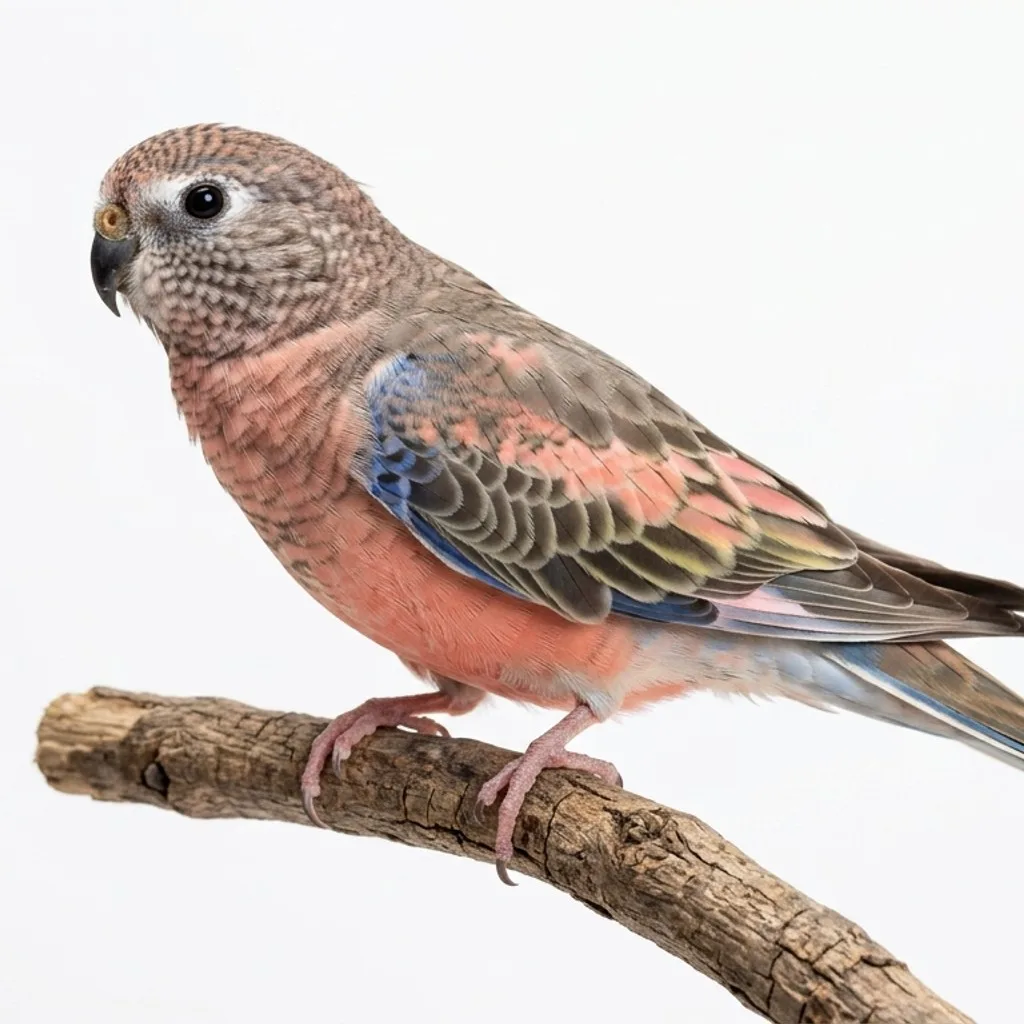
Bourke's Parakeet is a small, softly coloured parrot from inland Australia, rosy pink below with a grey-brown back and blue in the wings, and it is one of the gentler options for a first-time bird owner. It is quiet by parakeet standards, offering melodic chirps rather than squawking, and it is crepuscular, so most of its activity falls around dawn and dusk while the day passes in dozing and gentle foraging. Bourkies are docile, rarely bite, and become tame with steady, unhurried handling, though they tend to enjoy company more than cuddling and are not mimics. They do best in pairs or small groups, with a roomy cage, varied perches, chewable toys and supervised flight in a bird-proofed room. A lifespan of 8 to 12 years and soft vocalisations make them workable in flats and quiet homes that want a calm, undemanding bird.
Budgerigar (Budgie)
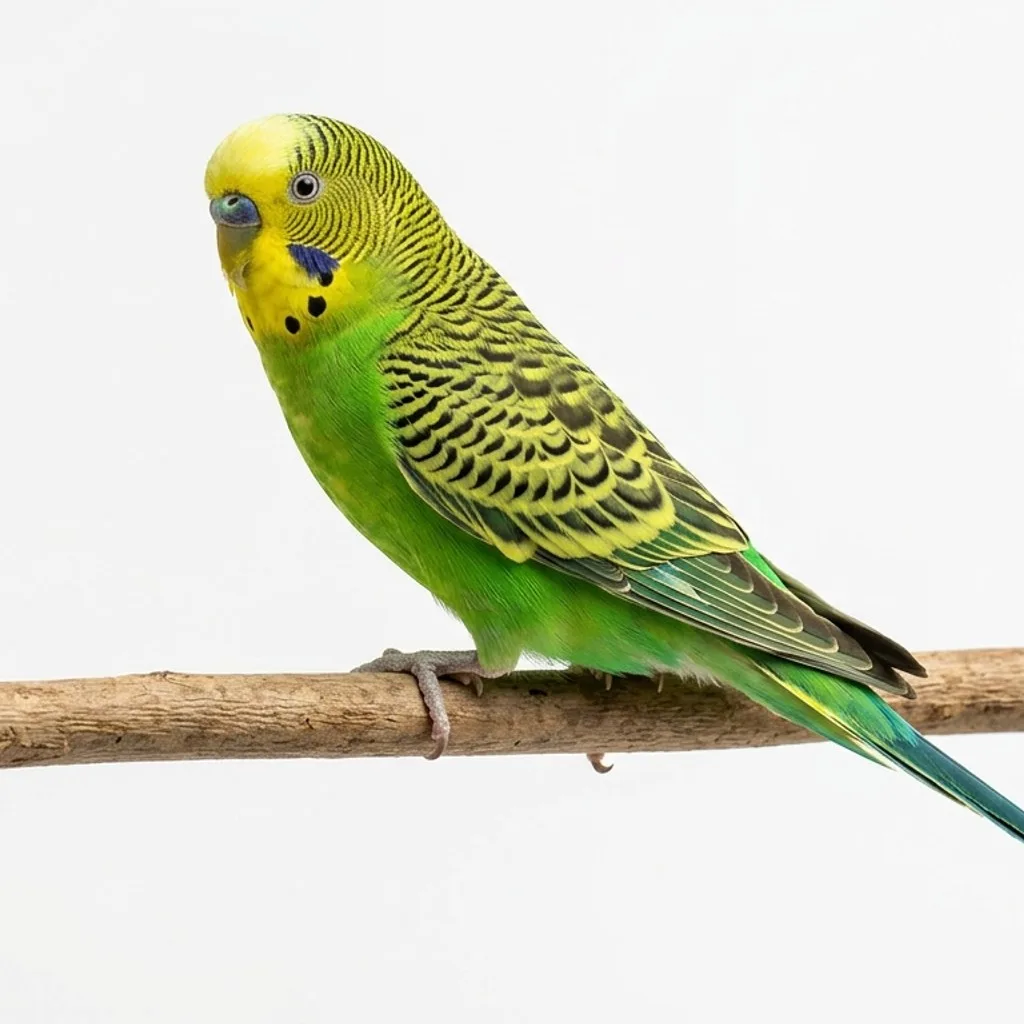
The Budgerigar, or budgie, is a small long-tailed seed-eating parrot from Australia and one of the most widely kept companion birds in the world. It is lively, inquisitive and intensely social: budgies live in large flocks in the wild, so a single bird needs either a companion budgie or committed daily human interaction to stay settled. They are bright enough to learn to step up, perform simple tricks and mimic speech, males more readily than females. Wild birds are green and yellow with black scalloping on the wings, while selective breeding has produced blue, white, yellow, grey and pied colour mutations. Care is straightforward rather than trivial: fresh food and water twice daily, a pellet-based diet with seed as a treat, spot cleaning, and 30 to 60 minutes of supervised flight in a bird-safe room. Their small size suits apartments, though near-constant chirping makes them a poor match for a noise-sensitive household.
Caique
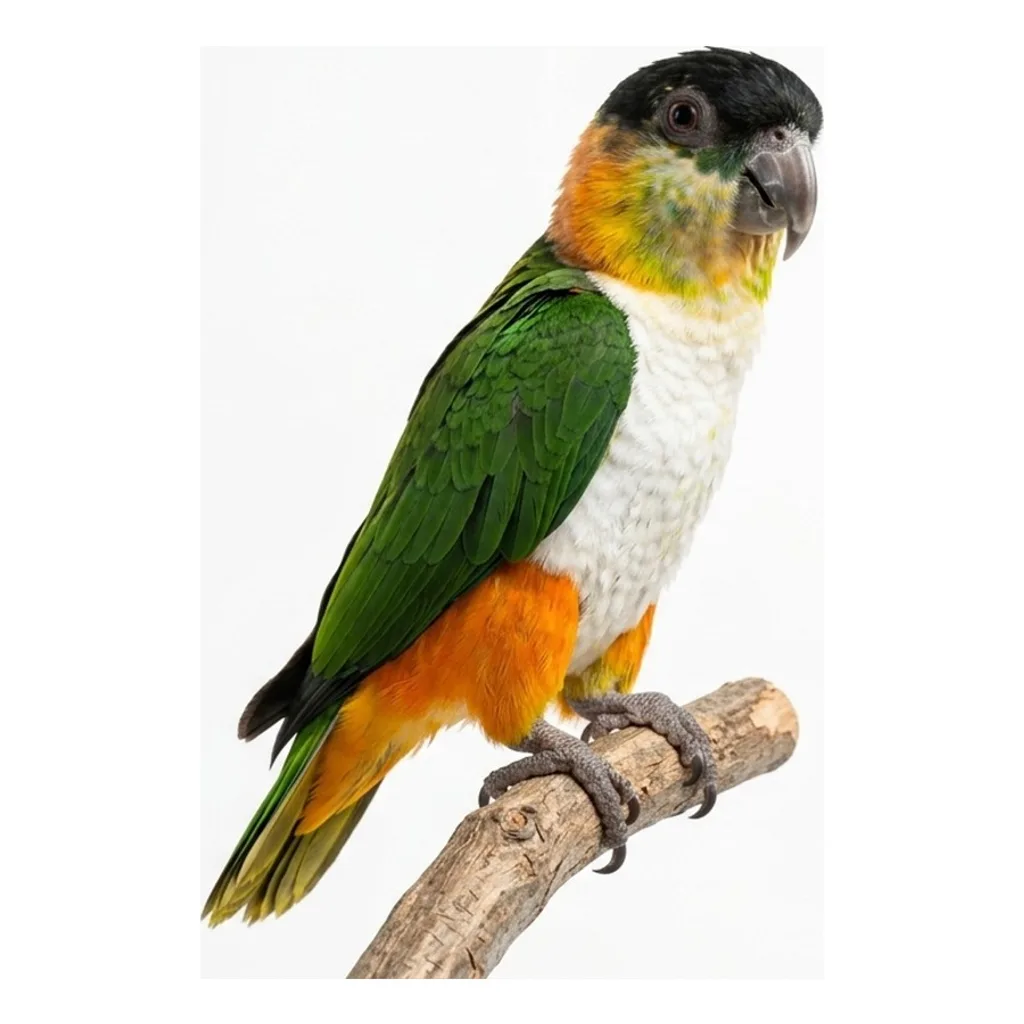
The Caique is a small, stocky South American parrot represented by two species, the Black-headed and the White-bellied, both bold, comical and relentlessly busy. Roughly 23 to 25 cm long and 150 to 170 grams, it carries a large personality in a compact frame and is better known for its hopping gait across flat surfaces than for talking, although it mimics sounds and chirps freely. Noise sits at a moderate level rather than a piercing one. A Caique needs at least two to four hours of supervised time out of the cage each day, the largest enclosure a home can fit, and a steady rotation of chewable and foraging toys, since a bored bird slides quickly into plucking or aggression. With a lifespan of 25 to 40 years, it fits an active, sociable household that is home often and ready for a decades-long companion.
Cockatiel
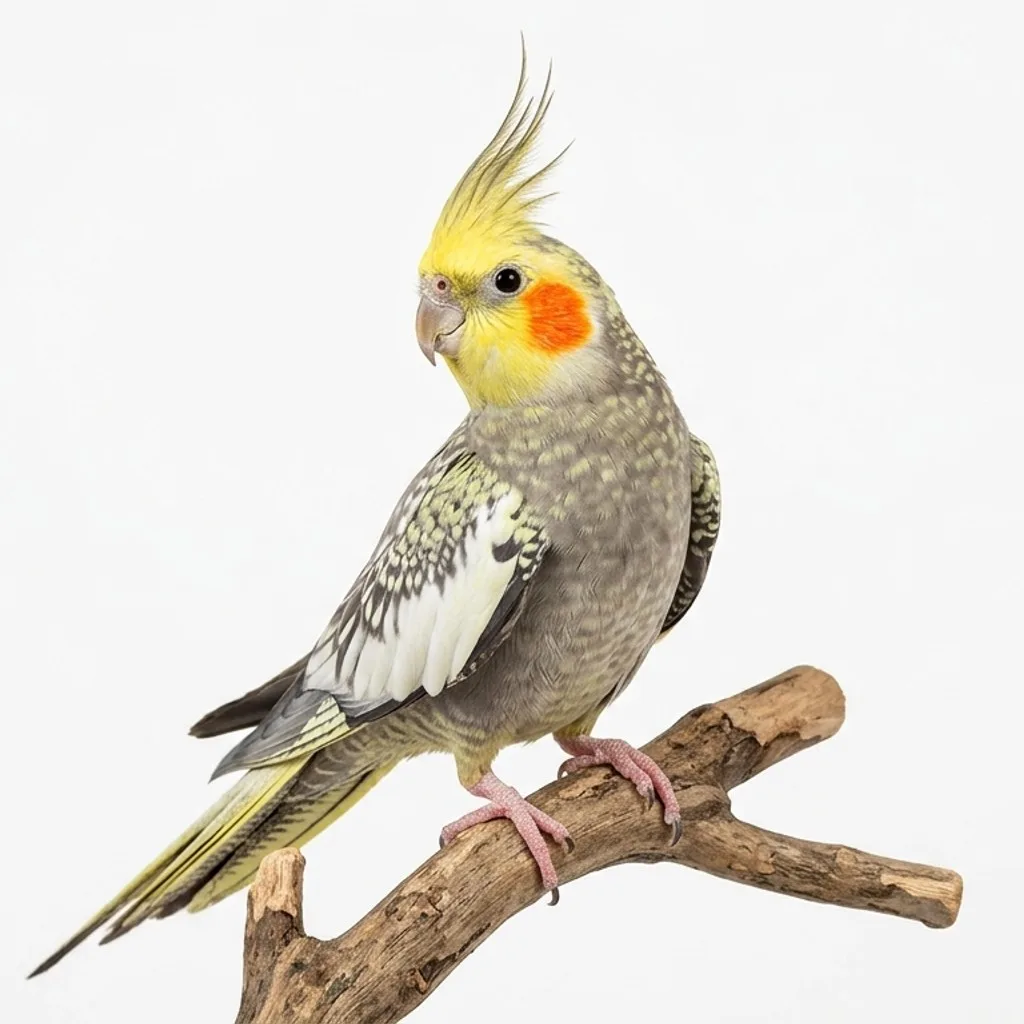
The Cockatiel is a crested Australian parrot and a member of the cockatoo family, kept for its friendly manner, its moderate voice and its readiness to bond with the people around it. Its movable crest doubles as a mood signal, rising when the bird is excited and flattening when it relaxes. The familiar normal grey has a grey body, white wing patches and an orange cheek patch, with lutino, pearl, pied, cinnamon and white-faced mutations also common. Temperament is affectionate rather than boisterous: cockatiels often enjoy head scratches and shoulder perching, and males in particular pick up whistled tunes and simple mimicry. Noise is moderate and mostly whistling rather than harsh squawking. They need a spacious cage, a pellet-led diet with seed a small part of it, an hour or two of supervised flight daily, and company, since they cope badly when left alone for long stretches. A lifespan of 15 to 25 years makes them a long commitment for families and patient first-time bird owners.