Pet Breed Guide NZ
Paradise Fish
The Paradise Fish (Macropodus opercularis) is a captivating freshwater species renowned for its vibrant colours and intricate finnage, making it a stunning addition to any New Zealand aquarium. Hailing from East Asia, these small, hardy fish possess a unique labyrinth organ, allowing them to breathe atmospheric air – a fascinating adaptation that contributes to their resilience. They are known for their intelligence and distinct personalities, often interacting with their owners. With a typical lifespan of 6-8 years, they offer a long-term companionship for Kiwi fish enthusiasts. While generally legal to keep in New Zealand, prospective owners should always confirm current MPI guidelines and local council regulations before acquiring one, ensuring responsible pet ownership.
Photo Gallery
NZ Ownership Snapshot
Verified NZ Status- Noise Level
- quiet
- Social Needs
- groups
- Water Type
- freshwater
- Tank Size
- 40L minimum
- Diet Type
- Prepared aquarium food, frozen foods, and species-appropriate live or vegetable foods
- UVB Required
- No
Listed on Schedule 4 (Approved Species) of MPI's Import Health Standard: Ornamental Fish and Marine Invertebrates (ORNAMARI.ALL, 20 September 2021), flagged as a higher-risk species with additional import conditions under Schedule 3. Verified 4 September 2026. Source: https://www.mpi.govt.nz/dmsdocument/17425-Ornamental-fish-and-marine-invertebrates-from-all-countries-Import-Health-Standard
Breed Snapshot
- Size
- small
- Lifespan
- 6-8 years
- Origin
- East Asia
- Care Focus
- Best researched for compatible tank mates, grouping, and stable water conditions.
- NZ Price
- NZD $15 - $40 per fish
- Annual Vet Cost
- Annual vet/care costs for Paradise Fish in New Zealand are generally low, primarily covering food, tank maintenance supplies, and electricity for heating/filtration. Specific veterinary intervention for fish can be costly and access to specialist exotic fish veterinarians in New Zealand is extremely limited. Most general vets may not have the expertise or equipment for fish diagnostics and treatment. Therefore, preventative care through excellent water quality and appropriate diet is paramount. Budgeting approximately NZD $100 - $200 annually for food and supplies is a reasonable estimate, with potential for higher costs if specialised equipment or treatments (if available) are needed.
Personality Scores
NZ Lifestyle Fit
Paradise Fish are well-suited for a variety of New Zealand homes, from city apartments to larger sections, provided they have a suitable indoor aquarium. Their relatively small size and indoor tank requirements mean they are not impacted by New Zealand's diverse climate, from Auckland's humidity to the South Island's colder temperatures, as their tank environment is controlled. There are no specific regional restrictions on keeping Paradise Fish within New Zealand, but the overarching legal note to check MPI guidance and local council rules applies nationwide. Prospective owners should source these fish from reputable pet stores across New Zealand, which are generally well-stocked with healthy specimens. These stores can also provide advice on local water parameters and suitable tank setups. Given their hardiness and indoor nature, they are a manageable pet for many Kiwi households, offering vibrant colour without requiring extensive outdoor space.
NZ legal status not yet verified against MPI, EPA, DOC and regional council records. Don't treat this page as confirmation that the species can legally be imported, bought, sold, bred or kept in New Zealand — check those official sources first.
About the Paradise Fish
The Paradise Fish, scientifically known as Macropodus opercularis, is a striking freshwater species originating from the rice paddies and slow-moving waters of East Asia. These beautiful fish are celebrated for their iridescent colours, often displaying shades of blue, red, and green, especially during breeding. They are relatively small, typically reaching about 7-10 cm in length, making them suitable for moderately sized aquariums. A key characteristic of the Paradise Fish is its labyrinth organ, an evolutionary adaptation that allows it to breathe directly from the air, enabling survival in oxygen-depleted waters. This hardiness, combined with their engaging personalities, has made them a popular choice among aquarists worldwide for centuries. With proper care, a Paradise Fish can live a healthy life of 6-8 years, offering a long-term, visually appealing pet for New Zealand homes.
What They Look Like
Paradise Fish are truly a spectacle of colour. Males, in particular, exhibit brilliant hues of red, blue, and green, often with iridescent spots and stripes that shimmer under aquarium lighting. Their fins are typically long and flowing, especially the dorsal, anal, and caudal fins, which become even more pronounced during courtship displays. Females are generally less colourful and have shorter fins, though they still possess an attractive, subtle beauty. Their body shape is somewhat elongated and compressed laterally. The eyes are prominent, and they have a distinct mouth suitable for surface feeding. When stressed or unwell, their colours may fade, serving as an indicator of their health. Their overall appearance is elegant and exotic, a testament to their wild origins.
Personality & Behaviour
Paradise Fish are known for their intelligence and can be quite interactive, often recognising their owners and even begging for food. However, they also have a reputation for being semi-aggressive and territorial, especially the males. They are best kept individually or in a species-specific tank, or with carefully selected tank mates that are robust and fast-moving enough to hold their own. Males can be particularly aggressive towards each other, so keeping multiple males in one tank is generally not recommended unless the tank is very large and heavily planted to provide territories. They are active swimmers and explorers, enjoying tanks with plenty of hiding spots and plants. During breeding, males will build bubble nests at the water's surface, a fascinating behaviour to observe. Their complex social dynamics and engaging behaviours make them a rewarding pet for experienced fish keepers.
Life in New Zealand
For Kiwis interested in keeping Paradise Fish, their legal status in New Zealand is generally 'legal'. This means they can be kept as pets without specific permits, unlike some other exotic species. However, it is crucial for all prospective owners to uphold responsible pet ownership by checking the most current guidance from the Ministry for Primary Industries (MPI) and their local council rules before acquiring a Paradise Fish. This ensures compliance with any updated regulations regarding exotic fish species and prevents the introduction of non-native species into New Zealand's unique ecosystems. Sourcing these fish from reputable pet stores across New Zealand is generally straightforward, and these establishments can often provide advice tailored to local conditions. Ensuring proper disposal of aquarium water and never releasing fish into natural waterways are vital practices to protect New Zealand's biodiversity.
Is This the Right Pet for You?
Paradise Fish can be a wonderful pet for the right owner. Their vibrant colours and engaging personalities make them a captivating addition to a home. However, their semi-aggressive and territorial nature means they are not ideal for beginners or those looking for a peaceful community tank with very docile fish. They thrive in well-maintained aquariums of at least 40 litres, with stable water parameters and plenty of hiding spots. Owners should be prepared for regular tank maintenance, including water changes and filter cleaning, to ensure a healthy environment. If you appreciate a fish with character, are willing to provide a suitable environment, and understand the importance of responsible pet ownership, including checking MPI guidelines, then a Paradise Fish could be a fantastic choice for your New Zealand home. They offer a unique blend of beauty, intelligence, and hardiness that can bring years of enjoyment.
Fun Facts
Fact 1
Paradise Fish were one of the first ornamental fish to be imported to Europe in the 19th century, sparking the modern aquarium hobby.
Fact 2
They possess a labyrinth organ, allowing them to breathe atmospheric air directly, which helps them survive in low-oxygen environments.
Fact 3
Males build intricate bubble nests on the water's surface to house their eggs, diligently guarding them until they hatch.
Fact 4
Paradise Fish are known for their intelligence and can often recognise their owners, sometimes even learning to take food from their fingers.
Fact 5
Their scientific name, Macropodus opercularis, translates to 'large foot' (referring to their large pelvic fins) and 'having a lid' (referring to their operculum or gill cover).
Related Breeds
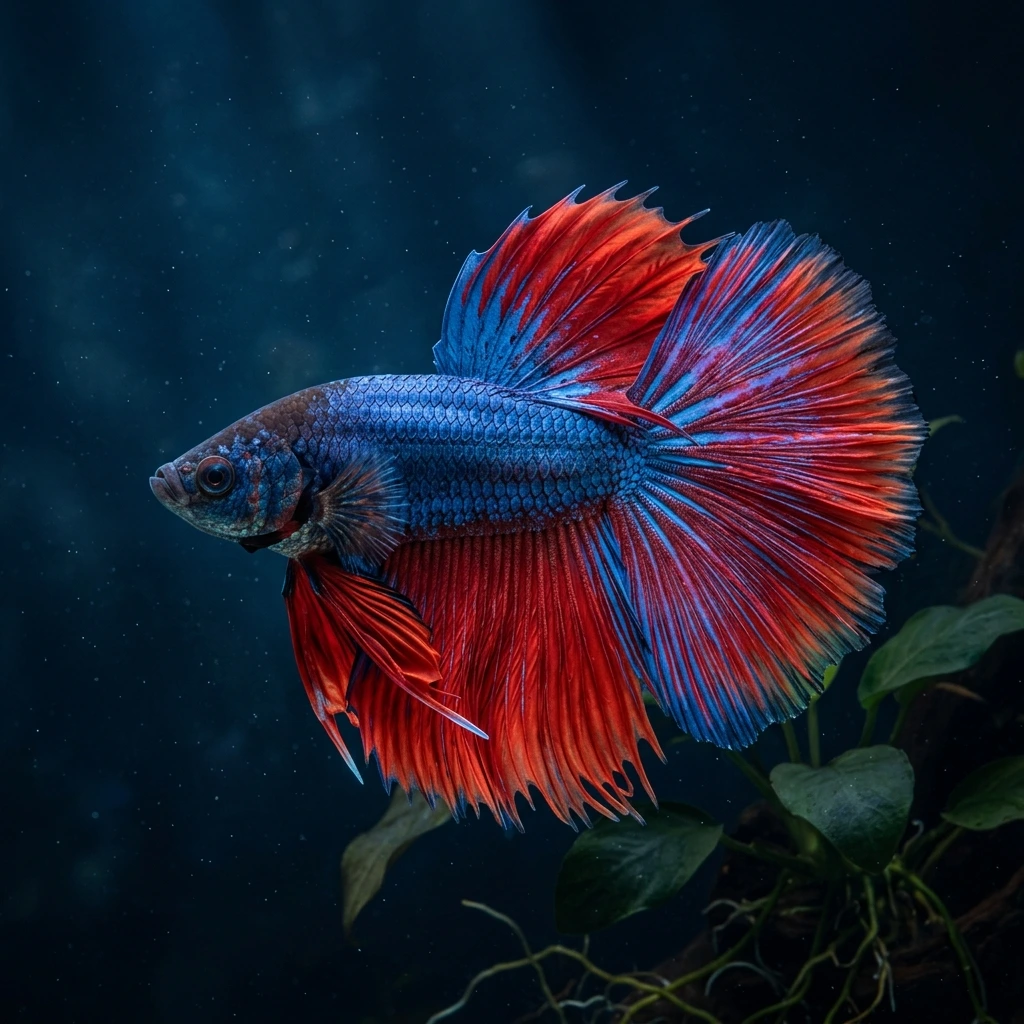
Betta Fish (Siamese Fighting Fish)
The Betta, or Siamese Fighting Fish, is a small, long-finned freshwater fish from the shallow rice paddies, canals and floodplains of Southeast Asia, usually kept alone because two males will not share a tank. The body reaches about 6-7 cm with the fins on top of that, and a labyrinth organ lets it breathe air at the surface, an adaptation to low-oxygen water that also makes it hardy in an aquarium. Males carry the long flowing fins and saturated reds, blues, greens and purples the species is known for, in forms such as veiltail, crowntail, halfmoon, plakat and doubletail; females are shorter-finned and quieter in colour. Males may also target other bright, long-finned fish, so tank mates need choosing with care. A single Betta needs at least 40 litres, a heater holding 24-27 degrees, gentle filtration, planting and a weekly water change. Typically living two to five years, it suits a keeper who wants one characterful fish rather than a crowded community tank.
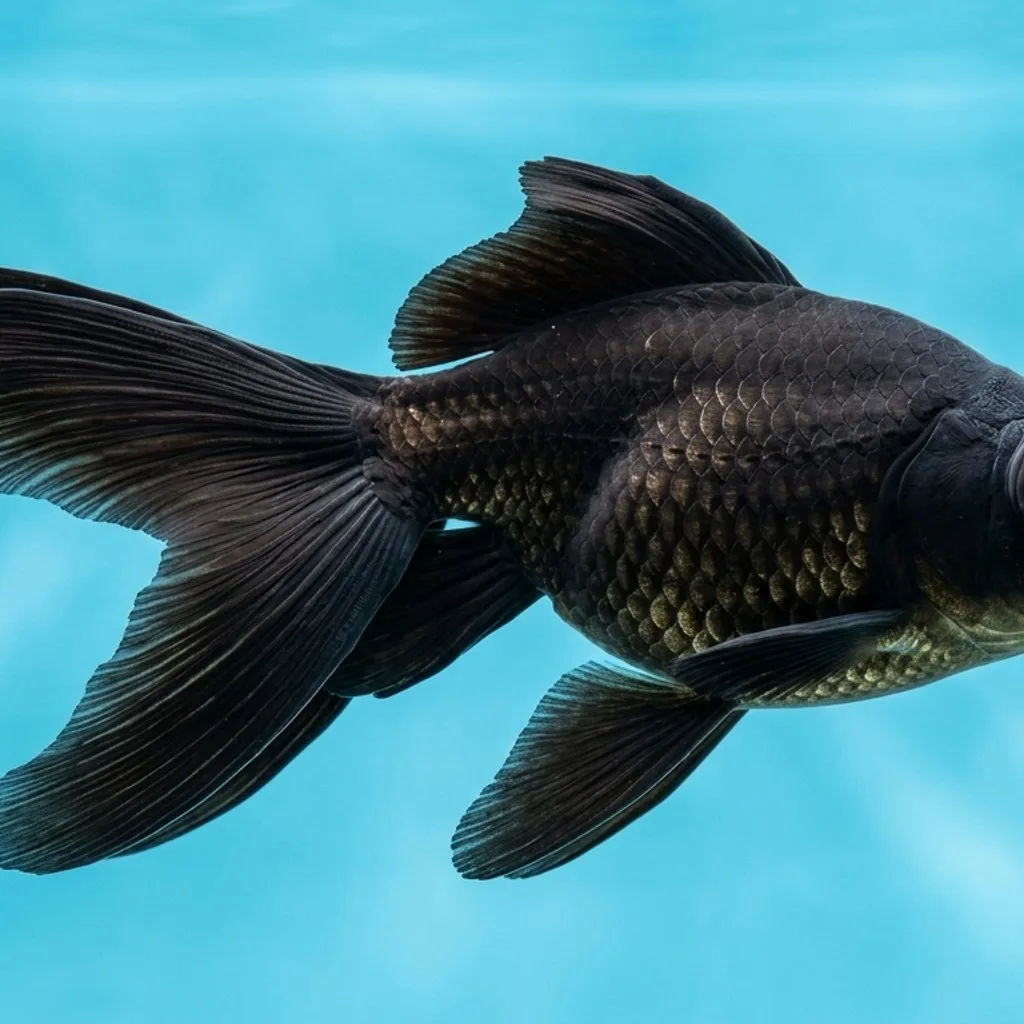
Black Moor Goldfish
Black Moor Goldfish is a small fish originating from China. It is listed on Schedule 4 (approved species) of MPI’s Import Health Standard for ornamental fish, so it can be legally imported and sold through the NZ aquarium trade. MPI classes it as a higher-risk species with additional import quarantine conditions. Typical lifespan is 10-15 years.
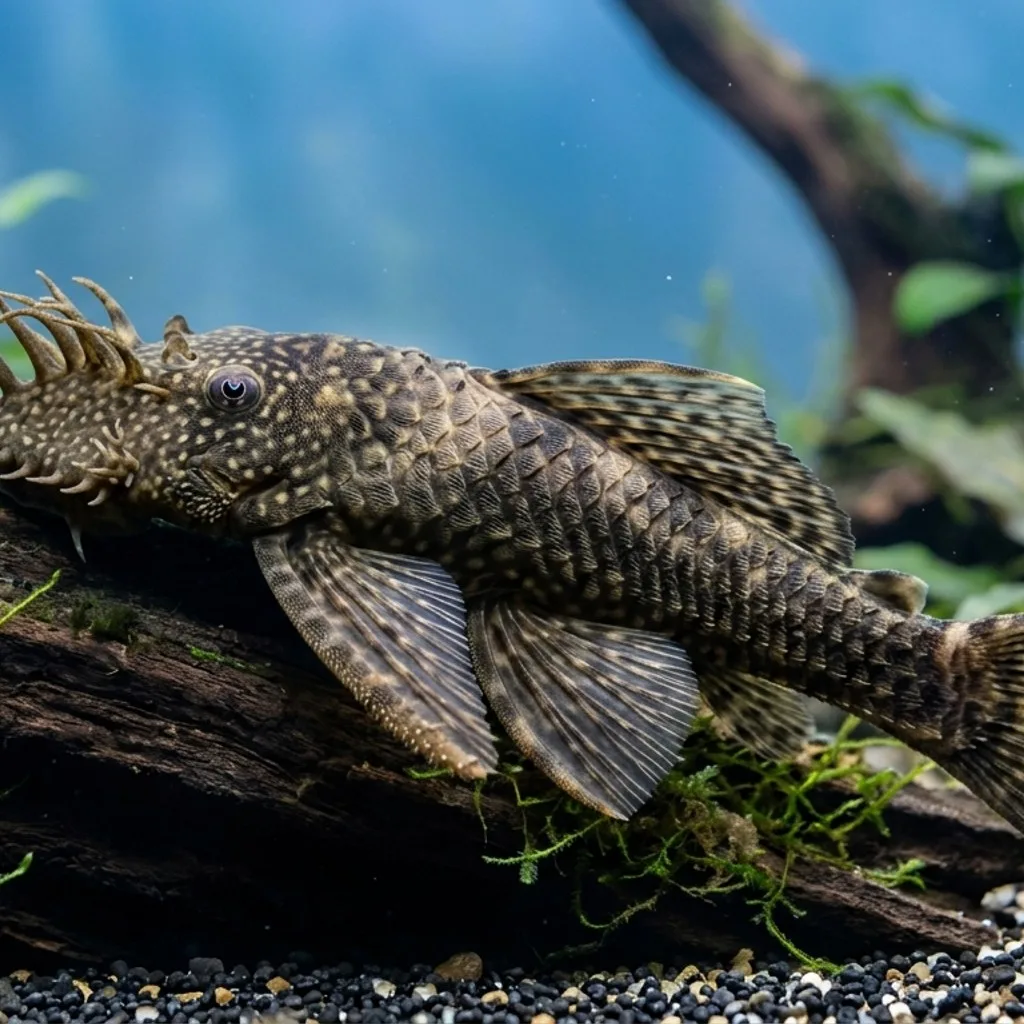
Bristlenose Pleco
Bristlenose Pleco is a small fish originating from South America. It is listed on Schedule 4 (approved species) of MPI’s Import Health Standard for ornamental fish, so it can be legally imported and sold through the NZ aquarium trade. Typical lifespan is 12-15 years.
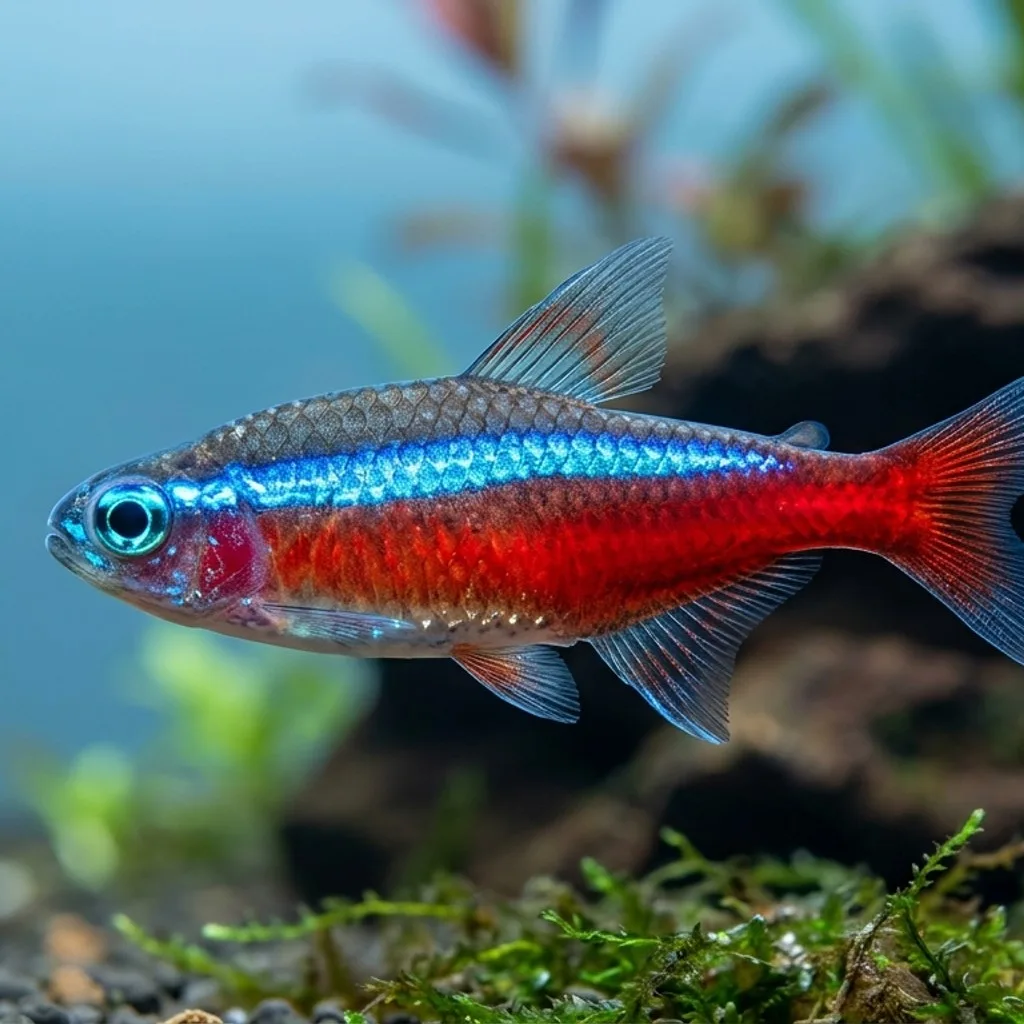
Cardinal Tetra
The Cardinal Tetra (Paracheirodon axelrodi) is a small, peaceful schooling fish from the blackwater tributaries of the Orinoco and Negro rivers, known for the iridescent stripe running the full length of its body, electric blue above and deep red below. It differs from the similar Neon Tetra in that the red band runs from snout to tail rather than stopping halfway. Adults reach about 5cm and live four to five years. Cardinals are shoaling fish that need groups of six or more to feel secure; kept in ones and twos they turn shy and their colour fades. They swim actively through the middle and upper levels of a well-planted tank, and prefer soft, slightly acidic water held between 23 and 27 degrees, with around 40 litres as a minimum for a small school. Subdued lighting, live plants and driftwood suit them. A sound choice for a calm community tank in a smaller space, provided conditions stay stable.